
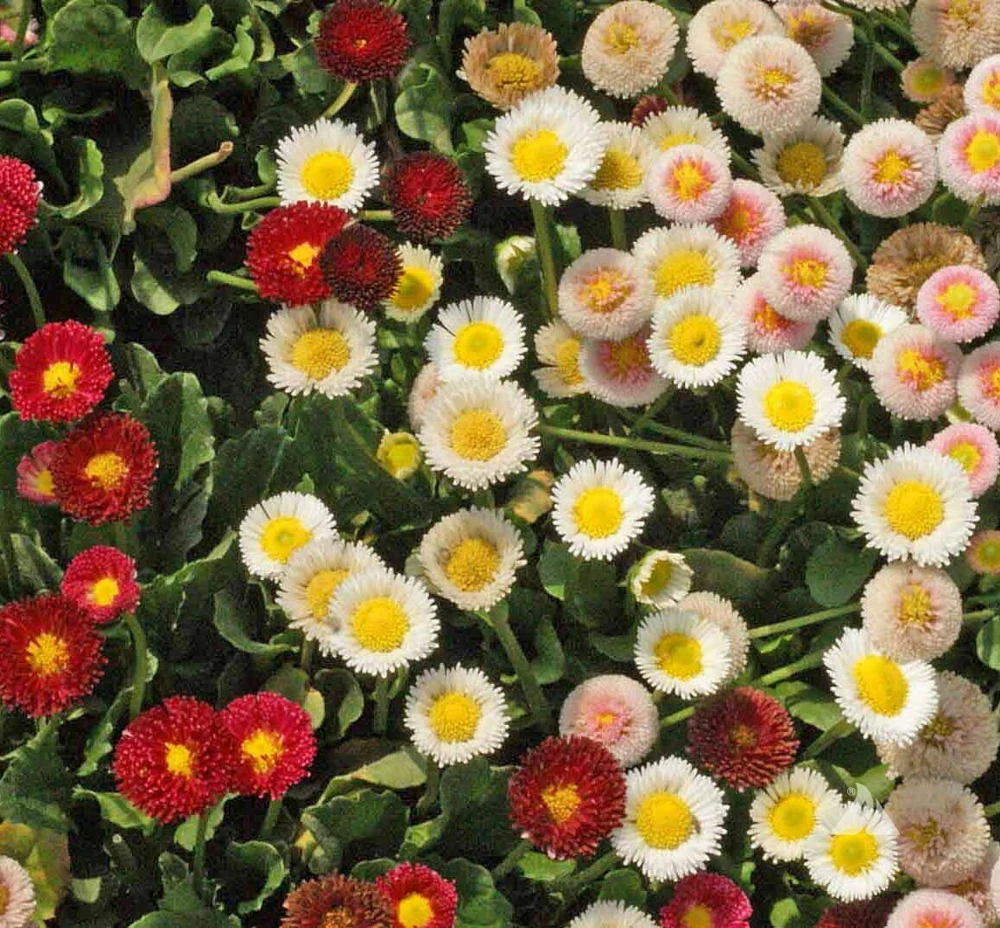
English Daisy Wildflower Seeds – Bellis perennis – Perennial – Outdoor
From 10.77 $
Discover the charm of English Daisy wildflower seeds (Bellis perennis) for your garden. These easy-to-grow perennial seeds produce delightful mat-forming blooms, perfect for ground cover or naturalizing. Enjoy vibrant flowers from fall through spring.
Estimated arrival
Sep 18
Sep 23 - Sep 25
Sep 25 - Sep 30
See our Shipping Policy.
Get in touch with us via email, and our team will review your concerns.
Our Alive & Thrive Guarantee covers issues with your plants within the first 30 days. Read our Refund & Returns Policy.
-
USDA Hardiness Zone
Zones 3-12 -
Soil Type
All (prefers well-draining) -
Sunlight Exposure
Partial Shade, Full Sun -
Expected Planting Period
Fall, Spring
Overview
Cultivate a classic garden favorite with our premium English Daisy wildflower seeds. Known botanically as Bellis perennis, these charming perennial seeds are ideal for creating a picturesque landscape, whether you’re establishing a new flower bed, enhancing a lawn, or seeking beautiful ground cover. Each packet contains high-quality seeds ready to transform your outdoor space into a vibrant tapestry of delicate white and pink blooms. The Bellis perennis seeds are celebrated for their resilience and ability to thrive across a wide range of climates, making them a versatile choice for many gardeners. With their mat-forming growth habit, these daisies provide continuous interest from fall to spring, offering cheerful splashes of color when many other plants are dormant.
The English Daisy, also known as Lawn Daisy or Common Daisy, is a beloved wildflower that brings a touch of natural elegance to any setting. Our English Daisy wildflower seeds are carefully selected to ensure vigorous growth and abundant flowering. They are an excellent choice for those looking to grow English Daisy with ease, providing a rewarding gardening experience for both beginners and seasoned enthusiasts. These seeds are perfect for creating a cottage garden feel, filling in gaps in borders, or even for naturalizing in meadows. Their low-growing nature makes them an ideal choice for areas where you desire continuous, understated beauty without tall, obtrusive plants.
Key Benefits
Planting English Daisy wildflower seeds offers numerous advantages, enhancing your garden’s aesthetic and ecological value. These versatile flowers are not only beautiful but also remarkably hardy and low-maintenance. Their enduring charm makes them a valuable addition to any outdoor space.
- Charming and Classic Blooms: The English Daisy produces small, attractive flowers, typically white with a yellow center, often tinged with pink or red. These classic blooms add a timeless, natural beauty to gardens and lawns, evoking a sense of tranquility and tradition. They are perfect for creating a quaint, English garden aesthetic.
- Excellent Ground Cover: With their mat-forming growth habit, these perennial plants are superb for ground cover. They spread gently to form a dense carpet of foliage and flowers, suppressing weeds and providing an attractive green base for other plants. This makes them ideal for filling in bare spots or creating a soft border.
- Long Blooming Season: One of the standout features of Bellis perennis seeds is their extended flowering period. They typically bloom from fall through spring, providing continuous color and interest during seasons when many other plants are dormant. This ensures your garden remains lively and colorful for much of the year.
- Low Maintenance and Hardy: English Daisies are incredibly easy to care for, requiring minimal attention once established. They are tolerant of various soil types and climates, making them a resilient choice for gardeners of all skill levels. Their hardiness means they can withstand different weather conditions.
- Attracts Pollinators: While not as prominent as some larger flowers, the delicate blooms of the English Daisy can still attract beneficial pollinators like small bees and hoverflies to your garden, contributing to a healthier ecosystem. This helps support local biodiversity.
- Versatile Garden Use: These seeds are incredibly versatile, suitable for a range of garden applications. Use them in rock gardens, along pathways, in cottage gardens, as a lawn alternative, or simply to naturalize open areas. Their adaptability allows for creative landscaping.
- Easy to Grow from Seed: For those looking to grow English Daisy, starting from seed is a straightforward and rewarding process. The seeds germinate readily and establish quickly, allowing you to enjoy beautiful blooms in a relatively short period. This makes them accessible for new gardeners.
Plant Care & Growing Tips
Caring for English Daisy wildflower seeds is relatively simple, making them a fantastic choice for both novice and experienced gardeners. These hardy perennials are quite forgiving, but providing optimal conditions will ensure a more robust display of their charming blooms. English Daisies thrive in a variety of settings, from full sun to partial shade, making them adaptable to different garden aspects. For best results, aim for at least 4-6 hours of direct sunlight per day, especially in cooler climates. In hotter regions, some afternoon shade will help protect the plants from scorching and prolong their blooming period. They are well-suited for outdoor cultivation and can withstand a wide range of temperatures.
When it comes to watering, English Daisies prefer consistently moist, but not waterlogged, soil. Water regularly, especially during dry spells and when the plants are establishing. Once mature, they are somewhat drought-tolerant but will perform best with medium watering. Ensure your soil is well-draining to prevent root rot. These plants are not particularly fussy about soil type and can grow in most garden soils, including sandy, loamy, or clay. However, they prefer a neutral to slightly acidic soil pH, ideally between 6.0 and 8.0. Incorporating organic matter into the soil before planting can improve drainage and fertility. The perennial wildflower seeds will establish a strong root system in good soil.
English Daisies are incredibly cold-hardy, thriving in USDA Hardiness Zones 3-12, which covers a vast majority of the United States. They are typically planted in the fall or spring. Fertilization is generally not heavily required; a light application of a balanced, slow-release fertilizer in early spring can encourage more vigorous growth and blooming. Deadheading spent flowers is beneficial as it encourages the plant to produce more blooms and prevents self-seeding if not desired. While generally pest and disease resistant, watch out for common garden issues like aphids or powdery mildew, and treat as necessary with organic solutions. Learning to grow English Daisy successfully means providing consistent, moderate care.
Size & Details
Our English Daisy wildflower seeds are supplied in variety sizes, offering flexibility for different garden projects. These seeds will mature into charming, low-growing plants that typically reach a height of 4-8 inches (10-20 cm) with a similar spread, forming dense, mat-forming clumps. The compact nature of these plants makes them ideal for ground cover, rock gardens, or the front of borders. Expect blooms to appear within 8-10 weeks after planting, with flowers lasting throughout the fall, winter, and spring seasons, depending on your local climate. This long season of interest ensures your garden remains vibrant for an extended period.
As perennial wildflower seeds, English Daisies will return year after year, establishing a lasting presence in your landscape. They are a deciduous plant, meaning their foliage may die back in extreme heat or cold but will re-emerge with favorable conditions. The seeds are suitable for outdoor planting and will adapt to various aspects, from full sun to partial shade. The ease of cultivation, combined with their resilient nature, makes these Bellis perennis seeds a rewarding choice for creating a beautiful and enduring garden display. These hardy plants are known for their ability to cover ground effectively and provide consistent flowering.
Frequently Asked Questions
- Q: How big does the English Daisy plant get? A: English Daisy plants typically grow to a compact size, reaching about 4-8 inches (10-20 cm) in height and spread. They form a dense, mat-forming habit, making them excellent for ground cover or low borders.
- Q: Is this an indoor or outdoor plant? A: English Daisy (Bellis perennis) is an outdoor plant, ideally suited for garden beds, borders, rock gardens, and naturalized areas. While they can be grown in containers, they thrive best in outdoor conditions.
- Q: How much sunlight does English Daisy need? A: To grow English Daisy successfully, provide them with full sun to partial shade. They prefer at least 4-6 hours of direct sunlight daily, especially in cooler climates. In hotter regions, some afternoon shade is beneficial to protect the blooms.
- Q: Is this plant easy to care for? A: Yes, English Daisies are considered very easy to care for, making them suitable for beginner gardeners. They are hardy, adaptable to various soil types, and require medium watering once established.
- Q: What condition will the English Daisy wildflower seeds arrive in? A: Your English Daisy wildflower seeds will arrive as a packet of high-quality, viable seeds, ready for planting. They are carefully packaged to ensure freshness and successful germination.
- Q: How long until English Daisy blooms after planting? A: You can typically expect your English Daisy plants to begin blooming within 8-10 weeks after planting the seeds. They offer a long flowering season from fall through spring, depending on your climate.
- Q: Will English Daisy survive winter in my zone? A: Yes, English Daisies are very cold-hardy and are perennial in USDA Hardiness Zones 3-12. This means they will survive winter and return year after year in most temperate and subtropical climates.
- Q: What is the best time to plant these perennial wildflower seeds? A: The best times to plant perennial wildflower seeds like English Daisy are in the fall for earlier spring blooms, or in early spring after the last frost. Fall planting allows for root development before winter.
- Q: Can I use English Daisy as a lawn alternative? A: Yes, English Daisies can be an excellent choice for a low-maintenance lawn alternative or to naturalize parts of a lawn. Their mat-forming habit and low growth create a charming, flowering carpet.
- Q: What kind of soil is best for Bellis perennis seeds? A: While tolerant of many soil types, Bellis perennis seeds prefer well-draining soil with a neutral to slightly acidic pH (6.0-8.0). Amending heavy clay soils with organic matter can improve drainage.
| Seed Amount | 12K Seeds Or 2 Gram, 175K Seeds Or 1 Oz, 22K Seeds Or 1/8 Oz, 3000 Seeds Or 1/2 Gram, 44K Seeds Or 1/4 Oz, 6000 Seeds Or 1 Gram, 88K Seeds Or 1/2 Oz |
|---|
Be the first to review “English Daisy Wildflower Seeds – Bellis perennis – Perennial – Outdoor”
Related products


Flower Seeds


You May Like
5 Best Bulbs for Fall Planting: Brighten Your Garden This Spring
Are you dreaming of a garden full of vibrant colors in the spring? The key [...]
Aug
How to Repot Houseplants Like a Pro
Do your houseplants look like they’ve outgrown their pots? Are their roots popping out of [...]
Aug
10 Houseplants That Will Thrive in Your Kitchen
Are you tired of your kitchen feeling dull and lifeless? Want to add a little [...]
Aug
Reviews
There are no reviews yet.