
2 Cherry Laurel Live Plants – Prunus caroliniana – 6-12″ Tall in 2.5″ Pots
Original price was: 45.91 $.25.91 $Current price is: 25.91 $.
Introduce the beautiful cherry laurel live plant (Prunus caroliniana) to your garden. These small evergreen trees are known for their fragrant, almond-scented leaves and attractive black berries, making them a wonderful addition to natural settings and privacy screens. Perfect for USDA Zones 7-10.
Estimated arrival
Oct 15
Oct 20 - Oct 22
Oct 22 - Oct 27
See our Shipping Policy.
Get in touch with us via email, and our team will review your concerns.
Our Alive & Thrive Guarantee covers issues with your plants within the first 30 days. Read our Refund & Returns Policy.
-
USDA Hardiness Zone
7-10 -
Soil Type
Well-draining soil (sandy, loamy, or clay) -
Sunlight Exposure
Full sun to partial shade -
Expected Planting Period
Spring or Fall
Overview
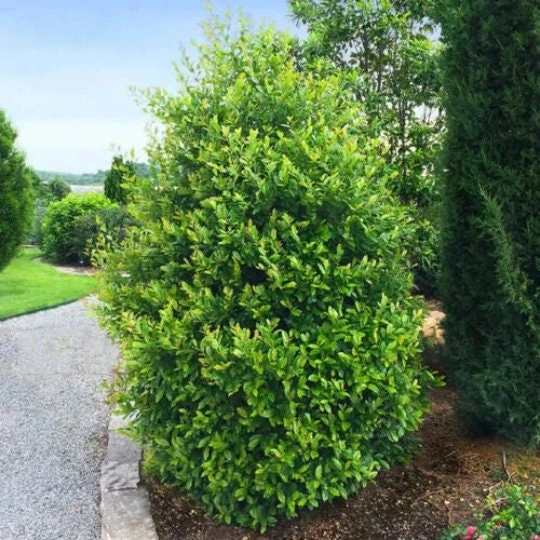
Discover the charm and versatility of the cherry laurel live plant, scientifically known as Prunus caroliniana. This elegant evergreen tree is a native gem of the southeastern United States, celebrated for its year-round beauty and ecological value. Unlike many deciduous trees, the cherry laurel live plant maintains its lush green foliage throughout the seasons, providing consistent visual interest and privacy. Its distinctive features include glossy green leaves that, when crushed, release a delightful almond-like fragrance, adding a unique sensory experience to your garden. These plants are ideal for creating natural hedges, screens, or as standalone specimens in a diverse landscape, contributing to biodiversity by attracting local bird populations with their small, persistent black cherries.
The Prunus caroliniana is a robust and adaptable species, making it a favored choice for gardeners seeking both aesthetic appeal and low maintenance. Its ability to thrive in various conditions, coupled with its moderate growth rate, allows it to quickly establish itself and become a significant feature in your outdoor space. Whether you’re aiming to establish a native garden, a wildlife-friendly habitat, or simply enhance your property with an attractive evergreen, the evergreen cherry laurel offers a compelling solution. Its resilience and natural beauty ensure it will be a cherished part of your landscape for years to come.
Key Benefits
The cherry laurel live plant offers a multitude of benefits, making it an excellent choice for a variety of landscape designs and gardening goals. From its aesthetic appeal to its ecological contributions, this plant provides enduring value.
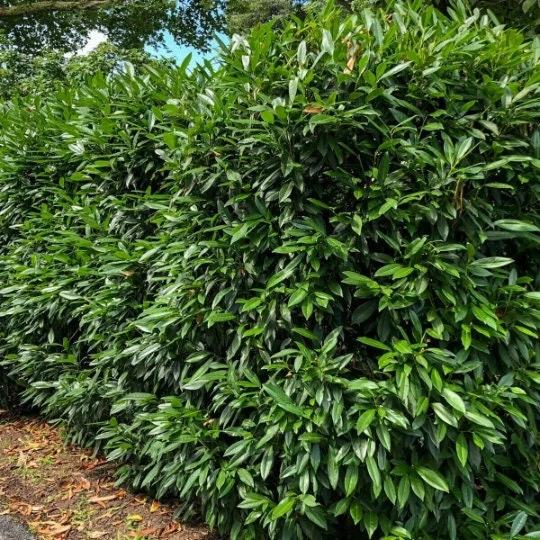
- Year-Round Greenery: As an evergreen, the Prunus caroliniana tree maintains its vibrant green foliage throughout all seasons, providing consistent color and structure to your garden even during winter months. This makes it perfect for privacy screens or hedges that need to offer continuous coverage.
- Fragrant Foliage: The leaves and twigs of the cherry laurel live plant emit a pleasant almond-like scent when bruised or crushed, adding an unexpected aromatic element to your garden. This unique fragrance can be particularly enjoyable near pathways or seating areas.
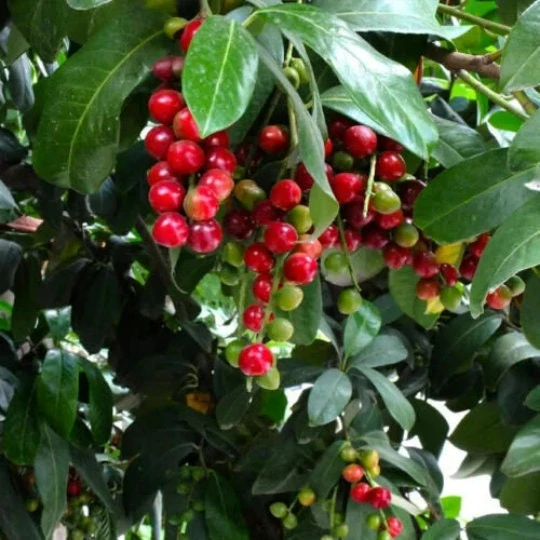
- Wildlife Attraction: The small, black cherries produced by this plant are a significant food source for various bird species, especially during the winter when other food sources are scarce. Planting an evergreen cherry laurel helps support local wildlife and enhances the ecological balance of your garden.
- Low Maintenance & Adaptable: Once established, the cherry laurel live plant is remarkably drought-tolerant and requires minimal care, making it suitable for busy gardeners. It adapts well to different soil types and growing conditions, thriving with ease.
- Natural Privacy Screen: With its dense foliage and potential to grow up to 43 feet tall and 30 feet wide, the Prunus caroliniana tree is an excellent choice for creating natural privacy screens, windbreaks, or sound barriers. Its robust growth provides effective seclusion.
- Native Plant Benefits: Choosing this native southeastern plant supports regional ecosystems, requires less water and fertilizer once established, and generally exhibits higher resistance to local pests and diseases compared to non-native species.
- Versatile Landscaping Use: Ideal for natural settings, woodland gardens, or even formal hedges when regularly pruned. The fragrant cherry laurel can be used as a specimen plant, in mass plantings, or as part of a mixed border, adding structure and beauty wherever it’s placed.
Plant Care & Growing Tips
Caring for your cherry laurel live plant is relatively straightforward, as this native species is known for its resilience and adaptability. Understanding its basic needs will ensure healthy growth and a thriving presence in your garden. For optimal growth, these plants prefer a location that receives full sun to partial shade. While they can tolerate some shade, more sunlight generally leads to denser foliage and more abundant berry production. Aim for at least 4-6 hours of direct sunlight per day. The Prunus caroliniana tree is not overly particular about soil type but thrives best in well-draining soil. It can tolerate sandy, loamy, or clay soils, but good drainage is crucial to prevent root rot. Incorporating organic matter at planting time can improve soil structure and fertility.
Once established, the cherry laurel live plant is quite drought-tolerant, meaning it doesn’t require frequent watering. During its first year, water regularly to help it establish a strong root system. After that, water deeply during prolonged dry spells, especially in hot climates. Avoid overwatering, as this can be more detrimental than underwatering. These plants are hardy in USDA Zones 7-10, tolerating a wide range of temperatures. They are generally evergreen, but in the colder parts of their range, some leaf drop might occur during harsh winters. Fertilization is typically not necessary for established plants, especially if grown in fertile soil. If growth appears sluggish, a balanced, slow-release fertilizer can be applied in early spring. Pruning can be done to maintain shape, size, or to remove any dead or damaged branches. The best time for significant pruning is late winter or early spring before new growth begins.
Common problems for the evergreen cherry laurel are few, but watch out for issues related to poor drainage, which can lead to fungal diseases. Ensuring proper planting depth and soil conditions will mitigate most problems. Pests are generally not a major concern, but occasional issues with scale insects or aphids can be managed with horticultural oil or insecticidal soap. The fragrant cherry laurel is a robust choice for a low-maintenance, high-impact landscape.
Size & Details
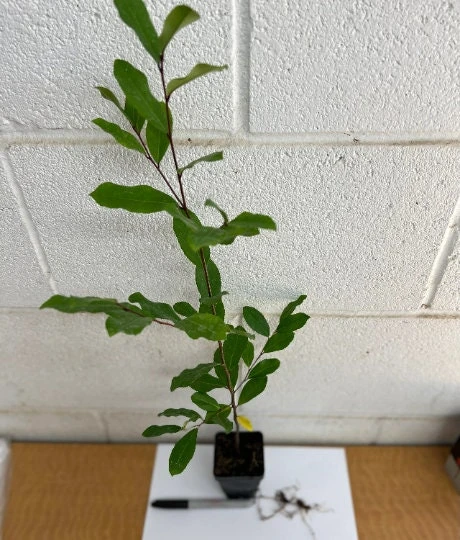
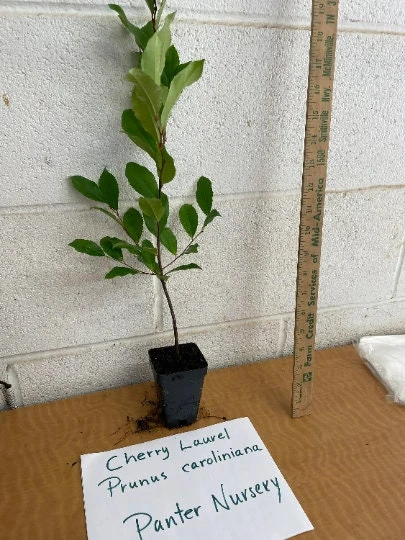
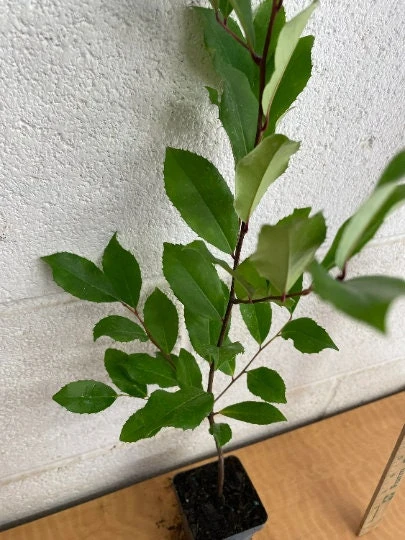
You are receiving two cherry laurel live plant specimens, each standing approximately 6-12 inches tall. These young plants are carefully grown in 2.5-inch nursery pots, ensuring they arrive with a healthy root system ready for transplanting. While currently compact, the Prunus caroliniana tree has the potential for significant growth, reaching heights of 16-43 feet and spreading 20-30 feet wide at maturity, depending on growing conditions and pruning practices. They exhibit a moderate to fast growth rate, allowing them to establish quickly in your garden.
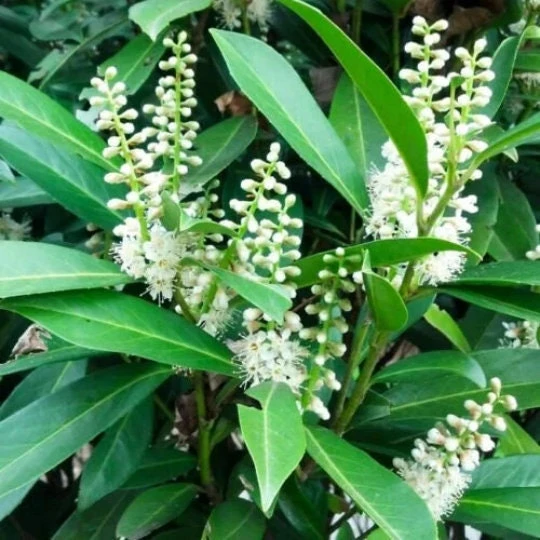
These plants are shipped as live, actively growing specimens, ready to be planted upon arrival. The leaves are typically glossy green, and the twigs are red to grayish-brown. The small black cherries, about 1cm in diameter, will develop as the plant matures, persisting through winter and providing sustenance for birds. This native southeastern plant is a long-lived species, offering decades of beauty and ecological benefit to your landscape. Proper care after planting, especially during the establishment phase, will ensure these young trees develop into strong, healthy specimens.
Frequently Asked Questions
- Q: How big does this plant get? A: The cherry laurel live plant can grow quite large, reaching heights of 16-43 feet and spreading 20-30 feet wide at maturity. Its ultimate size depends on growing conditions and whether it’s pruned.
- Q: What size pot does it come in? A: You will receive two Prunus caroliniana tree plants, each in a 2.5-inch nursery pot, approximately 6-12 inches tall.
- Q: Is this an indoor or outdoor plant? A: This is primarily an outdoor plant, best suited for landscape use in USDA Zones 7-10. It is not typically grown as an indoor houseplant.
- Q: How much sunlight does it need? A: The cherry laurel live plant thrives in full sun to partial shade, ideally receiving at least 4-6 hours of direct sunlight daily for best growth and berry production.
- Q: Is this plant easy to care for? A: Yes, the evergreen cherry laurel is considered low-maintenance once established. It’s drought-tolerant and adaptable to various soil conditions, making it suitable for beginners.
- Q: What condition will it arrive in? A: Your plants will arrive as live, actively growing specimens in their nursery pots, carefully packaged to ensure their health during transit.
- Q: Can I use the berries from the cherry laurel? A: While the berries are a food source for birds, they are generally considered inedible for humans and contain compounds that can be toxic. It’s best to enjoy them for their ornamental and wildlife benefits.
- Q: When is the best time to plant this native southeastern plant? A: The best time to plant is typically in the spring or fall, allowing the plant to establish its root system before extreme summer heat or winter cold.
- Q: Will it survive winter in my zone? A: The fragrant cherry laurel is hardy in USDA Zones 7-10. If you are within these zones, it should survive winter without issue, remaining evergreen.
- Q: Does the foliage truly smell like almonds? A: Yes, when the leaves or twigs are crushed, they release a distinct fragrance often described as resembling almond extract, adding a unique characteristic to the plant.
Be the first to review “2 Cherry Laurel Live Plants – Prunus caroliniana – 6-12″ Tall in 2.5″ Pots”
Related products

Trees
Guava Tree Live Plant Pink Tropical Fruit 4-10in Tall Well Rooted for Gardening USDA Zones 9-11


You May Like

Hardneck vs. Softneck Garlic: Which Should You Grow?
Have you ever stood in front of a seed catalog in mid-September, staring at dozens [...]
Oct

When to Plant Music Garlic: Ultimate US Fall Guide
Have you ever spent your fall weekend placing carefully chosen garlic cloves into rich, dark [...]
1 Comment
Oct

5 Best Bulbs for Fall Planting: Brighten Your Garden This Spring
Are you dreaming of a garden full of vibrant colors in the spring? The key [...]
Aug

10 Houseplants That Will Thrive in Your Kitchen
Are you tired of your kitchen feeling dull and lifeless? Want to add a little [...]
1 Comment
Aug
Reviews
There are no reviews yet.