
Guide
Hardneck vs. Softneck Garlic: Which Should You Grow?
Oct
Have you ever stood in front of a seed catalog in mid-September, staring at dozens of garlic varieties, and felt completely stuck? You know you want to plant garlic this fall, but you are hit with a choice right away: hardneck or softneck? Will one type turn to mush in your cold Midwest soil? Will the other refuse to form real cloves during a mild California winter?
If you have ever asked these questions, you are not alone. As someone who has spent years testing heirloom seed stock and getting dirty in garden beds across different USDA Hardiness Zones, I have seen plenty of gardeners lose half their harvest simply because they bought the wrong type of garlic for their region.
Choosing between hardneck vs. softneck garlic is not just about personal taste. It comes down to your local weather, how long you want your harvest to store in the pantry, and whether you want that sweet extra bonus crop known as garlic scapes. Let us walk through the key differences step by step so you can pick the exact right variety for your garden this season.
Quick Comparison: Hardneck vs Softneck Garlic at a Glance
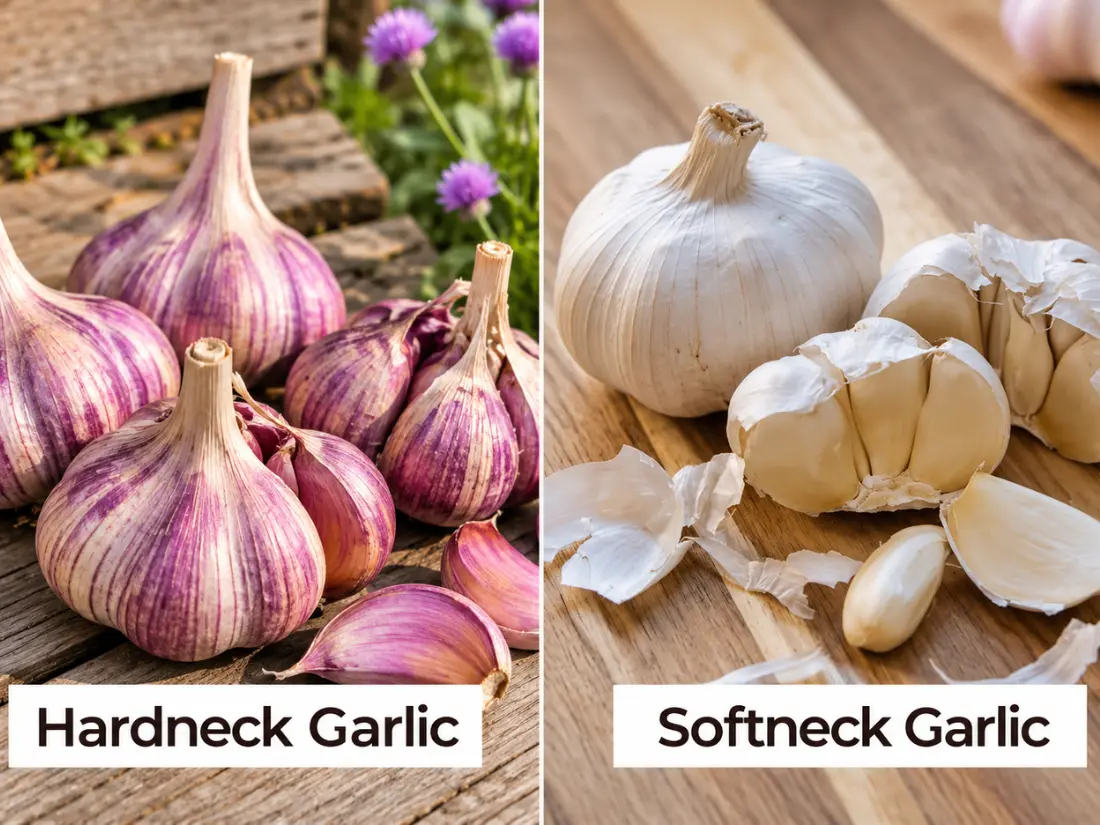
Before we dive into the details, here is a quick side-by-side look at how these two main garlic types stack up:
|
Feature |
Hardneck Garlic (Allium sativum var. ophioscorodon) |
Softneck Garlic (Allium sativum var. sativum) |
|
Best Climate |
Cold winter climates (USDA Zones 3 to 7) |
Mild winter climates (USDA Zones 8 to 10) |
|
Central Stem |
Rigid, thick, woody stem |
Pliable, soft, flexible stem |
|
Garlic Scapes |
Yes (produces edible curly flower stems) |
No (rarely forms scapes) |
|
Cloves per Bulb |
4 to 12 large, uniform cloves |
10 to 20+ layered cloves |
|
Flavor Profile |
Complex, bold, rich, often spicy |
Mild, classic, reliable garlic flavor |
|
Storage Life |
4 to 6 months |
9 to 12 months |
|
Braiding |
No (stems are too hard) |
Yes (perfect for woven garlic braids) |
|
Peeling Ease |
Very easy (loose paper skins) |
Moderate (tight, thin, parchment-like skin) |
What is Hardneck Garlic?

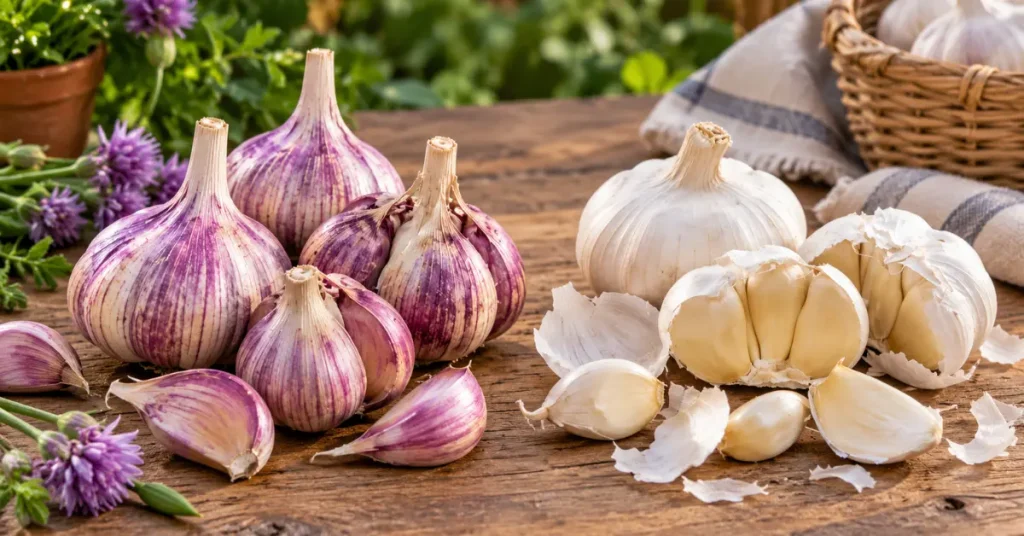
Hardneck garlic, known botanically as Allium sativum var. ophioscorodon, gets its name from the hard, woody stem that runs straight up through the center of the bulb.
If you live in northern states like Vermont, Minnesota, or Washington, hardneck varieties are likely your best friends in the garden. These plants are tough, resilient, and require a solid period of cold weather to thrive.
Key Characteristics & Growth Habit
Hardneck plants produce a single ring of large, plump cloves surrounding that central stem. Because there is only one outer layer of cloves, they are exceptionally easy to peel in the kitchen.
In early summer, hardneck garlic sends up a curling center stalk called a scape. Harvesting these scapes isn’t just fun; it actually prompts the plant to redirect its energy down into expanding the underground bulb size.
Climate Preferences
Hardneck garlic is extremely cold-hardy. It requires a process called vernalization, which means the planted clove needs several weeks of temperatures below 40 degrees Fahrenheit to trigger proper bulb division. If you experience freezing winter conditions, heavy snow, or frost-heavy springs, hardneck seed bulbs will settle into the ground happily over winter and shoot up vigorous greens as soon as the soil thaws.
Flavor Profile & Popular Varieties
Culinary enthusiasts and home chefs often lean toward hardneck garlic for its depth of flavor. The taste ranges from subtle and nutty to sharp and fiery.
Some outstanding heirloom groups and varieties include:
-
Rocambole (e.g., Spanish Roja): Renowned for deep, full-bodied spice and broad cloves, though it has a slightly shorter shelf life than other hardnecks.
-
Porcelain (e.g., Music): Famous for massive bulbs with bright white skin, yielding 4 to 6 huge cloves with a fiery bite.
-
Purple Stripe (e.g., Chesnok Red): Beautiful purple-streaked wrappers with a sweet, rich flavor when roasted whole.
What is Softneck Garlic?
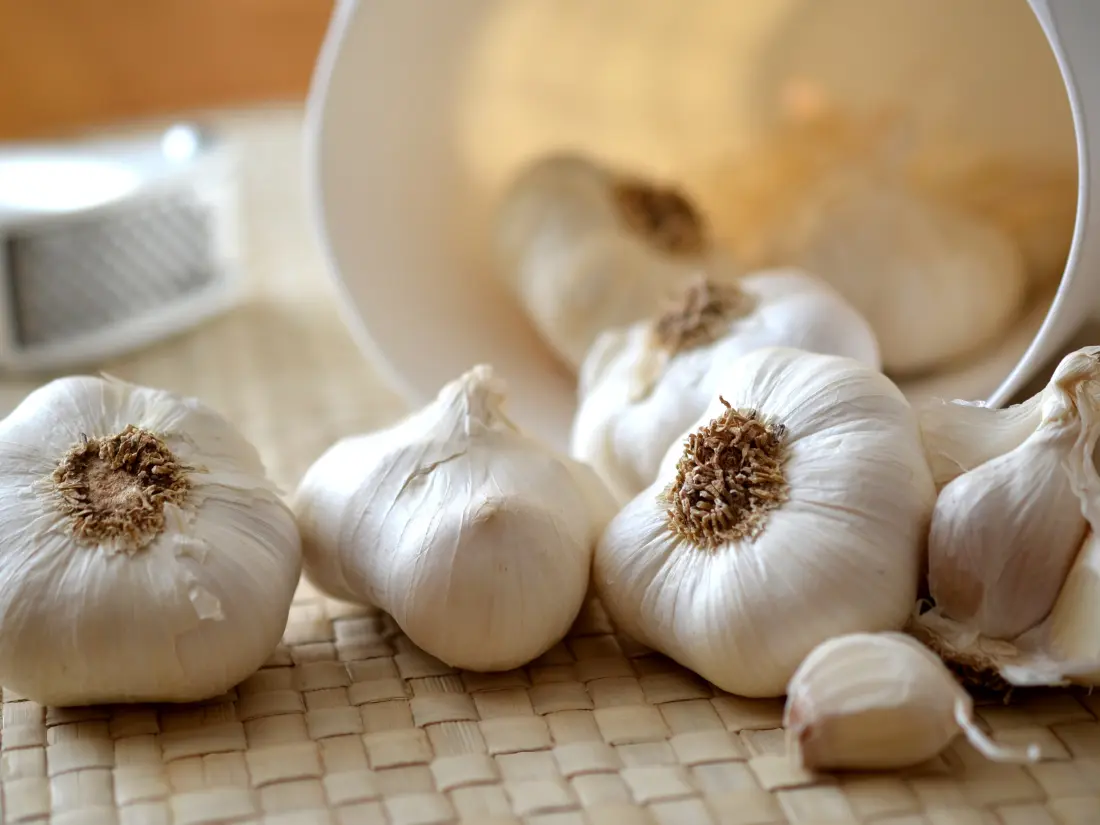
Softneck garlic, or Allium sativum var. sativum, is the standard garlic you usually find in grocery store bins across the United States.
Unlike its stiff cousin, softneck garlic features soft, flexible leaves that extend all the way down into the neck of the bulb. This flexible stalk is what allows growers to weave those gorgeous, traditional garlic braids you see hanging in rustic kitchens.
Key Characteristics & Growth Habit
A softneck bulb contains multiple overlapping layers of cloves. You will find larger cloves on the outer ring and smaller, narrower cloves tucked inside near the center. A single bulb can easily yield 10 to 20 cloves or more.
Softneck plants generally do not produce scapes, which means less garden maintenance during the late spring months since you won’t need to clip blooming shoots.
Climate Preferences
Softneck garlic thrives in southern states, coastal areas, and USDA Zones 8 through 10, such as Texas, Florida, Georgia, and Southern California. It does not require deep winter freezing to split into cloves, making it much more forgiving in regions with short, mild winters.
While it can tolerate moderate cold, severe winter drops without proper mulch protection can stress softneck crops.
Flavor Profile & Popular Varieties
Softneck garlic delivers that timeless, comforting garlic flavor we all grew up with. The taste is generally milder and less aggressively spicy than hardneck varieties, making it ideal for raw salad dressings, sautés, and everyday family meals.
Top softneck groups include:
-
Artichoke (e.g., Inchelium Red, California Early): Broad, flat bulbs with multiple clove layers. Extremely productive and adaptable across diverse soils.
-
Silverskin (e.g., Silver White): Known for smooth, gleaming white skins. This group matures late in the season and boasts the longest storage capability of any garlic.
Key Differences Between Hardneck and Softneck Garlic

Choosing between these two types comes down to five core practical factors. Let us break them down so you know what to expect from planting day to mealtime.
1. Climate Hardiness & Growing Conditions
Your geographic location is the biggest factor in this decision.
If you plant softneck garlic in an area that regularly hits sub-zero temperatures without reliable snowfall cover, you risk damaging your crop unless you apply a thick layer of straw mulch. Conversely, if you plant a hardneck variety in a warm southern climate, the lack of prolonged cold will often result in a single solid bulb, similar to a small onion, rather than a head of segmented cloves.
2. Storage Life & Shelf Stability
If your primary goal is pantry self-sufficiency and keeping fresh garlic on hand all winter long, softneck garlic is the clear winner.
Softneck bulbs have tight, papery wrappers that wrap closely around the internal cloves, sealing out moisture and air. Under cool, dark, well-ventilated curing conditions, softneck garlic can easily stay fresh for 9 to 12 months.
Hardneck garlic has thinner, looser wrappers. While delicious, most hardneck varieties begin to sprout or dry out after 4 to 6 months of storage.
3. Flavor Intensity & Culinary Uses
For raw dishes, delicate roasts, or quick sautés where you do not want garlic to overpower other fresh ingredients, softneck garlic provides a smooth, balanced backbone.
If you are making fresh salsa, rich pestos, heavy meat rubs, or want a raw clove that delivers a clean kick, hardneck garlic stands out. The distinct essential oils in varieties like Music or Chesnok Red hold up remarkably well during long simmer times and heavy baking.
4. The Bonus Harvest: Garlic Scapes
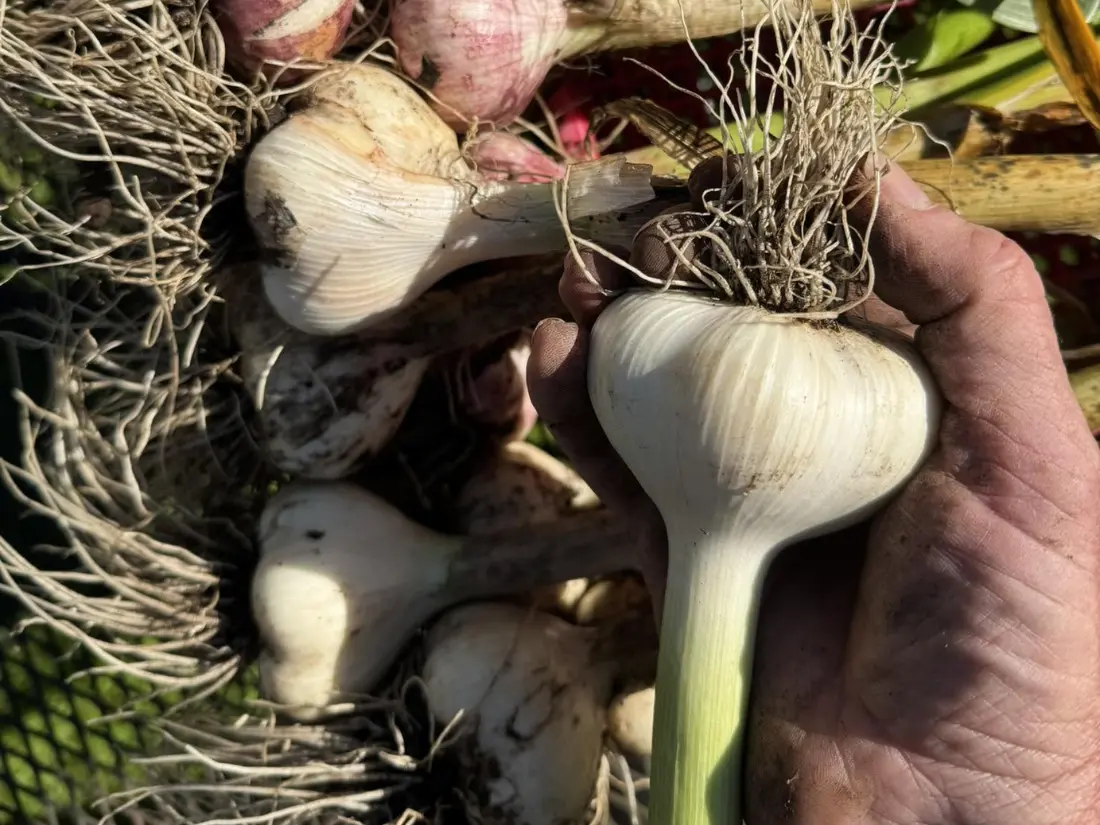
One of the distinct advantages of growing hardneck garlic is the early summer harvest of scapes. In June, hardneck plants send up green shoots that curl twice in a circle before heading upward.
Trimming these scapes off preserves energy for the bulb below, but it also gives you a delicious early crop. Garlic scapes taste like a cross between green onions and mild garlic. You can blend them into summer pesto, chop them into stir-fries, or grill them whole with olive oil and sea salt. Softneck varieties do not offer this extra harvest.
Read more: When to Plant Music Garlic: Ultimate US Fall Guide
5. Peeling Ease & Prep Work
Ask any chef who has peeled a bushel of garlic: clove size matters. Hardneck bulbs feature fewer, significantly larger cloves wrapped in loose skin. A gentle tap with the flat side of a chef’s knife pops the skin right off.
Softneck garlic, while producing more cloves per head, features smaller interior cloves wrapped in tight, paper-thin skins that require a bit more patience to peel.
How to Choose the Right Garlic for Your Garden
Still undecided? Here is a simple decision guide to help you choose the best option for your plot.
Choose Hardneck Garlic If:
-
You live in the Northern US, Midwest, or high-altitude regions (USDA Zones 3–7).
-
You love bold, complex, spicy flavors in your cooking.
-
You want to harvest two crops from one plant: edible spring scapes and summer bulbs.
-
You prefer large, easy-to-peel cloves for quick prep work.
Choose Softneck Garlic If:
-
You live in the Southern US, Sunbelt, or coastal regions with mild winters (USDA Zones 8–10).
-
You want a long-lasting harvest that will store in your pantry for up to a full year.
-
You enjoy handcrafting traditional braided garlic ropes to hang in your kitchen or give as gifts.
-
You prefer a smooth, mild, classic garlic taste for everyday cooking.
Can’t Decide? Try the Hybrid Approach!
If you live in a moderate climate zone, such as USDA Zones 5, 6, or 7, you don’t actually have to choose! Many home gardeners in these mid-tier zones plant a 50/50 split. Plant hardneck cloves for summer scapes and fresh eating through autumn, and plant softneck cloves to supply your kitchen through late winter and spring.
Frequently Asked Questions (FAQs)
1. Can I grow hardneck garlic in warm climates like Florida or Texas?
It is challenging to grow hardneck garlic in southern states because these varieties require a cold period to set individual cloves. However, if you are determined to try it, you can artificially chill your seed cloves in a paper bag inside your refrigerator for 6 to 8 weeks before planting in late autumn. Keep in mind that yields may still be smaller compared to softneck crops grown in the same region.
2. Can you eat softneck garlic scapes?
Softneck garlic rarely produces scapes under normal growing conditions. On the rare occasion that a softneck plant becomes stressed by unexpected weather and sends up a central stalk, that stem is usually tough and woody rather than tender and edible. If you are growing softneck garlic, focus your attention on nourishing the below-ground bulb rather than hunting for scapes.
3. Is store-bought garlic hardneck or softneck?
The vast majority of garlic sold in American supermarkets is softneck garlic. Commercial growers prefer softneck varieties because they offer a much longer shelf life, pack efficiently for long-distance transport, and can be harvested mechanically. If you want to taste fresh hardneck garlic, your best option is to grow it yourself or buy it from a local farmers’ market during mid-to-late summer.
4. Can you plant both hardneck and softneck garlic together in the same bed?
Yes, you can easily plant both types in the same garden bed! Just make sure to group them by variety and space them roughly 4 to 6 inches apart in well-draining soil rich in organic matter. Keep in mind that hardneck varieties usually mature a few weeks earlier than softneck varieties, so keeping them grouped together in clear rows makes harvesting at the right time much easier.
Ready to Get Planting?
Growing your own garlic is one of the most rewarding projects you can undertake in a home garden. Whether you pick hardneck varieties for their rich spice and tender early scapes, or softneck varieties for long-lasting pantry storage and easy braiding, starting with high-quality seed garlic is the first step toward a bountiful summer harvest.
Take a quick look at your USDA Hardiness Zone, consider how you like to cook, and pick the seed stock that matches your garden goals.
If you are ready to prepare your raised beds or garden soil for planting day, check out our step-by-step soil preparation guide to learn how to prepare your garden bed for fall planting!
