
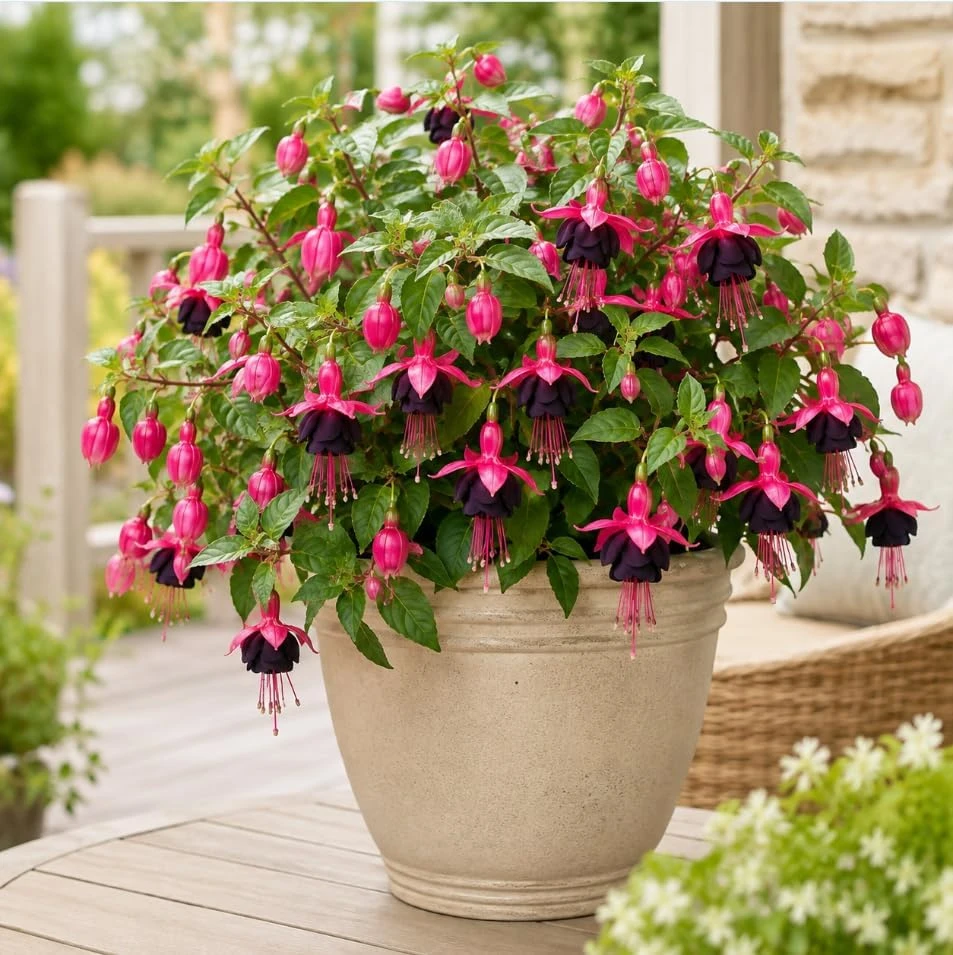
Black-Pink Fuchsia Plant – Live Plant – 4-6 inch Tall – 5 Inch Pot
Original price was: 43.99 $.23.99 $Current price is: 23.99 $.
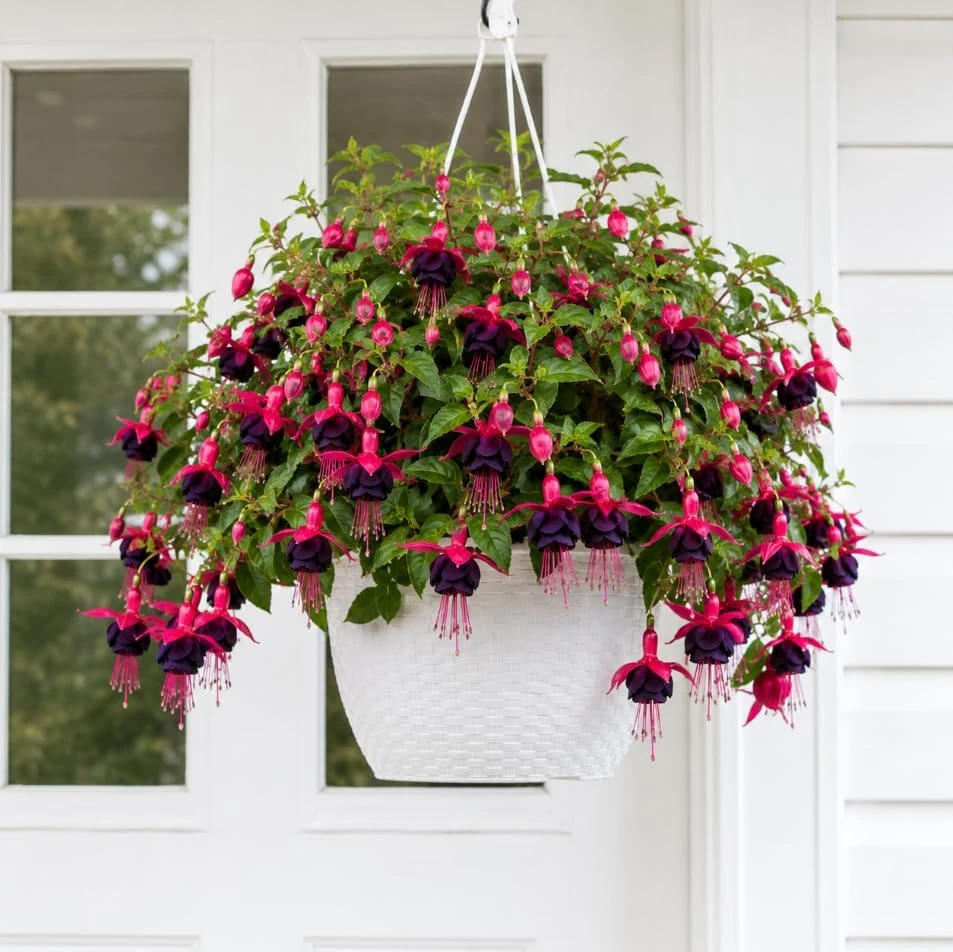
Introduce a stunning fuchsia plant to your garden with this vibrant black-pink variety. Standing 4-6 inches tall in a 5-inch pot, it’s perfect for adding elegant, trailing blooms to baskets, containers, or shaded garden beds. Enjoy its prolific flowers from late spring through fall.
Estimated arrival
Oct 16
Oct 21 - Oct 23
Oct 23 - Oct 28
See our Shipping Policy.
Get in touch with us via email, and our team will review your concerns.
Our Alive & Thrive Guarantee covers issues with your plants within the first 30 days. Read our Refund & Returns Policy.
-
USDA Hardiness Zone
USDA Zones 8-11 -
Soil Type
Well-draining soil -
Sunlight Exposure
Partial shade to bright indirect light -
Expected Planting Period
Late spring through fall (blooming season)
Overview
Discover the enchanting beauty of the fuchsia plant, a true jewel for any home garden. This particular variety, with its captivating black and pink blooms, offers an exquisite display of color and form. Known for its delicate, pendulous flowers that resemble tiny dancing ballerinas, the fuchsia is a beloved choice for adding elegance to shaded areas. As a live plant, it arrives ready to thrive, bringing immediate charm to your outdoor spaces or even as a vibrant indoor accent in the right conditions. Often referred to as a ‘Fuchsia Tree’ in its more mature, upright forms, this plant promises a continuous show of blossoms, transforming your garden into a whimsical haven. Its unique two-toned flowers are a conversation starter, making it a focal point wherever it’s placed. Embrace the allure of this extraordinary botanical specimen and elevate your gardening experience with its unparalleled grace.
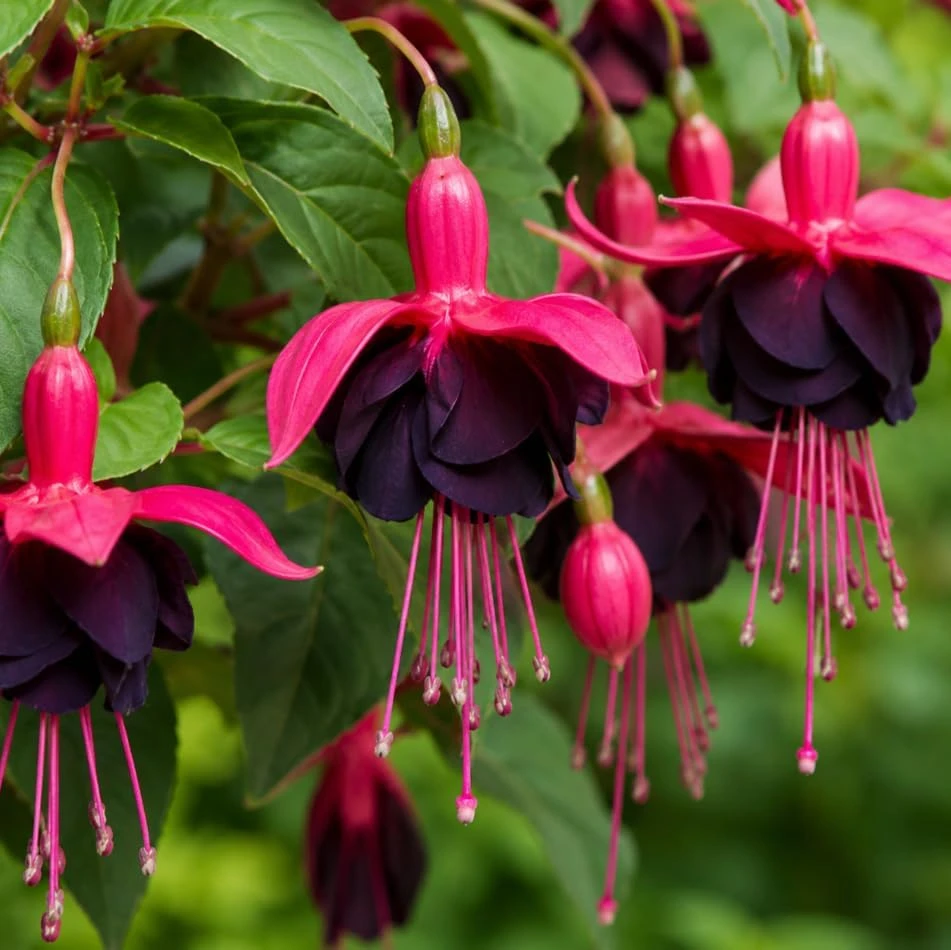
The fuchsia (Fuchsia spp.) is a genus of flowering plants belonging to the Onagraceae family, native to Central and South America. This specific variety is cultivated for its striking bicolor flowers, which feature deep, almost black sepals contrasting beautifully with bright pink petals. It’s a relatively easy-to-grow plant, making it suitable for gardeners of all experience levels. With proper care, this fuchsia plant will reward you with a long and abundant blooming season, creating a spectacular visual impact.
Key Benefits
Adding a fuchsia plant to your garden offers numerous advantages, enhancing both its aesthetic appeal and ecological value. This plant is not just beautiful; it’s also a delight for various garden visitors.
- Stunning Visual Appeal: The unique black and pink flowers provide a dramatic contrast, making this fuchsia a captivating centerpiece or an elegant addition to mixed containers. Its trailing habit makes it ideal for hanging baskets.
- Extended Blooming Season: Enjoy a prolonged period of bloom from late spring through fall, ensuring your garden remains vibrant and colorful for months. This extended display guarantees continuous beauty.
- Attracts Pollinators: Fuchsias are known to attract hummingbirds and other beneficial pollinators, bringing lively activity and supporting local ecosystems in your garden.
- Versatile Placement: Suitable for containers, hanging baskets, and garden beds, especially in partial shade, allowing for flexible design options in various garden settings.
- Relatively Low Maintenance: With consistent moisture and appropriate light, this fuchsia plant thrives without excessive fuss, making it a rewarding choice for busy gardeners.
- Enhances Shaded Areas: Brings much-needed color and life to shadier spots where many other flowering plants struggle, brightening up often overlooked parts of the garden.
- Air Purification: Like many live plants, fuchsias contribute to a healthier environment by helping to filter the air around them, albeit on a smaller scale.
Plant Care & Growing Tips
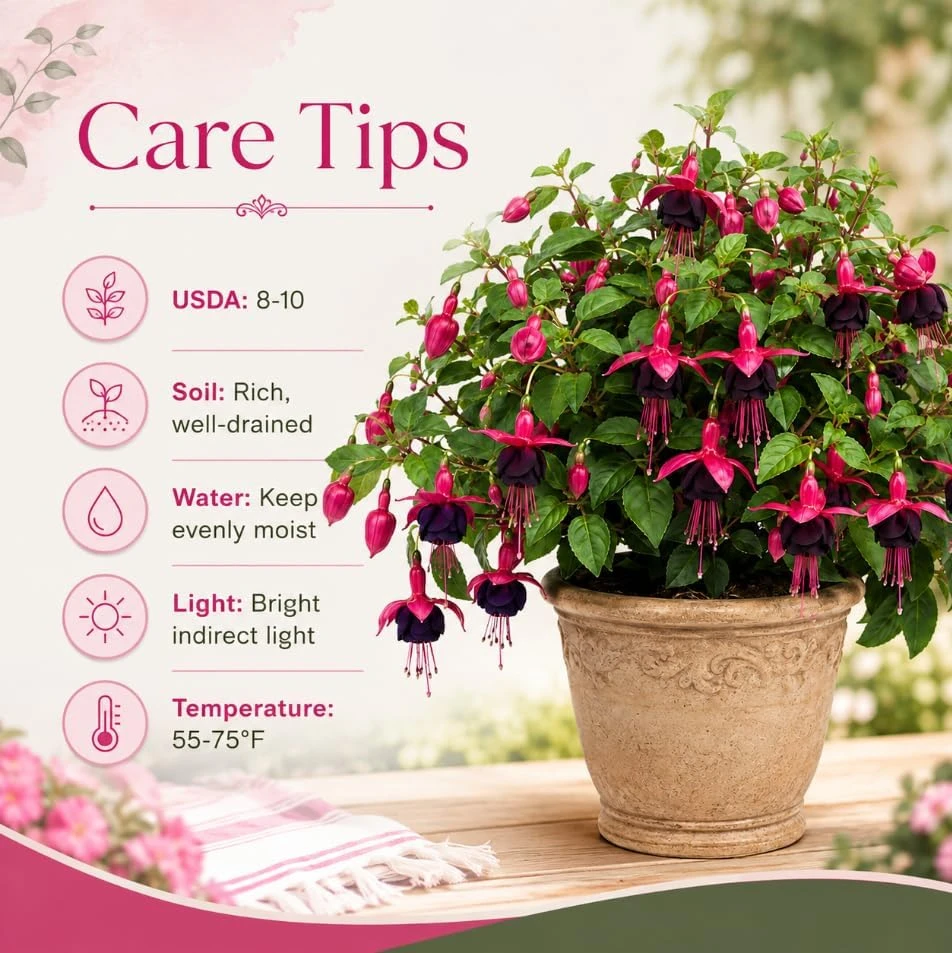
Caring for your fuchsia plant is straightforward, ensuring a season full of beautiful blooms. Understanding its specific needs for light, water, and soil will help it flourish. Fuchsias prefer a location with partial shade to bright indirect light. This means they should receive some morning sun but be protected from the harsh afternoon sun, which can scorch their delicate leaves and flowers. If growing indoors, place it near a window with filtered light. Temperatures between 55°F and 75°F are ideal, making it a great choice for many climates during its growing season. The USDA Zones for this plant are 8-11, indicating it can be perennial in these warmer regions, but often grown as an annual or overwintered indoors in cooler zones.
When it comes to watering, consistency is key for a healthy fuchsia plant. The soil should be kept consistently moist but never soggy. Overwatering can lead to root rot, while underwatering will cause wilting and stress. Check the soil moisture regularly, especially during hot weather and when the plant is actively blooming. Well-draining soil is crucial; a good quality potting mix enriched with organic matter works best. Fertilize every 2-4 weeks during the blooming season with a balanced liquid fertilizer to encourage continuous flowering. Pruning can be done to maintain shape and encourage bushier growth, and deadheading spent flowers will promote new blooms. Be mindful of common pests like whiteflies and spider mites, and treat them promptly with organic insecticidal soap if they appear. Understanding proper fuchsia care is essential for a thriving and vibrant display.
Size & Details
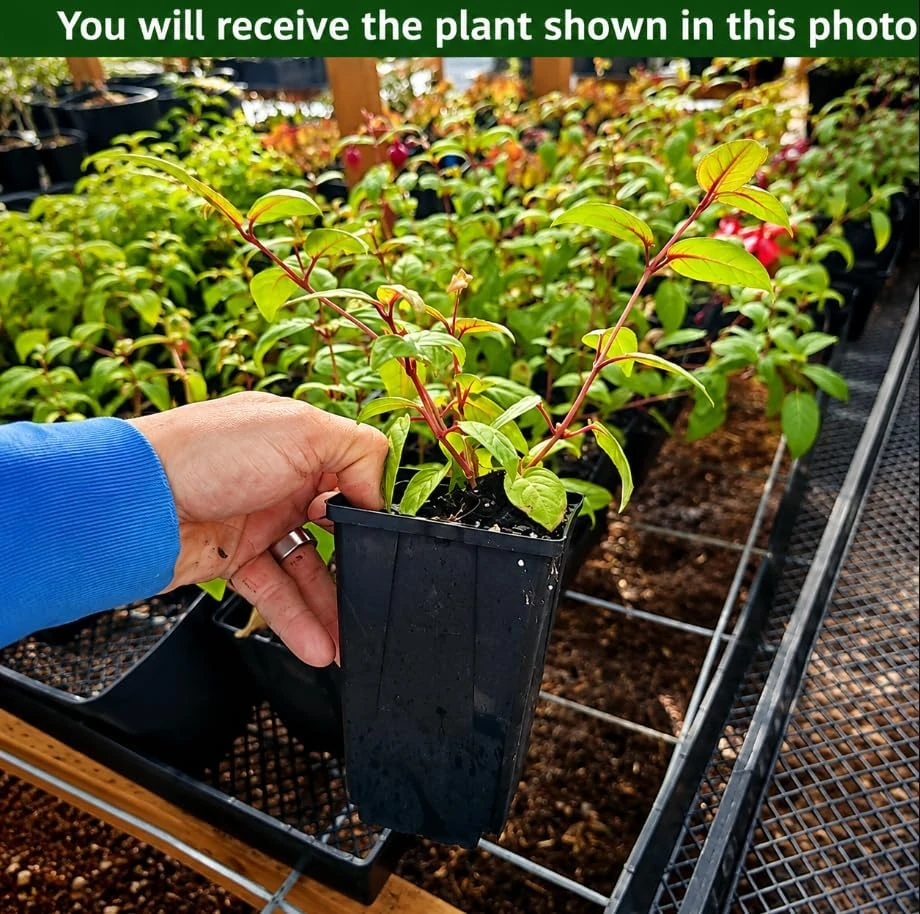
This fuchsia plant arrives as a healthy, established live plant, measuring approximately 4-6 inches in height from the base of the soil. It is securely rooted in a 5-inch nursery pot, providing ample space for initial growth and establishment. The plant has a moderate growth rate and, with optimal conditions, can develop into a lush, trailing specimen. The ‘Fuchsia Tree’ designation often refers to its potential to be trained into a standard form over time, though it naturally tends to a bushy, mounding, or cascading habit. Expect the fuchsia blooming season to begin in late spring and continue prolifically through the fall, offering months of vibrant color. The plant’s mature size will depend on its growing conditions and whether it’s grown in a container or in the ground, but typically it can spread 1-2 feet wide, with trailing varieties extending further. This plant is perfect for those looking to add an immediate splash of color and elegance to their garden or patio.
Frequently Asked Questions
- Q: How big does this fuchsia plant get? A: This fuchsia plant typically grows to about 1-2 feet tall and wide, especially when grown in containers. Its trailing habit can extend further, making it ideal for hanging baskets.
- Q: What size pot does it come in? A: The plant arrives established in a 5-inch nursery pot, providing a good base for continued growth. You can transplant it into a larger container or directly into your garden.
- Q: Is this an indoor or outdoor plant? A: While primarily an outdoor plant for shaded garden areas, it can be grown indoors in a bright location with indirect light and consistent humidity, especially in cooler climates.
- Q: How much sunlight does it need? A: Fuchsias thrive in partial shade to bright indirect light. They prefer morning sun and protection from intense afternoon sun, which can scorch their leaves.
- Q: Is this plant easy to care for? A: Yes, with consistent watering and proper light, this fuchsia plant is relatively easy to care for. It’s a rewarding choice for both novice and experienced gardeners.
- Q: What condition will it arrive in? A: Your fuchsia plant will arrive as a healthy, live plant, carefully packaged to ensure its safe journey. It will be rooted in its nursery pot with soil.
- Q: Is it shipped in soil? A: Yes, the plant is shipped securely in its 5-inch nursery pot with the appropriate soil, ready for you to place in its new home.
- Q: When is the best time for the fuchsia blooming season? A: The fuchsia blooming season typically runs from late spring through fall, providing a long period of vibrant color in your garden.
- Q: Will it survive winter in my zone? A: This fuchsia is hardy in USDA Zones 8-11, where it can be a perennial. In colder zones, it’s usually grown as an annual or brought indoors to overwinter.
- Q: What’s the minimum temperature it can tolerate? A: Fuchsias prefer temperatures between 55°F and 75°F. They are not frost-tolerant and should be protected from temperatures below freezing.
Be the first to review “Black-Pink Fuchsia Plant – Live Plant – 4-6 inch Tall – 5 Inch Pot”
Related products


Flower Plants


Flower Plants

You May Like

Hardneck vs. Softneck Garlic: Which Should You Grow?
Have you ever stood in front of a seed catalog in mid-September, staring at dozens [...]
Oct

When to Plant Music Garlic: Ultimate US Fall Guide
Have you ever spent your fall weekend placing carefully chosen garlic cloves into rich, dark [...]
1 Comment
Oct

5 Best Bulbs for Fall Planting: Brighten Your Garden This Spring
Are you dreaming of a garden full of vibrant colors in the spring? The key [...]
Aug

10 Houseplants That Will Thrive in Your Kitchen
Are you tired of your kitchen feeling dull and lifeless? Want to add a little [...]
1 Comment
Aug
Reviews
There are no reviews yet.