
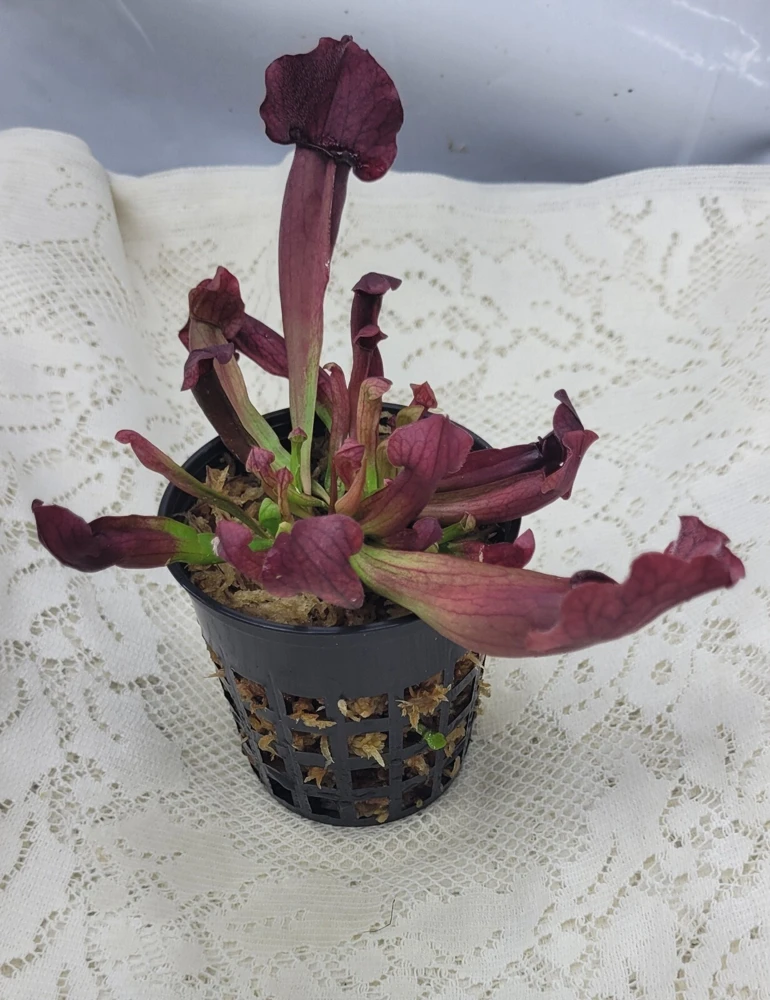
Sarracenia Catesbaei Pitcher Plant – Live Carnivorous Plant – 3.75 inch Pot – Indoor
Original price was: 76.99 $.51.99 $Current price is: 51.99 $.
Bring home a captivating Sarracenia Catesbaei pitcher plant, a unique American carnivorous plant. This live specimen comes in a 3.75-inch net pot, perfect for adding an exotic touch to your indoor garden. Known for its striking pitchers and effective insect trapping capabilities, it’s an intriguing addition for enthusiasts and beginners alike.
Estimated arrival
Oct 16
Oct 21 - Oct 23
Oct 23 - Oct 28
See our Shipping Policy.
Get in touch with us via email, and our team will review your concerns.
Our Alive & Thrive Guarantee covers issues with your plants within the first 30 days. Read our Refund & Returns Policy.
-
USDA Hardiness Zone
unknown -
Soil Type
Peat-based carnivorous plant mix -
Sunlight Exposure
Medium Sun -
Expected Planting Period
Year-round indoors
Overview
Introducing the remarkable Sarracenia Catesbaei pitcher plant, a captivating carnivorous species renowned for its distinctive, upright pitchers. This fascinating American native is a hybrid of Sarracenia flava and Sarracenia purpurea, combining the best traits of its parents into a visually stunning and highly effective insect trap. Our live Sarracenia Catesbaei pitcher plant arrives healthy and ready to thrive in its 3.75-inch net pot, making it an ideal choice for both seasoned collectors and those new to the world of carnivorous plants. Its unique appearance and natural pest control abilities make it a fantastic conversation starter and a valuable addition to any indoor plant collection. The vibrant colors and intricate patterns of its pitchers are truly a sight to behold, attracting and digesting insects to supplement its nutrient intake.
The Sarracenia Catesbaei pitcher plant is a wonderful specimen that showcases the incredible diversity of the plant kingdom. It’s a robust and relatively easy-to-care-for carnivorous plant, perfect for creating a miniature bog garden indoors or as a standalone feature. Its ability to thrive in humid subtropical climates makes it well-suited for many indoor environments, provided its specific care needs are met. This plant is not only beautiful but also serves a practical purpose, making it a truly engaging botanical companion.
Key Benefits
The Sarracenia Catesbaei pitcher plant offers a multitude of benefits, from its unique aesthetic to its natural pest control. It’s an engaging plant that provides educational value and a touch of the exotic to your home.
- Natural Pest Control: The primary benefit of the Sarracenia Catesbaei pitcher plant is its remarkable ability to trap and digest insects. Its pitcher-shaped leaves act as natural lures, helping to reduce common household pests like flies and gnats without the need for chemicals.
- Unique Ornamental Appeal: With its vibrant colors and intricate patterns, the pitchers of this plant are incredibly decorative. It adds an exotic and visually striking element to any indoor plant display, drawing attention and sparking conversation.
- Educational Value: Growing a carnivorous plant like the Sarracenia Catesbaei pitcher plant offers a unique opportunity to learn about plant biology, adaptation, and ecology. It’s a fantastic educational tool for children and adults alike.
- Low Maintenance for Carnivorous Plants: Compared to some other carnivorous species, the American pitcher plant care requirements are relatively straightforward, making it an excellent choice for beginners looking to venture into carnivorous plant cultivation.
- Pet and Child Safe: This plant is considered safe for both children and pets, offering peace of mind while enjoying its unique beauty and functionality.
- Adaptable to Indoor Environments: While naturally found in bogs, this Sarracenia hybrid can thrive indoors with proper humidity and lighting, bringing a piece of the wild into your home.
- Conversation Starter: Its unusual nature and striking appearance make it an instant conversation piece, perfect for offices, living rooms, or any space where you want to add a touch of botanical intrigue.
Plant Care & Growing Tips
Proper American pitcher plant care is crucial for the health and vibrancy of your Sarracenia Catesbaei pitcher plant. These plants thrive in conditions that mimic their natural bog environment. The most critical aspects are water quality, sunlight, and appropriate soil. Always use distilled water, rainwater, or reverse osmosis water for watering, as tap water often contains minerals that can harm the plant over time. Keep the soil consistently moist, never allowing it to dry out completely. A common method is to place the potted plant in a tray of standing water, ensuring the water level is about 1 inch high at all times. This provides constant moisture and helps maintain humidity.
For sunlight, Sarracenia Catesbaei pitcher plant requires bright light. A medium sun exposure is generally recommended, which means at least 4-6 hours of direct sunlight daily, or very bright indirect light if grown indoors. An east-facing window can be ideal for indoor cultivation, providing morning sun without excessive harshness. Without adequate light, the pitchers may not develop their vibrant colors or grow to their full potential. The soil type should be a peat-based mix, specifically formulated for carnivorous plants. A good mix typically consists of sphagnum peat moss mixed with perlite or horticultural sand. Avoid standard potting soil, which contains nutrients and fertilizers that are detrimental to Sarracenia.
Temperature and humidity are also important. These plants prefer a humid subtropical climate, so maintaining decent humidity indoors is beneficial. While they can tolerate a range of temperatures, they generally prefer warmer conditions during their active growing season and a cooler, dormant period in winter. Fertilization is not necessary and can be harmful; the plant gets its nutrients from the insects it catches. If your plant is not catching enough insects, you can occasionally drop a small, dead insect into a pitcher. Understanding how to grow Sarracenia successfully involves paying close attention to these specific environmental needs.
Size & Details
This Sarracenia Catesbaei pitcher plant is a live specimen, arriving ready to thrive in its 3.75-inch net pot. The plant’s form is a well-established plant, ensuring a strong start in its new home. While individual plant sizes may vary slightly upon arrival, they are typically robust and healthy, showcasing developing pitchers. These plants are deciduous, meaning they may experience a period of dormancy where some foliage dies back, only to return with new growth. Expect the plant to grow steadily, with pitchers reaching several inches in height, adding dramatic vertical interest to your space. With proper care, the plant will mature and produce an abundance of its characteristic pitchers, enhancing its ornamental value.
The Sarracenia Catesbaei pitcher plant is potted and ready for display or transplanting into a larger carnivorous plant bog setup. It prefers acidic soil with a pH suitable for peat. Watering should be heavy, ensuring the root system remains consistently moist. It is a robust species that, once established, will continue to grow and develop its impressive traps, providing a continuous display of natural beauty and insect control.
Frequently Asked Questions
- Q: How big does this Sarracenia Catesbaei pitcher plant get? A: While this plant arrives in a 3.75-inch net pot, mature Sarracenia Catesbaei pitcher plant specimens can grow pitchers that reach several inches in height, typically ranging from 6 to 18 inches depending on conditions and maturity.
- Q: What size pot does it come in? A: This live Sarracenia Catesbaei pitcher plant is shipped in a 3.75-inch net pot, which is suitable for its initial stage. You may choose to repot it into a larger container or a bog garden setup as it grows.
- Q: Is this an indoor or outdoor plant? A: While Sarracenia species are typically outdoor bog plants in their native habitats, the Sarracenia Catesbaei pitcher plant can be successfully grown indoors, especially in regions with unsuitable outdoor climates. It thrives indoors with proper light and humidity.
- Q: How much sunlight does it need? A: This plant requires medium sun exposure, meaning at least 4-6 hours of direct sunlight or very bright indirect light daily. An east-facing window is often ideal for indoor cultivation to ensure optimal pitcher development and coloration.
- Q: Is this plant easy to care for? A: Compared to some other carnivorous plants, the Sarracenia Catesbaei pitcher plant is considered a good choice for beginners due to its relatively straightforward American pitcher plant care requirements, primarily focusing on water quality and sunlight.
- Q: What condition will it arrive in? A: Your Sarracenia Catesbaei pitcher plant will arrive as a live, healthy specimen, potted in its 3.75-inch net pot, carefully packaged to ensure its safe journey to your home.
- Q: Is it pet-safe? A: Yes, the Sarracenia Catesbaei pitcher plant is generally considered child-safe and pet-safe, making it a worry-free addition to homes with curious pets or young children.
- Q: Will it survive winter in my zone? A: Sarracenia species require a winter dormancy period. If grown outdoors, its hardiness depends on your USDA zone. If grown indoors, you’ll need to provide cooler temperatures during winter months to simulate dormancy.
- Q: What is the best soil for this carnivorous plant? A: The best soil for Sarracenia Catesbaei indoor cultivation is a nutrient-poor, acidic mix, typically composed of sphagnum peat moss and perlite or horticultural sand. Avoid regular potting soil.
- Q: How long until it develops pitchers? A: Your plant should arrive with developing pitchers. With consistent care and adequate sunlight, it will continue to produce new pitchers throughout its active growing season.
Be the first to review “Sarracenia Catesbaei Pitcher Plant – Live Carnivorous Plant – 3.75 inch Pot – Indoor”
Related products


HousePlants
Purple African Violet Plant Live, Perennial Houseplant, 4 Inch Pot, Indoor Garden, Vibrant Violets


You May Like

Hardneck vs. Softneck Garlic: Which Should You Grow?
Have you ever stood in front of a seed catalog in mid-September, staring at dozens [...]
Oct

When to Plant Music Garlic: Ultimate US Fall Guide
Have you ever spent your fall weekend placing carefully chosen garlic cloves into rich, dark [...]
1 Comment
Oct

5 Best Bulbs for Fall Planting: Brighten Your Garden This Spring
Are you dreaming of a garden full of vibrant colors in the spring? The key [...]
Aug

10 Houseplants That Will Thrive in Your Kitchen
Are you tired of your kitchen feeling dull and lifeless? Want to add a little [...]
1 Comment
Aug
Reviews
There are no reviews yet.