
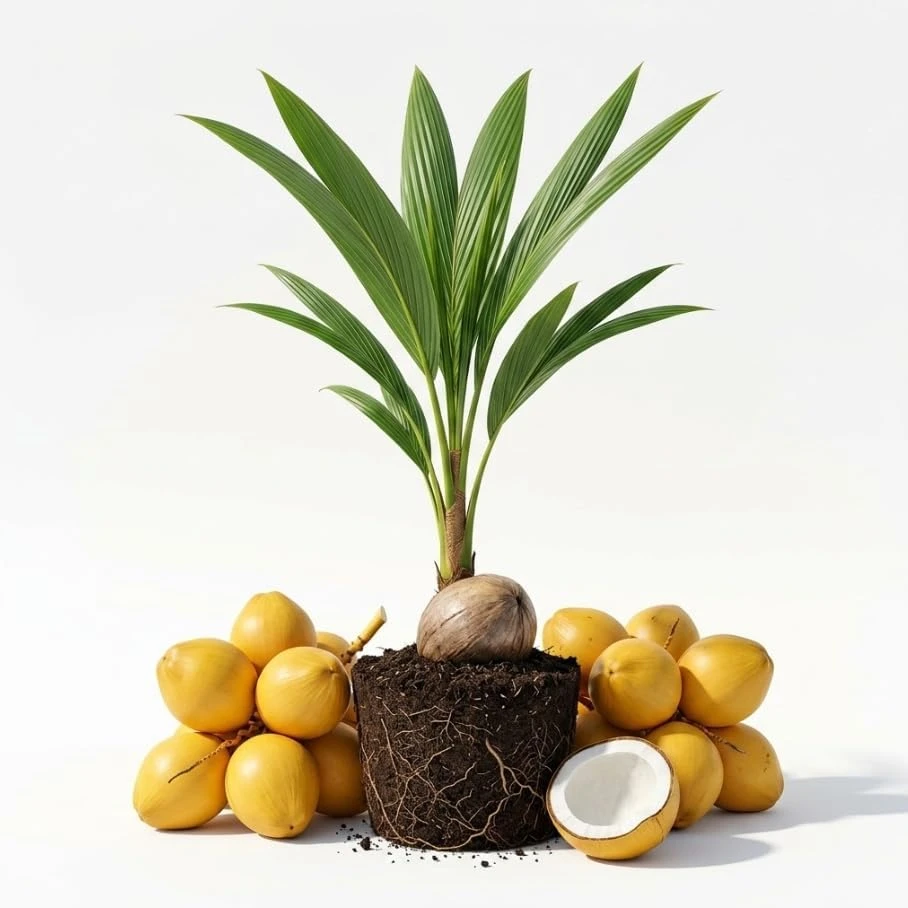
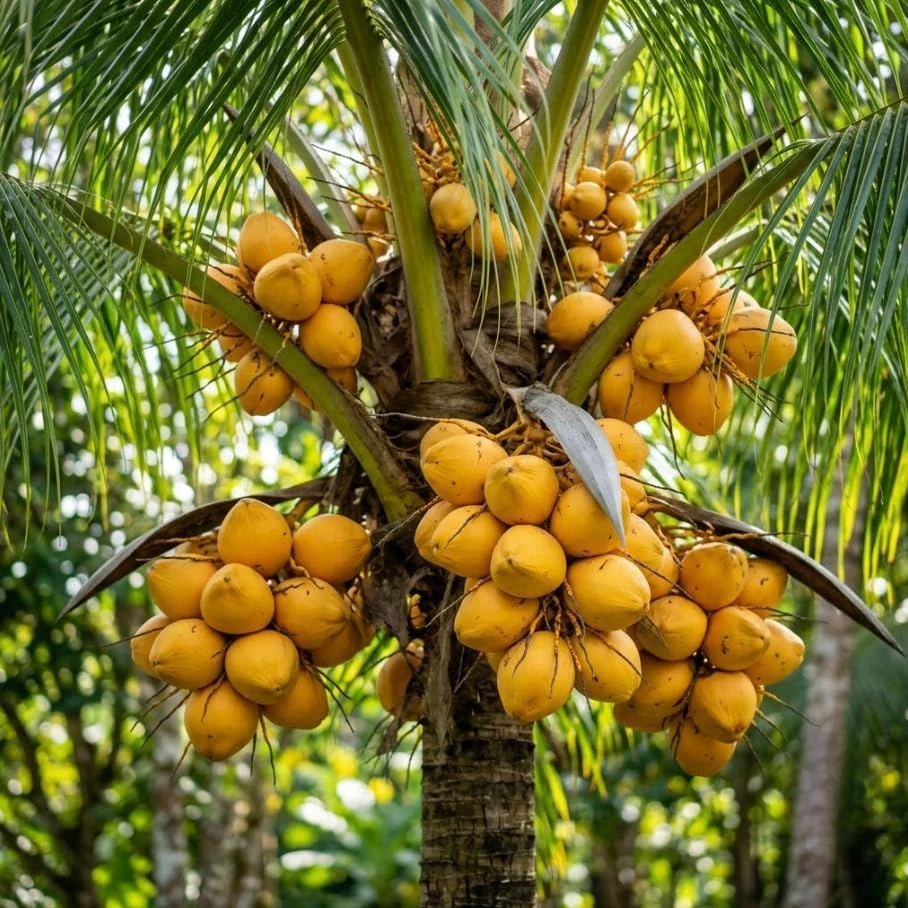
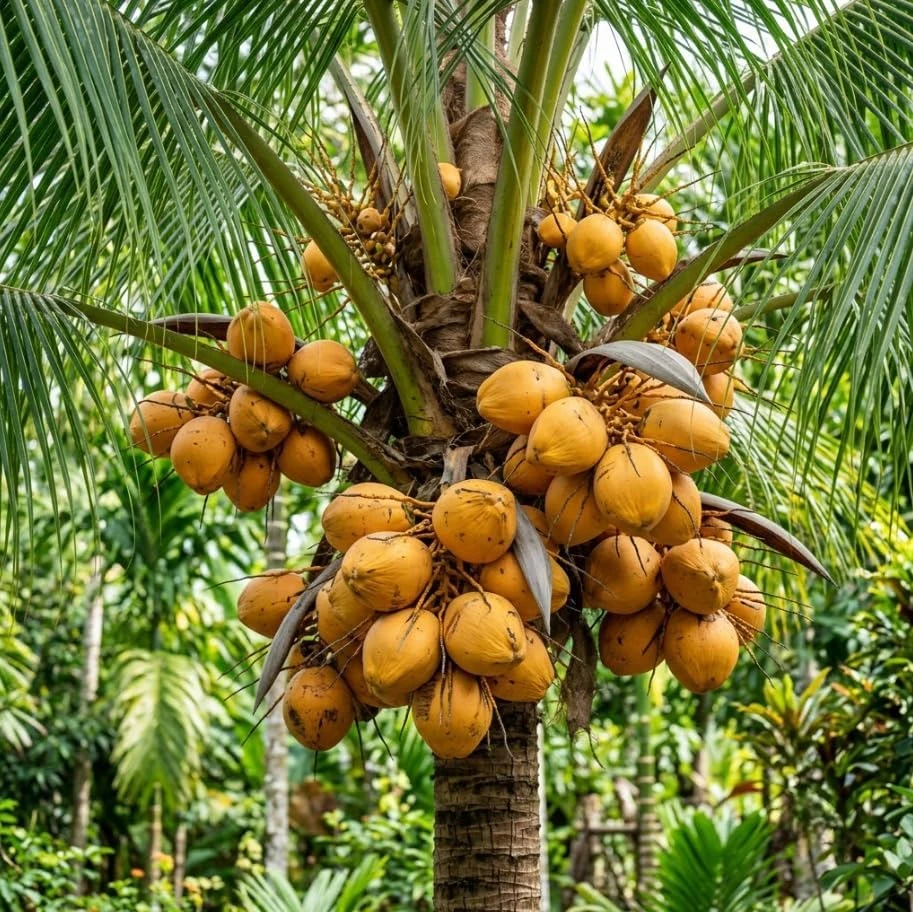
Yellow Malayan Dwarf Coconut Tree Live Plant, 6-8 Inch Tall, Tropical Fruit
Original price was: 109.98 $.64.99 $Current price is: 64.99 $.
Cultivate your own tropical oasis with a yellow malayan dwarf coconut tree. This 6-8 inch tall, freshly sprouted live plant is ideal for creating a lush, exotic atmosphere and eventually producing delicious coconuts. Perfect for warm, sunny environments.
Estimated arrival
Oct 16
Oct 21 - Oct 23
Oct 23 - Oct 28
See our Shipping Policy.
Get in touch with us via email, and our team will review your concerns.
Our Alive & Thrive Guarantee covers issues with your plants within the first 30 days. Read our Refund & Returns Policy.
-
USDA Hardiness Zone
USDA zones 10-11 -
Soil Type
Well-draining sandy loam -
Sunlight Exposure
Full sun (6-8+ hours direct) -
Expected Planting Period
Year-round in tropical climates; spring to early summer elsewhere
Overview
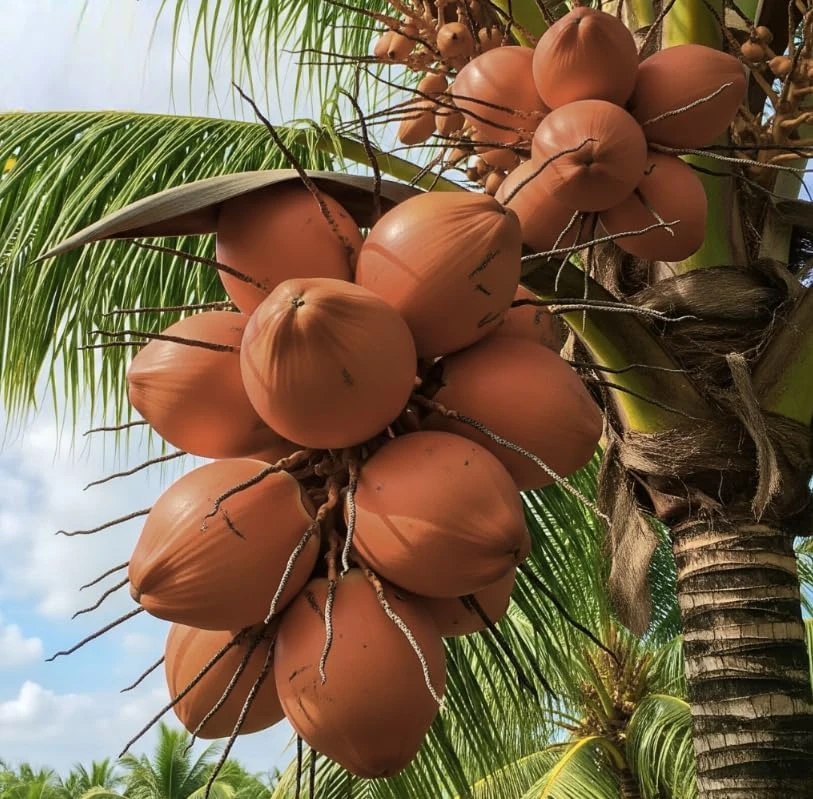
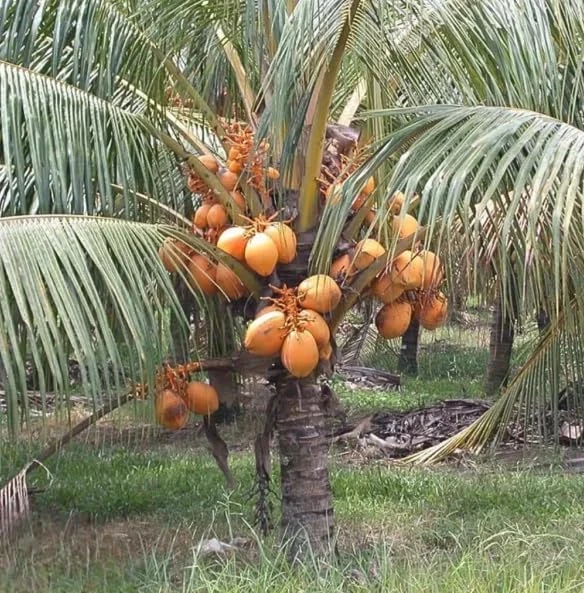
Bring the tropics to your home or garden with this vibrant yellow malayan dwarf coconut tree. Each live plant arrives freshly sprouted and stands an impressive 6-8 inches tall, providing a significant head start on growing your very own coconut-producing tree. The Yellow Malayan variety is highly prized for its beautiful golden-yellow coconuts and its relatively compact size, making it a popular choice for both home gardeners and commercial growers. This particular dwarf coconut plant is a fantastic addition for anyone looking to add an exotic touch to their landscape or cultivate their own fresh, delicious coconuts. Its vigorous growth and robust nature ensure a rewarding gardening experience, transforming your space into a tropical paradise. Enjoy the journey of nurturing this magnificent tree from a young sprout to a mature, fruit-bearing specimen.
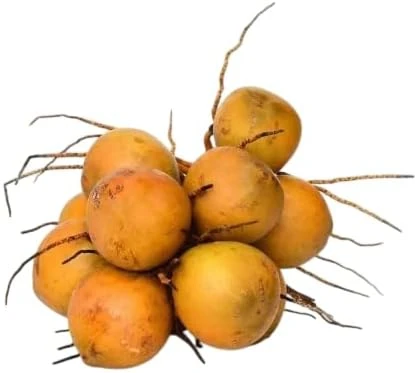
Known for its robust nature and reliable fruit production, the yellow malayan dwarf coconut tree is a true gem among tropical plants. This live specimen is carefully cultivated to ensure a strong, healthy start in your garden. Whether you’re an experienced horticulturist or a budding plant enthusiast, you’ll appreciate the ease of care and the stunning visual appeal this tree offers. Its distinctive yellow husks mature into sweet, refreshing coconuts, providing a taste of the tropics right in your backyard. Embrace the beauty and bounty of this exceptional fruit tree.
Key Benefits
Growing a yellow malayan dwarf coconut tree offers numerous advantages, from its aesthetic appeal to the potential for fresh, homegrown fruit. This tropical addition will enhance your environment in several ways:
- Exotic Aesthetic Appeal: Adds a stunning, tropical look to any garden, patio, or large indoor space, instantly creating a resort-like ambiance with its graceful fronds and potential for colorful fruit.
- Homegrown Fresh Coconuts: Enjoy the unique satisfaction of harvesting your own fresh, sweet coconuts, perfect for drinking, cooking, or making refreshing desserts right from your own dwarf coconut plant care efforts.
- Compact Growth Habit: As a dwarf variety, this tree is ideal for smaller gardens or container growing, allowing you to enjoy a coconut tree even without vast amounts of space, unlike larger, more unruly varieties.
- Relatively Low Maintenance: Once established, these trees are quite hardy and require less intensive care compared to some other fruit trees, thriving with consistent warmth and sunlight.
- Air Purification: Like many large-leaved plants, coconut trees contribute to improving air quality by absorbing carbon dioxide and releasing oxygen, making your environment healthier.
- Unique Gardening Experience: Provides a fascinating and rewarding gardening project, watching a small sprouted coconut tree grow into a fruit-bearing palm.
- Drought Tolerance: While young plants need consistent moisture, mature coconut trees exhibit good drought tolerance once their root systems are well-established, making them resilient in suitable climates.
Plant Care & Growing Tips
Proper care is essential for a thriving yellow malayan dwarf coconut tree. These tropical plants flourish in specific conditions that mimic their natural habitat. Ensure your plant receives abundant sunlight; a minimum of 6-8 hours of direct sun per day is crucial for healthy growth and fruit production. In cooler climates, consider a greenhouse or bringing the plant indoors during colder months. They thrive in USDA zones 10-11, where temperatures rarely drop below 40°F (4°C). For those in colder regions, container growing allows for easy relocation indoors when temperatures fall.
When it comes to watering, consistency is key, especially for a young sprouted coconut tree. Keep the soil consistently moist but never waterlogged. Good drainage is paramount to prevent root rot. A well-draining soil mix, ideally sandy loam, is recommended. Fertilize regularly during the growing season (spring and summer) with a balanced fertilizer formulated for palm trees, following the product’s instructions. Protect your tree from strong winds, especially when young, as strong gusts can damage the fronds. Regular inspection for pests and diseases will help maintain the health of your malayan coconut tree.
For successful growth, provide a large container if growing indoors, allowing ample space for the root system to develop. Repotting should be done as the plant grows, moving to progressively larger pots. Outdoor planting should be in a location with full sun and protection from cold winds. The ideal soil pH for coconut trees is slightly acidic to neutral (pH 5.5-7.0). Ensure adequate spacing if planting multiple trees, as even dwarf varieties need room to spread their fronds. With diligent care, your tree will flourish and potentially yield a bountiful supply of your own tropical fruit tree.
Size & Details
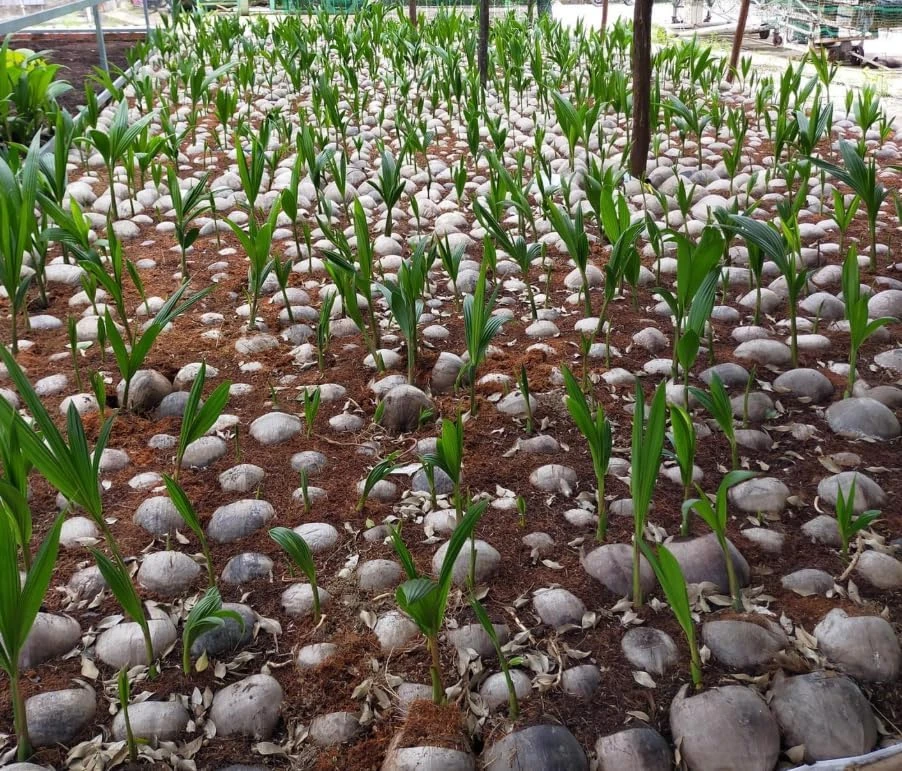
This offering is for a single yellow malayan dwarf coconut tree live plant. Each plant is freshly sprouted and stands approximately 6-8 inches tall from the base of the sprout to the tip of its fronds. It will arrive ready for transplanting into a larger container or directly into the ground, depending on your climate and growing preferences. The growth rate of a dwarf coconut tree can vary, but with optimal conditions, it typically grows several feet per year. Expect fruit production to begin in approximately 5-7 years, although this can vary based on care and environmental factors. The mature height of a dwarf coconut tree typically ranges from 20-30 feet, significantly shorter than standard varieties, making it more manageable for residential landscapes.
The plant is shipped with its root system intact, often in a small amount of soil or a protective wrapping to ensure its health during transit. While the initial size is compact, these trees have a moderate growth rate, quickly developing into impressive palms. When selecting a container, choose one that is at least 15-20 gallons to allow for initial growth, eventually moving to a larger size as the tree matures. With proper dwarf coconut plant care, you can expect a long-lived and productive tree.
Frequently Asked Questions
- Q: How big does this plant get? A: This yellow malayan dwarf coconut tree arrives at 6-8 inches tall. When mature, dwarf coconut trees typically reach a height of 20-30 feet, making them more manageable than standard varieties.
- Q: Is this an indoor or outdoor plant? A: This plant thrives outdoors in tropical and subtropical climates (USDA Zones 10-11). In colder regions, it can be grown indoors in a large container near a sunny window or in a greenhouse.
- Q: How much sunlight does it need? A: A sprouted coconut tree requires abundant sunlight, ideally 6-8 hours of direct sun per day. The more sun it gets, the healthier it will be and the more likely it is to produce fruit.
- Q: Is this plant easy to care for? A: While it requires specific tropical conditions, once established in the right environment, the malayan coconut tree is relatively low maintenance. Consistent watering and adequate sunlight are the main requirements.
- Q: What condition will it arrive in? A: Your plant will arrive freshly sprouted and carefully packaged to ensure its health during transit. It will be ready for immediate transplanting into its permanent home.
- Q: Can I get fresh coconuts from this tree? A: Yes, with proper care and suitable growing conditions, this tropical fruit tree will eventually produce delicious yellow malayan coconuts, typically starting within 5-7 years.
- Q: What’s the minimum temperature this plant can tolerate? A: This tropical plant prefers temperatures above 60°F (15°C) and can be damaged by temperatures below 40°F (4°C). Protection from cold is essential in non-tropical zones.
- Q: What kind of soil is best for a dwarf coconut tree? A: Well-draining, sandy loam soil with a slightly acidic to neutral pH (5.5-7.0) is ideal. Good drainage is crucial to prevent root rot.
- Q: When is the best time to plant this tree? A: In tropical climates, it can be planted year-round. In other suitable climates, planting in spring or early summer allows the plant to establish itself before cooler weather.
- Q: How often should I water my young coconut tree? A: Keep the soil consistently moist but not waterlogged. Water thoroughly when the top inch of soil feels dry to the touch, adjusting frequency based on temperature and humidity.
Be the first to review “Yellow Malayan Dwarf Coconut Tree Live Plant, 6-8 Inch Tall, Tropical Fruit”
Related products


You May Like

Hardneck vs. Softneck Garlic: Which Should You Grow?
Have you ever stood in front of a seed catalog in mid-September, staring at dozens [...]
Oct

When to Plant Music Garlic: Ultimate US Fall Guide
Have you ever spent your fall weekend placing carefully chosen garlic cloves into rich, dark [...]
1 Comment
Oct

5 Best Bulbs for Fall Planting: Brighten Your Garden This Spring
Are you dreaming of a garden full of vibrant colors in the spring? The key [...]
Aug

10 Houseplants That Will Thrive in Your Kitchen
Are you tired of your kitchen feeling dull and lifeless? Want to add a little [...]
1 Comment
Aug
Reviews
There are no reviews yet.