
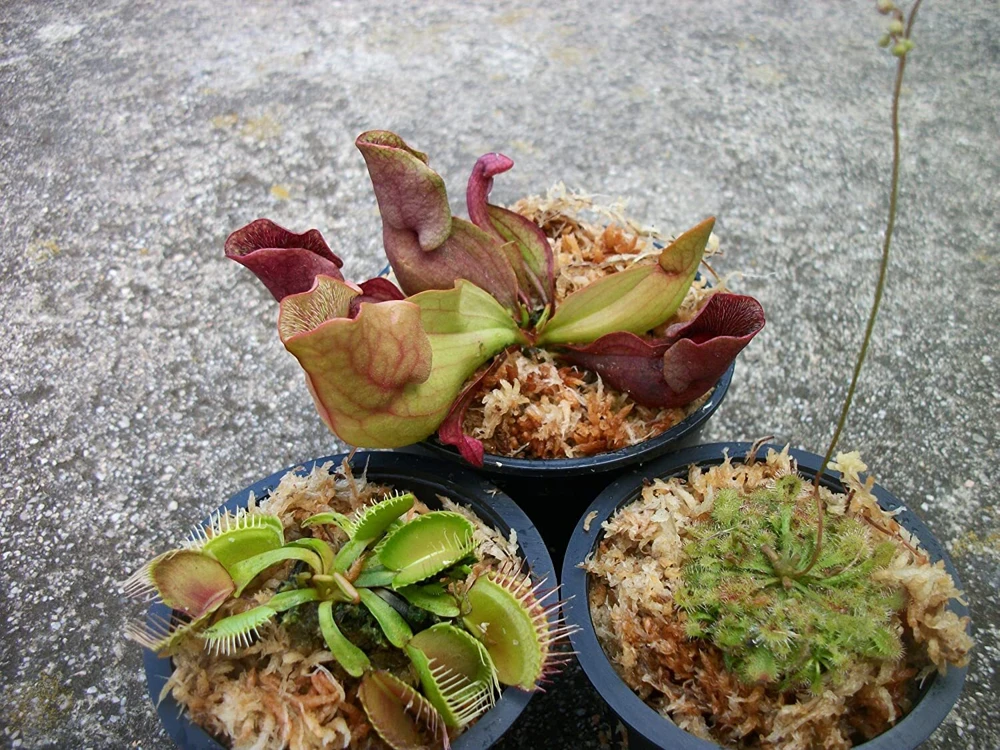
Carnivorous Plant Set – Live Venus Flytrap, Pitcher Plant, Sundew – 3 Pack
Original price was: 132.99 $.107.99 $Current price is: 107.99 $.
Bring home a unique collection of insect-eating wonders with this carnivorous plant set. This live plant trio features a stunning Venus Flytrap, an elegant Pitcher Plant, and a shimmering Sundew, offering natural pest control and captivating beauty. Ideal for both beginners and enthusiasts seeking a fascinating botanical display.
Estimated arrival
Oct 16
Oct 21 - Oct 23
Oct 23 - Oct 28
See our Shipping Policy.
Get in touch with us via email, and our team will review your concerns.
Our Alive & Thrive Guarantee covers issues with your plants within the first 30 days. Read our Refund & Returns Policy.
-
USDA Hardiness Zone
9 (20 to 30 °F) -
Soil Type
Acidic peat moss and perlite/sand mix -
Sunlight Exposure
Full sun to bright indirect light -
Expected Planting Period
Year-round indoors, spring/summer outdoors
Overview
Explore the intriguing world of botanical marvels with our premium carnivorous plant set. This exceptional collection features three distinct and captivating species: the iconic Venus Flytrap (Dionaea muscipula), a striking Pitcher Plant (typically Sarracenia or Nepenthes, known for their unique pitcher-shaped leaves), and a dazzling Sundew (Drosera, famous for its sticky, dew-like tentacles). Each live plant in this set is carefully selected to provide a diverse and engaging experience for plant enthusiasts. Perfect for those looking to add an exotic touch to their home or garden, these plants are not only beautiful but also serve as natural insect control. Our healthy, vibrant specimens are ready to thrive in their new environment, bringing a slice of the wild into your living space. This set is an excellent choice for anyone interested in the unique adaptations of carnivorous plants.
These fascinating plants have evolved remarkable mechanisms to trap and digest insects, making them a truly unique addition to any plant collection. The Venus Flytrap, with its famous snapping traps, the Pitcher Plant, with its deep, alluring pitchers, and the Sundew, with its glistening, sticky leaves, each offer a distinct method of predation. This trio provides an educational and aesthetically pleasing display, showcasing the incredible diversity within the carnivorous plant kingdom. They are particularly well-suited for terrariums or bog gardens, where their specific environmental needs can be met, ensuring a long and healthy life.
Key Benefits
Our carnivorous plant set offers a range of benefits beyond their unique appearance, making them a truly rewarding choice for plant lovers. Each plant contributes to a healthier environment and provides endless fascination.
- Natural Pest Control: These plants are highly effective at trapping and consuming common household pests like flies, gnats, and mosquitoes, reducing the need for chemical insecticides. They offer an eco-friendly solution to insect problems.
- Unique Aesthetic Appeal: With their striking forms and vibrant colors, the Venus Flytrap, Pitcher Plant, and Sundew add an exotic and captivating element to any indoor or outdoor space. They are instant conversation starters.
- Educational Value: Observe the incredible adaptations of these plants firsthand. Learning about their trapping mechanisms and digestive processes is an engaging experience for all ages, fostering a deeper appreciation for nature.
- Low Maintenance (with proper care): While they have specific needs, once their environmental requirements are understood, these plants are relatively easy to care for. Our guide on venus flytrap care and pitcher plant growing will help you succeed.
- Stress Reduction: Studies suggest that caring for plants can reduce stress and improve well-being. The unique nature of carnivorous plants adds an extra layer of engagement and enjoyment to your plant hobby.
- Boosts Humidity: Growing these plants, especially in a terrarium, naturally increases humidity in their immediate environment, which can benefit other tropical plants nearby.
- Perfect for Gifting: This unique set makes an unforgettable gift for gardeners, science enthusiasts, or anyone who appreciates unusual and beautiful living things. It’s a thoughtful present that keeps on giving.
Plant Care & Growing Tips
Caring for your carnivorous plant set requires attention to specific environmental factors to ensure their health and vitality. Understanding these needs is key to successful cultivation. For the Venus Flytrap, it thrives in full sun, needing at least 4-6 hours of direct sunlight daily. Pitcher Plants (Sarracenia types) also prefer full sun, while Nepenthes Pitcher Plants prefer bright, indirect light. Sundews generally need bright light, often full sun for the strongest coloration and dew production. If growing indoors, a bright south-facing window or grow lights are essential to provide sufficient light intensity. Inadequate light can lead to weak growth and diminished trapping ability.
Watering is crucial for all these carnivorous plants. They require consistently moist soil, but never tap water. Always use distilled water, rainwater, or reverse osmosis water, as minerals in tap water can be toxic to their roots. Water from the bottom by placing pots in a tray of water, allowing the plants to wick up moisture. The soil should remain damp but not waterlogged. The ideal soil mix is a combination of peat moss and perlite or horticultural sand, ensuring good drainage while retaining moisture. Avoid standard potting soil, as it contains nutrients and minerals that are harmful to carnivorous plants. Understanding proper watering is critical for healthy pitcher plant growing.
These plants generally prefer a temperate to tropical climate, with most Venus Flytraps and Sarracenia Pitcher Plants requiring a winter dormancy period at cooler temperatures (around 35-50°F or 2-10°C). Nepenthes Pitcher Plants and many Sundews do not require dormancy and prefer warmer temperatures year-round. The USDA Hardiness Zone for the Venus Flytrap is typically 9 (20 to 30 °F), but they can be grown in colder zones if protected. Fertilization is generally not needed; these plants get their nutrients from insects. If you notice signs of nutrient deficiency, a very diluted carnivorous plant-specific fertilizer can be applied, but sparingly. For those new to these plants, learning about carnivorous plant beginner tips will be very helpful.
Size & Details
This carnivorous plant set includes three individual live plants: one Venus Flytrap, one Pitcher Plant, and one Sundew. Each plant typically arrives in a 2-3 inch nursery pot, providing a robust start for your collection. The exact species of Pitcher Plant and Sundew may vary depending on availability, but will always be a healthy, vibrant specimen suitable for a beginner. The Venus Flytrap (Dionaea muscipula) generally reaches a mature size of 3-5 inches in diameter, while Pitcher Plants can vary significantly, from compact varieties of 6-12 inches tall to larger ones growing several feet. Sundews typically form rosettes 1-4 inches across. These plants are shipped carefully packaged to ensure they arrive in excellent condition, ready for immediate display or repotting into a suitable bog garden or terrarium. Expect steady growth with proper care, with many varieties showing noticeable development within a few weeks to months.
The plants are grown in a peat-based medium, ideal for their acidic soil preference. They are deciduous, meaning the foliage may die back during a dormancy period for some species, particularly the Venus Flytrap and temperate Pitcher Plants. The plants are well-rooted and established, making them resilient to transplant shock. This set provides a fantastic foundation for starting or expanding your collection of exotic insectivorous flora. For those specifically looking for a sundew plant for sale, this set offers a great opportunity to acquire one along with two other fascinating specimens.
Frequently Asked Questions
- Q: How big does this carnivorous plant set get? A: The Venus Flytrap typically grows 3-5 inches in diameter. The Pitcher Plant’s size varies by species, but often ranges from 6 inches to over a foot tall. Sundews usually form rosettes 1-4 inches across. Individual plant growth depends on care and environment.
- Q: Is this an indoor or outdoor plant? How much sunlight does it need? A: This carnivorous plant set can thrive both indoors and outdoors, depending on your climate and specific species. Most require at least 4-6 hours of direct sunlight daily. Indoors, a bright south-facing window or supplemental grow lights are recommended. Outdoors, they do well in full sun.
- Q: Is this plant easy to care for? Is it good for beginners? A: Yes, with the right information, these plants are suitable for beginners. The key is understanding their specific needs for water (distilled/rainwater only), soil (peat/perlite mix), and light. Our guide on carnivorous plant beginner care provides essential tips.
- Q: What condition will it arrive in? Is it shipped in soil? A: Your plants will arrive as healthy, live specimens, carefully packaged to minimize stress during transit. They are typically shipped in their nursery pots with appropriate soil (peat moss and perlite) to ensure they are ready to thrive upon arrival.
- Q: What kind of water should I use for my carnivorous plants? A: It is crucial to use only distilled water, rainwater, or reverse osmosis water. Tap water, bottled water, or filtered water often contain minerals and chemicals that are harmful and can slowly kill carnivorous plants.
- Q: How often should I water my Venus Flytrap? A: For optimal venus flytrap care, keep the soil consistently moist. The best method is often to place the pot in a tray of about an inch of distilled water, allowing the plant to absorb water from the bottom. Do not let the soil dry out completely.
- Q: Do I need to feed my carnivorous plants insects? A: While they are insectivorous, if grown outdoors or in an area with insects, they will catch their own food. If kept indoors and insect-free, you can occasionally feed them small, live insects, but it’s not strictly necessary for their survival if they receive adequate light.
- Q: Will these plants survive winter in my zone? What’s the minimum temperature? A: The Venus Flytrap and temperate Pitcher Plants often require a dormancy period with cooler temperatures (around 35-50°F or 2-10°C). Many Sundews and tropical Pitcher Plants prefer warmer temperatures year-round. The Venus Flytrap is hardy in USDA zones 9-11.
- Q: Can I use regular potting soil for my carnivorous plants? A: No, absolutely not. Regular potting soil contains nutrients and minerals that are toxic to carnivorous plants. They require a nutrient-poor, acidic medium like a mix of peat moss and perlite or horticultural sand.
- Q: I’m looking for a sundew plant for sale specifically. Does this set include a healthy one? A: Yes, this set includes a vibrant and healthy Sundew plant, along with a Venus Flytrap and a Pitcher Plant. It’s a great way to start your collection with multiple fascinating species.
Be the first to review “Carnivorous Plant Set – Live Venus Flytrap, Pitcher Plant, Sundew – 3 Pack”
Related products

HousePlants
Plectranthus Swedish Ivy Plant Live Purple Houseplant 2-Pack Starter Plants for Indoor Gardens


You May Like

Hardneck vs. Softneck Garlic: Which Should You Grow?
Have you ever stood in front of a seed catalog in mid-September, staring at dozens [...]
Oct

When to Plant Music Garlic: Ultimate US Fall Guide
Have you ever spent your fall weekend placing carefully chosen garlic cloves into rich, dark [...]
1 Comment
Oct

5 Best Bulbs for Fall Planting: Brighten Your Garden This Spring
Are you dreaming of a garden full of vibrant colors in the spring? The key [...]
Aug

10 Houseplants That Will Thrive in Your Kitchen
Are you tired of your kitchen feeling dull and lifeless? Want to add a little [...]
1 Comment
Aug
Reviews
There are no reviews yet.