
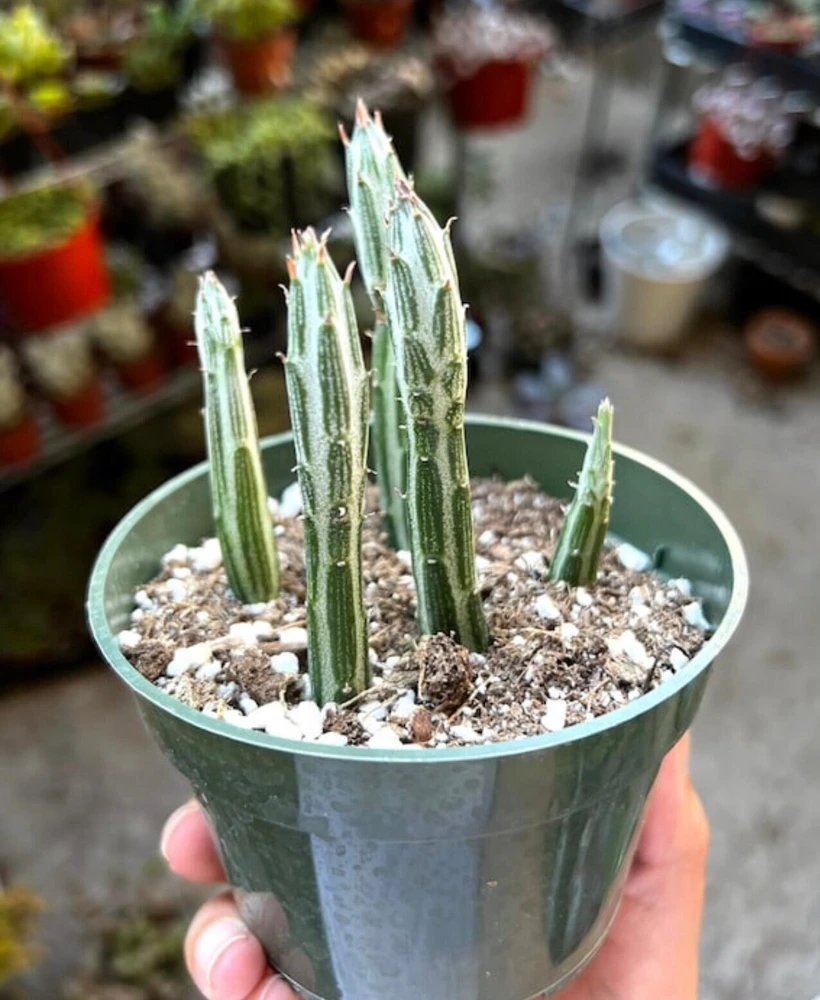
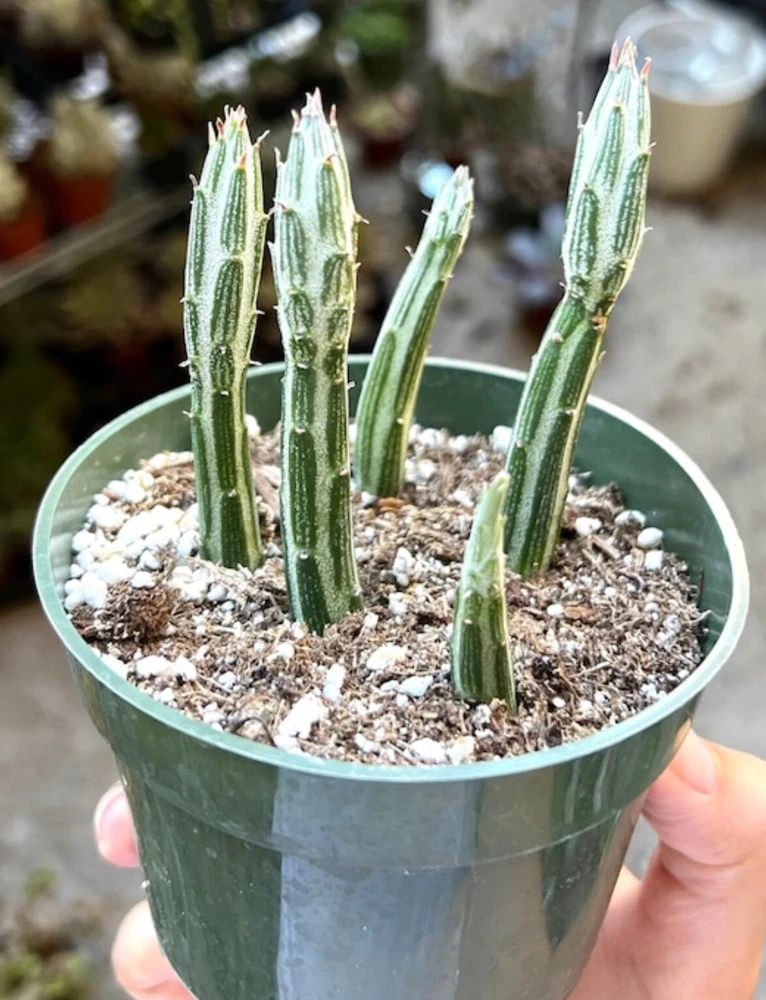
Pickle Plant Succulent Live Plant – Little Pickles Kleinia Stapeliiformis in 4” Pot, Indoor
Original price was: 33.55 $.13.55 $Current price is: 13.55 $.
Bring home a charming pickle plant succulent, also known as the little pickles plant (Kleinia Stapeliiformis). This unique rare succulent live plant comes in a 4-inch pot, offering distinctive pickle-shaped foliage. It’s an easy care succulent, perfect for beginners and small spaces, thriving indoors with bright indirect light.
Estimated arrival
Oct 20
Oct 25 - Oct 27
Oct 27 - Nov 01
See our Shipping Policy.
Get in touch with us via email, and our team will review your concerns.
Our Alive & Thrive Guarantee covers issues with your plants within the first 30 days. Read our Refund & Returns Policy.
-
USDA Hardiness Zone
USDA zones 10-11 (outdoors), suitable for all zones indoors -
Soil Type
Well-draining succulent or cactus potting mix -
Sunlight Exposure
Bright indirect light -
Expected Planting Period
Year-round indoors
Overview
Introduce a touch of whimsical charm to your plant collection with the delightful pickle plant succulent. This fascinating live plant, scientifically known as Kleinia Stapeliiformis, is often affectionately called the little pickles plant due to its distinctive, cylindrical leaves that strikingly resemble miniature pickles. Originating from South Africa, this unique succulent is a true conversation starter, offering an intriguing texture and form that stands out from typical houseplants. You will receive a healthy, established plant in a 4-inch nursery pot, ready to thrive in its new home. Its striking appearance makes it a popular choice among succulent enthusiasts and beginners alike who are looking for a truly special and rare succulent live plant.
The pickle plant succulent is celebrated not only for its unusual looks but also for its resilience and ease of care. It’s an excellent choice for those new to plant parenthood or anyone seeking a low-maintenance yet visually captivating addition to their indoor garden. Its compact growth habit makes it ideal for windowsills, desks, or terrariums, adding a touch of natural artistry without demanding constant attention. Embrace the unique beauty and effortless charm of this remarkable Kleinia Stapeliiformis.
Key Benefits
The pickle plant succulent offers a host of benefits, making it a highly desirable addition to any home or office. Its distinctive appearance and straightforward care requirements contribute to its widespread appeal. Here are some of the key advantages of welcoming this charming succulent into your space:
- Unique Aesthetic Appeal: The primary draw of the pickle plant succulent is its extraordinary appearance. Its green, cylindrical, pickle-like leaves growing along thin stems create a truly eye-catching display that adds unique texture and visual interest to any plant collection or decor.
- Low Maintenance & Easy Care: This plant is incredibly forgiving, making it an ideal choice for beginners or individuals with busy schedules. It tolerates infrequent watering and requires minimal fuss, proving itself to be a genuinely easy care succulent.
- Drought-Tolerant: As a succulent, the Kleinia Stapeliiformis is naturally adapted to dry conditions. It stores water in its fleshy leaves, meaning it can go for extended periods without water, reducing the risk of overwatering, which is a common plant killer.
- Compact Growth Habit: Growing up to 2 feet tall and 1 foot wide, the little pickles plant remains a manageable size, perfect for small apartments, office desks, shelves, or terrariums where space is at a premium.
- Air Purification: Like many houseplants, the pickle plant succulent contributes to a healthier indoor environment by helping to filter toxins from the air, promoting better air quality in your living space.
- Easy to Propagate: For those looking to expand their collection or share with friends, the pickle plant succulent can be easily propagated from stem cuttings, offering an economical way to grow more of these charming plants.
- Versatile Decor: Its unique form makes it a versatile decorative element, fitting seamlessly into various interior design styles, from modern minimalist to bohemian or rustic themes.
Plant Care & Growing Tips
Caring for your pickle plant succulent (Kleinia Stapeliiformis) is straightforward, making it a joy for both novice and experienced plant enthusiasts. The key to a thriving plant lies in mimicking its native arid environment. Provide bright, indirect light for optimal growth. A south or west-facing window with some sheer curtain filtration is often ideal. While it can tolerate some direct morning sun, intense afternoon sun can scorch its delicate leaves. Insufficient light may lead to leggy growth, where the stems stretch out in search of more light, diminishing its compact, pickle-like appearance.
Watering is perhaps the most crucial aspect of pickle plant succulent care. Being drought-tolerant, it prefers its soil to dry out completely between waterings. Overwatering is the quickest way to harm this plant, as it can lead to root rot. A good rule of thumb is to water thoroughly until water drains from the bottom of the pot, then wait until the soil is bone dry before watering again. During winter months, when growth slows, reduce watering frequency significantly. Use a well-draining succulent or cactus potting mix, as regular potting soil retains too much moisture. The pot should always have drainage holes.
The little pickles plant thrives in average room temperatures, generally between 65-80°F (18-27°C). It is not frost-tolerant, so if you live in a region with cold winters, it must be grown indoors or brought inside before temperatures drop below 40°F (4°C). Fertilize sparingly during the growing season (spring and summer) with a diluted, balanced liquid fertilizer formulated for succulents. Avoid fertilizing in fall and winter. This easy care succulent rarely encounters pest issues, but keep an eye out for common houseplant pests like mealybugs, which can be treated with insecticidal soap. With these simple guidelines, your pickle plant succulent will flourish and bring unique beauty to your home.
Size & Details
This offering is for one healthy pickle plant succulent (Kleinia Stapeliiformis) in a 4-inch nursery pot. The plant you receive will be similar in size and vigor to the one pictured, typically featuring multiple stems with characteristic green, cylindrical leaves. At maturity, the little pickles plant can reach heights of up to 2 feet (60 cm) and spread about 1 foot (30 cm) wide, though it often remains smaller when grown in pots. Its stems can grow up to 12 inches (30 cm) in length, creating an attractive trailing or mounding effect.
Your rare succulent live plant will be shipped carefully packaged to ensure its safe arrival. It comes established in its pot with appropriate well-draining soil, minimizing transplant shock upon arrival. This plant exhibits a moderate growth rate, gradually filling its pot and producing new pickle-shaped foliage. While primarily grown for its unique foliage, mature plants may occasionally produce small, inconspicuous flowers. It is a fantastic choice for adding architectural interest and a touch of the exotic to your indoor plant collection.
Frequently Asked Questions
- Q: How big does this pickle plant get? A: The pickle plant succulent typically grows up to 2 feet (60 cm) tall and 1 foot (30 cm) wide when mature, though it often stays smaller in containers. The stems themselves can reach up to 12 inches (30 cm) in length, creating a lovely trailing effect.
- Q: What size pot does it come in? A: Your Kleinia Stapeliiformis will arrive planted in a standard 4-inch nursery pot, ready for you to enjoy or repot into a decorative container of your choice.
- Q: Is this an indoor or outdoor plant? A: The pickle plant succulent is primarily grown as an indoor houseplant in most climates due to its sensitivity to cold. It can be grown outdoors in USDA zones where temperatures do not drop below 40°F (4°C).
- Q: How much sunlight does it need? A: This easy care succulent thrives in bright, indirect light. A spot near a south or west-facing window with filtered light is usually ideal. Avoid intense, direct afternoon sun, which can scorch its leaves.
- Q: Is this plant easy to care for? A: Yes, the pickle plant succulent is considered very easy to care for, making it an excellent choice for beginners. Its drought tolerance and minimal needs make it a low-maintenance plant.
- Q: What condition will it arrive in? A: Your rare succulent live plant will be carefully packaged to ensure it arrives healthy and in excellent condition, ready to be placed in its new home. It will be established in its nursery pot with soil.
- Q: How often should I water my little pickles plant? A: Water thoroughly only when the soil has completely dried out. It’s better to underwater than overwater this plant, as too much moisture can lead to root rot.
- Q: Is the pickle plant pet-safe? A: While generally considered non-toxic, it’s always best to keep plants out of reach of pets to prevent any potential stomach upset if ingested.
- Q: What kind of soil does the pickle plant need? A: Use a well-draining soil mix specifically formulated for succulents or cacti. This type of soil prevents water from sitting around the roots, which is crucial for the health of your pickle plant succulent.
- Q: Will it survive winter indoors? A: Yes, the pickle plant succulent thrives indoors during winter as long as it receives adequate light and is protected from cold drafts and temperatures below 40°F (4°C).
Be the first to review “Pickle Plant Succulent Live Plant – Little Pickles Kleinia Stapeliiformis in 4” Pot, Indoor”
Related products


Succulents
Live Pink Adenium Desert Rose Plants – 2 Pack, 4-6 Inch Height, Bonsai Ready Seedlings, No Pot


You May Like

Hardneck vs. Softneck Garlic: Which Should You Grow?
Have you ever stood in front of a seed catalog in mid-September, staring at dozens [...]
Oct

When to Plant Music Garlic: Ultimate US Fall Guide
Have you ever spent your fall weekend placing carefully chosen garlic cloves into rich, dark [...]
1 Comment
Oct

5 Best Bulbs for Fall Planting: Brighten Your Garden This Spring
Are you dreaming of a garden full of vibrant colors in the spring? The key [...]
Aug

10 Houseplants That Will Thrive in Your Kitchen
Are you tired of your kitchen feeling dull and lifeless? Want to add a little [...]
1 Comment
Aug
Reviews
There are no reviews yet.