
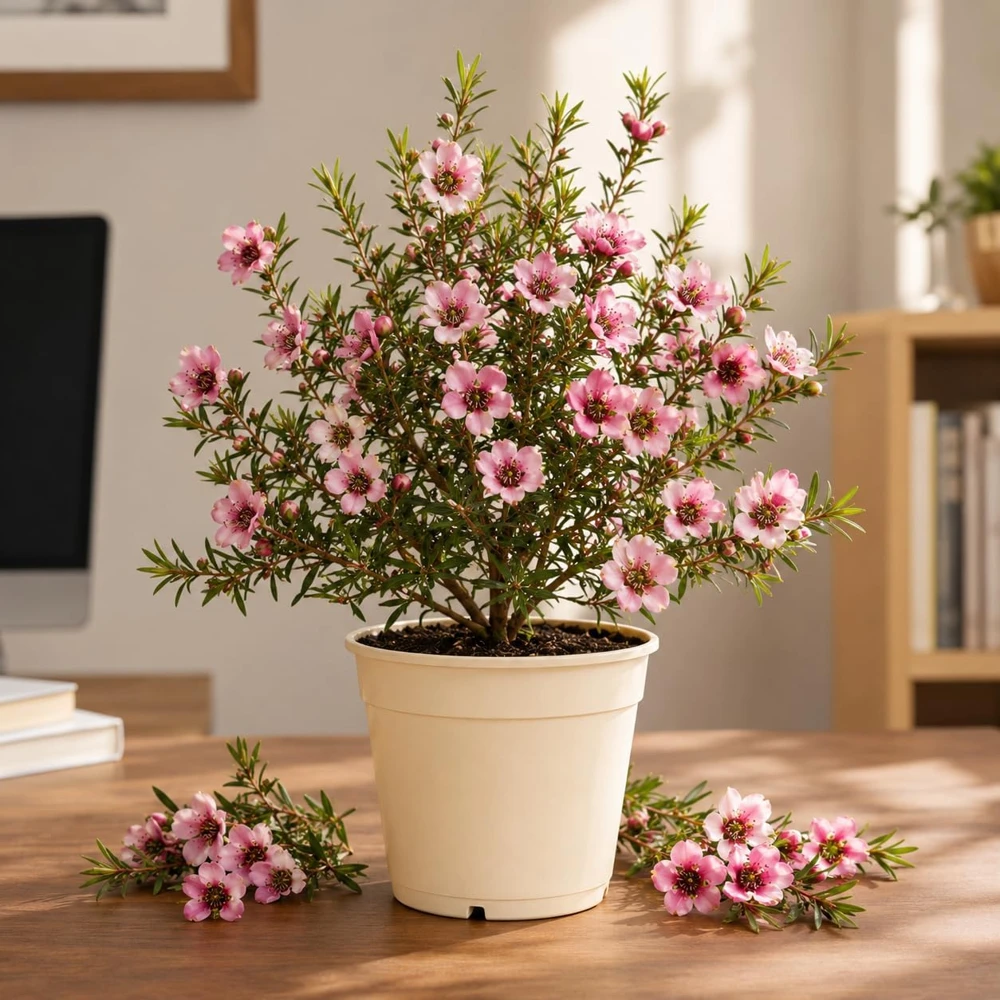

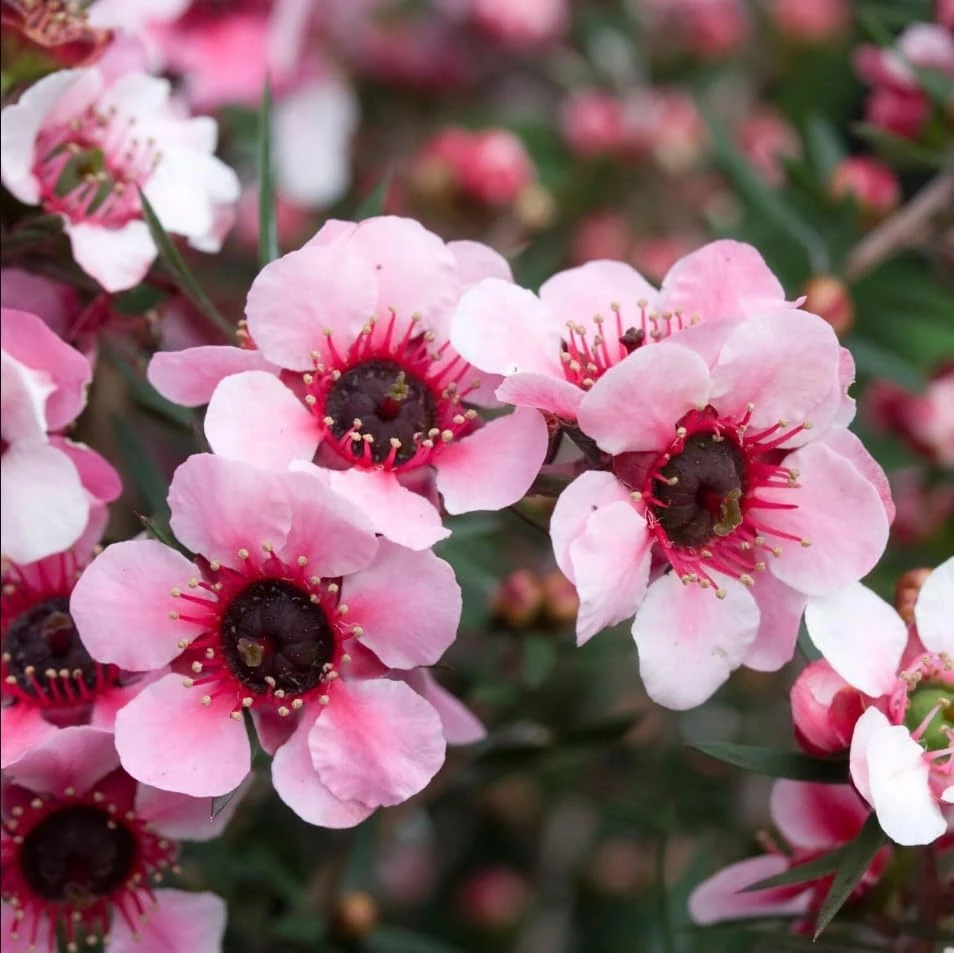
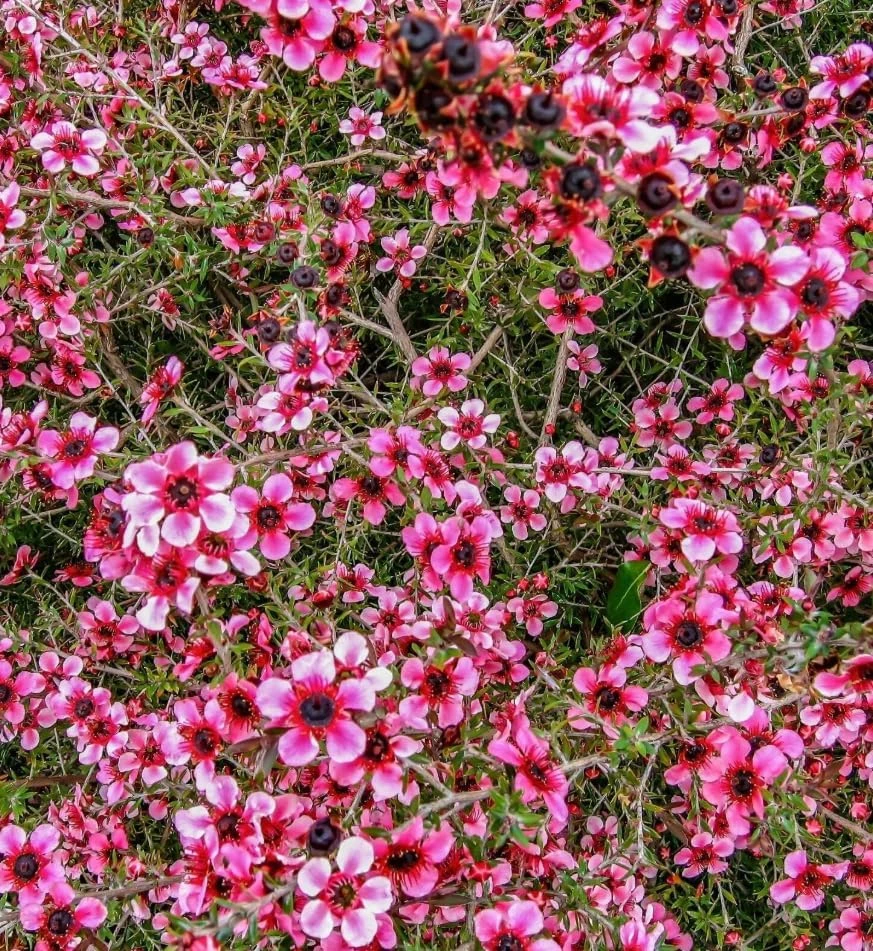
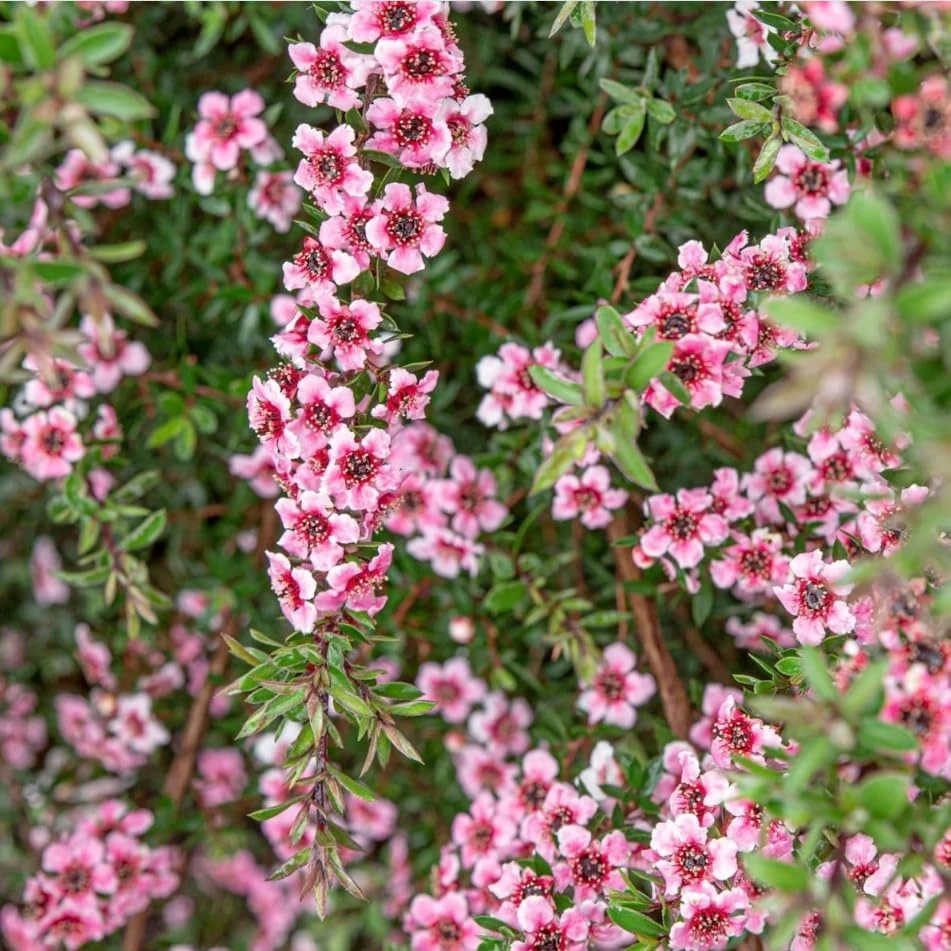
Pink Manuka Tea Plant – Leptospermum scoparium Live Plant – 4-6 Inch Tall
Original price was: 42.99 $.17.99 $Current price is: 17.99 $.
Cultivate a stunning pink manuka tea plant, known for its charming pink blooms and attractive foliage. This Leptospermum scoparium starter plant, measuring 4-6 inches tall, is ideal for adding unique beauty to your garden.
- Features delicate pink flowers
- Durable and relatively low-maintenance
- Perfect for USDA zones 9–11
Estimated arrival
Oct 15
Oct 20 - Oct 22
Oct 22 - Oct 27
See our Shipping Policy.
Get in touch with us via email, and our team will review your concerns.
Our Alive & Thrive Guarantee covers issues with your plants within the first 30 days. Read our Refund & Returns Policy.
-
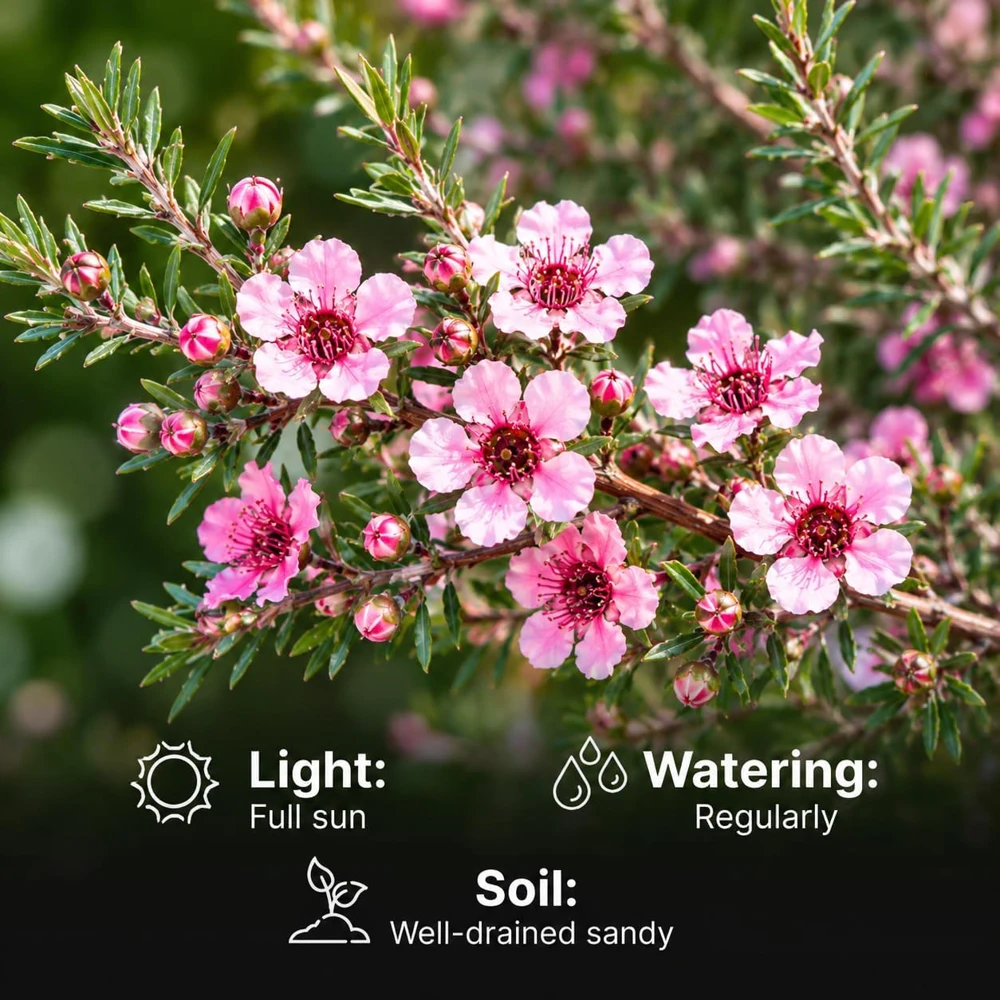
USDA Hardiness Zone
9–11 -
Soil Type
Well-draining soil -
Sunlight Exposure
Full sun -
Expected Planting Period
Spring to early summer
Overview
Discover the enchanting beauty of the pink manuka tea plant, scientifically known as Leptospermum scoparium. This delightful shrub is celebrated for its profusion of small, delicate pink flowers that create a stunning visual display. Originating from New Zealand and Australia, the Manuka bush is a versatile and resilient addition to many garden landscapes, bringing a touch of exotic elegance. You will receive a young starter plant, typically 4-6 inches tall, ready to be planted and grown into a mature, flowering specimen. While the photos illustrate the potential of a mature plant, your starter will be a healthy, vibrant young plant eager to establish itself in its new home. This live plant offers a unique opportunity to cultivate a piece of horticultural history, known for its aesthetic appeal and ecological value.
The pink manuka tea plant is not only a feast for the eyes but also a plant with a rich history. Its common name, ‘Tea Tree’, hints at its traditional uses, though it’s important to note this is not the same plant from which traditional black tea is made. Instead, it refers to the leaves being used by early settlers to make a tea-like beverage. This specific variety, with its lovely pink blossoms, makes it an excellent choice for ornamental gardening, hedges, or as a feature plant in a mixed border. It’s a robust plant that, with proper care, will flourish and become a highlight of your outdoor space, attracting pollinators and adding vibrant color.
Key Benefits
The pink manuka tea plant offers numerous advantages for gardeners looking for both beauty and resilience. Its charming characteristics make it a standout choice for various landscape designs.
- Beautiful Pink Blooms: Enjoy a spectacular display of delicate pink flowers that bloom from spring to early summer, adding vibrant color to your garden. These blossoms are a magnet for bees and other beneficial pollinators.
- Low Maintenance: Once established, the Leptospermum scoparium care is relatively straightforward, making it suitable for both experienced gardeners and those new to horticulture. It tolerates a range of conditions and requires minimal intervention.
- Versatile Landscaping: This shrub can be used in various garden settings, including as a specimen plant, in mixed borders, for hedging, or even in larger containers. Its dense foliage and attractive flowers provide year-round interest.
- Drought Tolerant: After its initial establishment period, the Manuka bush exhibits good drought tolerance, making it an excellent choice for water-wise gardens or regions with drier climates.
- Hardy in Warm Climates: Thrives in USDA Zones 9–11, making it well-suited for warmer regions of the United States. Its ability to adapt to these conditions ensures a robust and long-lasting plant.
- Unique Foliage: Beyond its flowers, the small, needle-like leaves of the Manuka plant provide a fine texture and evergreen presence, contributing to its overall appeal even when not in bloom.
- Supports Local Ecosystems: The abundant flowers provide a valuable nectar source for bees, playing a role in supporting local pollinator populations and contributing to garden biodiversity.
Plant Care & Growing Tips
To ensure your pink manuka tea plant thrives, understanding its specific care requirements is crucial. This hardy shrub prefers a location with full sun exposure, meaning it should receive at least 6 hours of direct sunlight per day. Adequate light is essential for robust growth and prolific flowering. When considering manuka bush growing conditions, well-draining soil is paramount. Avoid heavy, waterlogged soils, as these can lead to root rot. A sandy loam or a mix with good drainage is ideal.
Watering should be regular during the plant’s establishment phase, typically its first year in the ground. Once established, it becomes moderately drought-tolerant, but consistent moisture will promote the best growth and flowering. Water deeply when the top inch or two of soil feels dry, but always allow the soil to dry out slightly between waterings to prevent overwatering. The ideal temperature range for this plant is between 50 degrees Fahrenheit and 85 degrees Fahrenheit. While it can tolerate brief dips below 50, prolonged cold or hard freezes can be damaging, especially for young plants. Protect young plants during unexpected cold snaps with a frost cloth if necessary.
Fertilization is generally not heavily required for the pink manuka tea plant. A light application of a balanced, slow-release fertilizer in spring can encourage healthy growth and blooming. Avoid high-nitrogen fertilizers, which can promote leafy growth at the expense of flowers. Pruning can be done after flowering to maintain shape, encourage bushiness, and remove any spent blooms or leggy growth. This helps to ensure a tidy appearance and promotes a more vigorous display the following season. Keep an eye out for common pests like scale or mealybugs, though Manuka plants are generally quite resistant. Address any infestations promptly with appropriate organic or chemical controls.
Size & Details
This offering is for a young pink manuka tea plant, typically measuring 4-6 inches tall at the time of shipment. It is provided as a starter plant, ready for you to pot up or plant directly into your garden. Please note that it will not arrive in a pot, but as a healthy, well-rooted young specimen. The ultimate size of a mature Manuka bush can vary depending on growing conditions and specific variety, but they generally grow to a height of 5-10 feet with a similar spread, forming an attractive, dense shrub. While you will receive a young plant, with appropriate care, it will grow into a full-sized, flowering bush. Expect the first significant blooms in the spring to early summer once the plant has established itself and matured, which typically occurs within 1-2 years after planting. The plant ships without flowers or fruit, reflecting its young starter stage, and will develop these characteristics as it grows.
Frequently Asked Questions
- Q: How big does this Manuka plant get? A: A mature pink manuka tea plant can typically reach heights of 5-10 feet and spread similarly, forming a dense and attractive shrub. Growth rate depends on optimal growing conditions and care.
- Q: Is this an indoor or outdoor plant? A: The pink manuka tea plant is primarily an outdoor shrub, thriving in full sun in USDA Zones 9–11. It can be grown in containers and brought indoors in colder climates, but it truly flourishes outdoors.
- Q: How much sunlight does it need? A: This plant requires full sun exposure, meaning at least 6 hours of direct sunlight per day, to produce the best growth and an abundance of its characteristic pink flowers.
- Q: Is this plant easy to care for? A: Yes, once established, the pink manuka tea plant is considered relatively easy to care for. It’s drought-tolerant and doesn’t require extensive pruning or fertilization, making Leptospermum scoparium care manageable for most gardeners.
- Q: What condition will it arrive in? A: You will receive a healthy, young starter plant that is 4-6 inches tall. It will be carefully packaged to ensure safe transit, but may not have flowers or the mature appearance shown in reference photos.
- Q: When is the best time to plant a Manuka bush? A: The best time for manuka bush growing and planting is typically in spring or early fall, allowing the plant sufficient time to establish its root system before extreme summer heat or winter cold.
- Q: Will it survive winter in my zone? A: This pink manuka tea plant is hardy in USDA Zones 9–11. If you are in a colder zone, it may need winter protection or can be grown in a container and moved indoors during the colder months.
- Q: What are the benefits of the tea tree plant? A: Beyond its ornamental beauty, the Manuka plant’s leaves have been traditionally used to make a tea-like beverage. Its flowers also attract pollinators, contributing to garden biodiversity.
- Q: What kind of soil does it prefer? A: The Manuka plant thrives in well-draining soil. It’s crucial to avoid waterlogged conditions, so a sandy loam or a potting mix with good drainage is recommended.
- Q: How often should I water my young Manuka plant? A: During its establishment phase, water regularly, ensuring the soil stays consistently moist but not soggy. Once established, reduce watering to moderate amounts, allowing the topsoil to dry out between waterings.
Be the first to review “Pink Manuka Tea Plant – Leptospermum scoparium Live Plant – 4-6 Inch Tall”
Related products


You May Like

Hardneck vs. Softneck Garlic: Which Should You Grow?
Have you ever stood in front of a seed catalog in mid-September, staring at dozens [...]
Oct

When to Plant Music Garlic: Ultimate US Fall Guide
Have you ever spent your fall weekend placing carefully chosen garlic cloves into rich, dark [...]
1 Comment
Oct

5 Best Bulbs for Fall Planting: Brighten Your Garden This Spring
Are you dreaming of a garden full of vibrant colors in the spring? The key [...]
Aug

10 Houseplants That Will Thrive in Your Kitchen
Are you tired of your kitchen feeling dull and lifeless? Want to add a little [...]
1 Comment
Aug
Reviews
There are no reviews yet.