
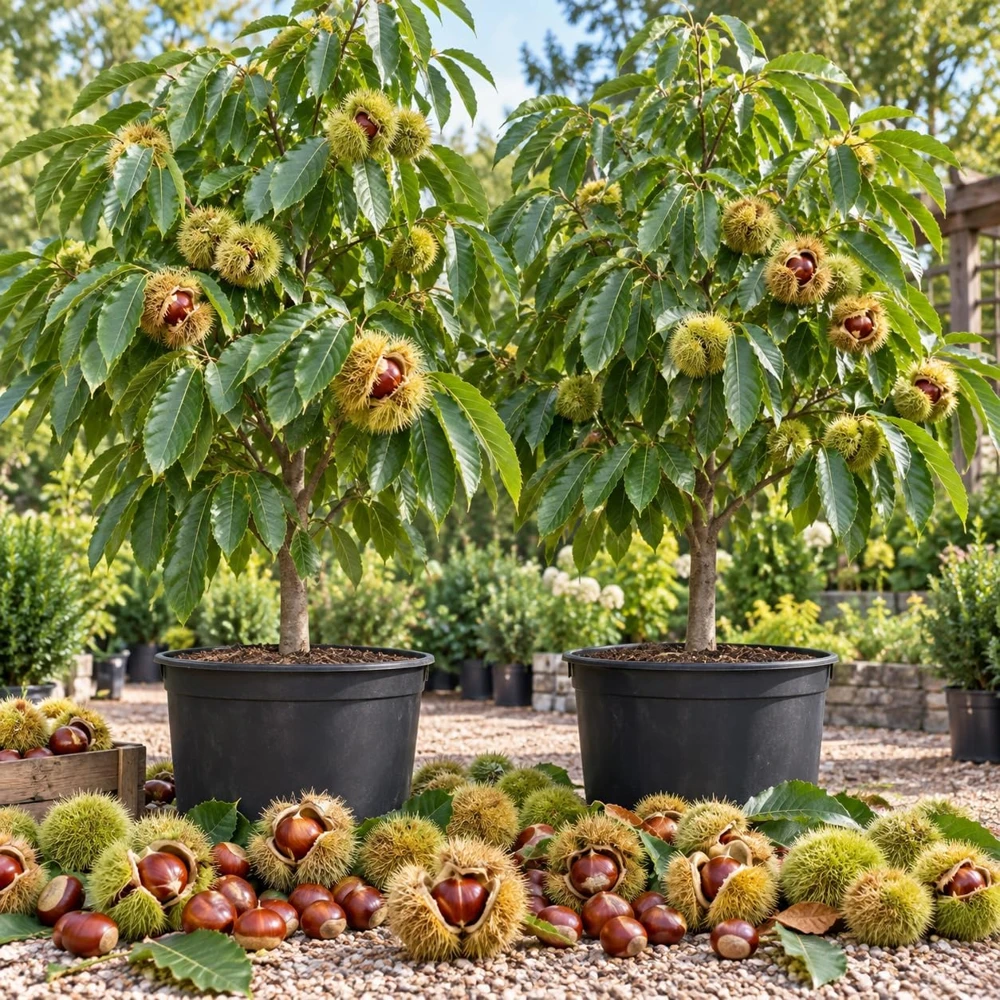
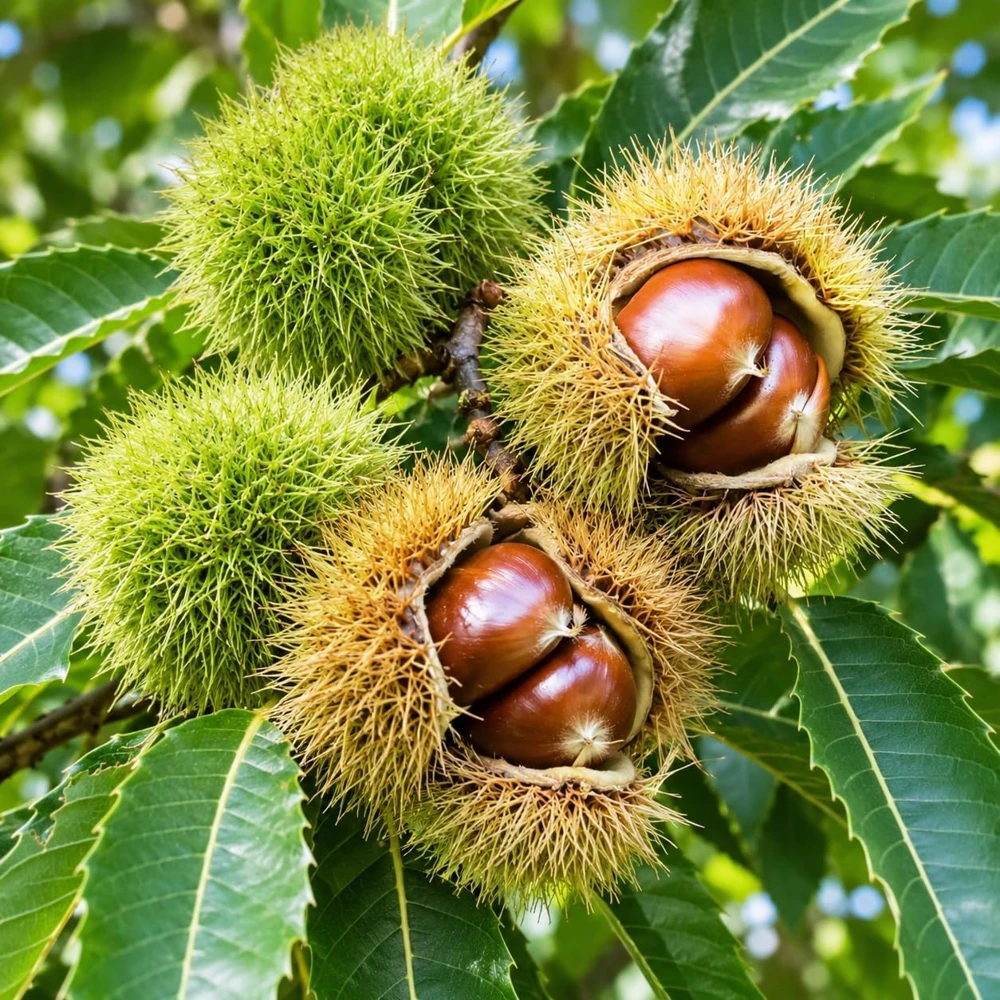
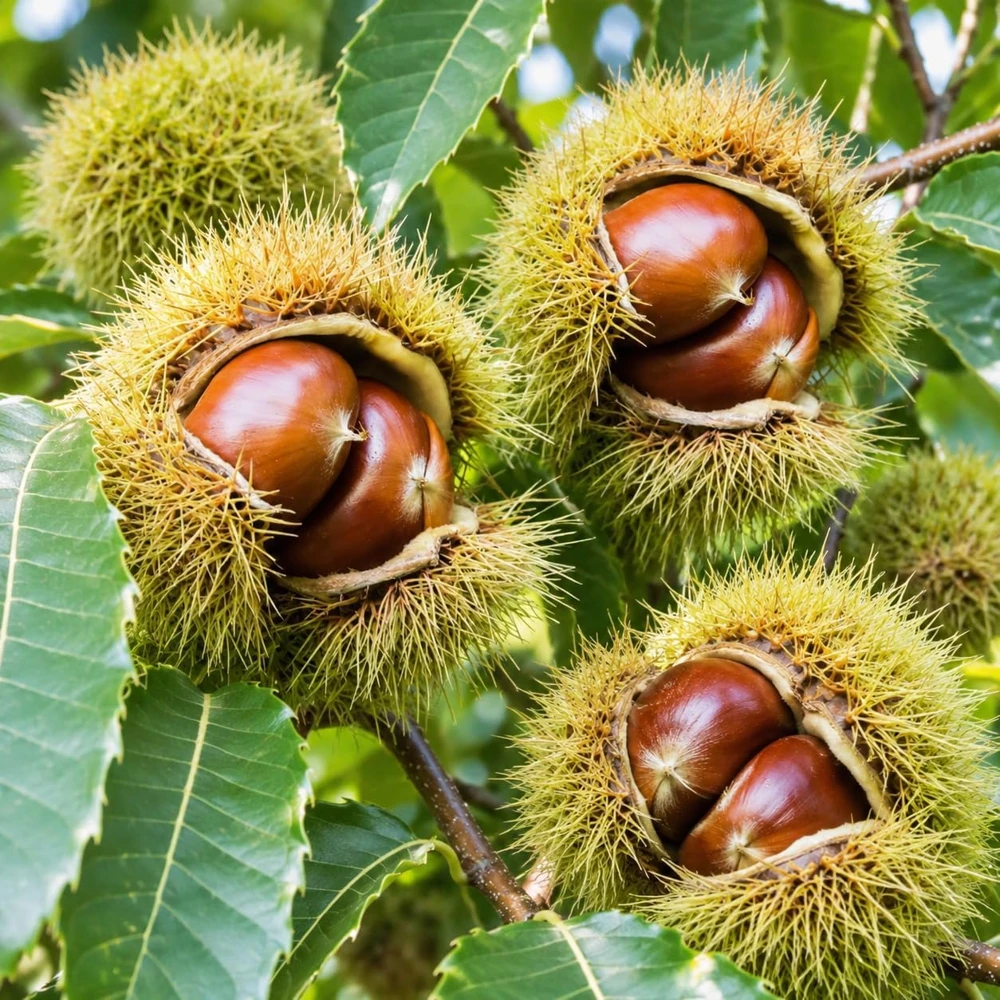
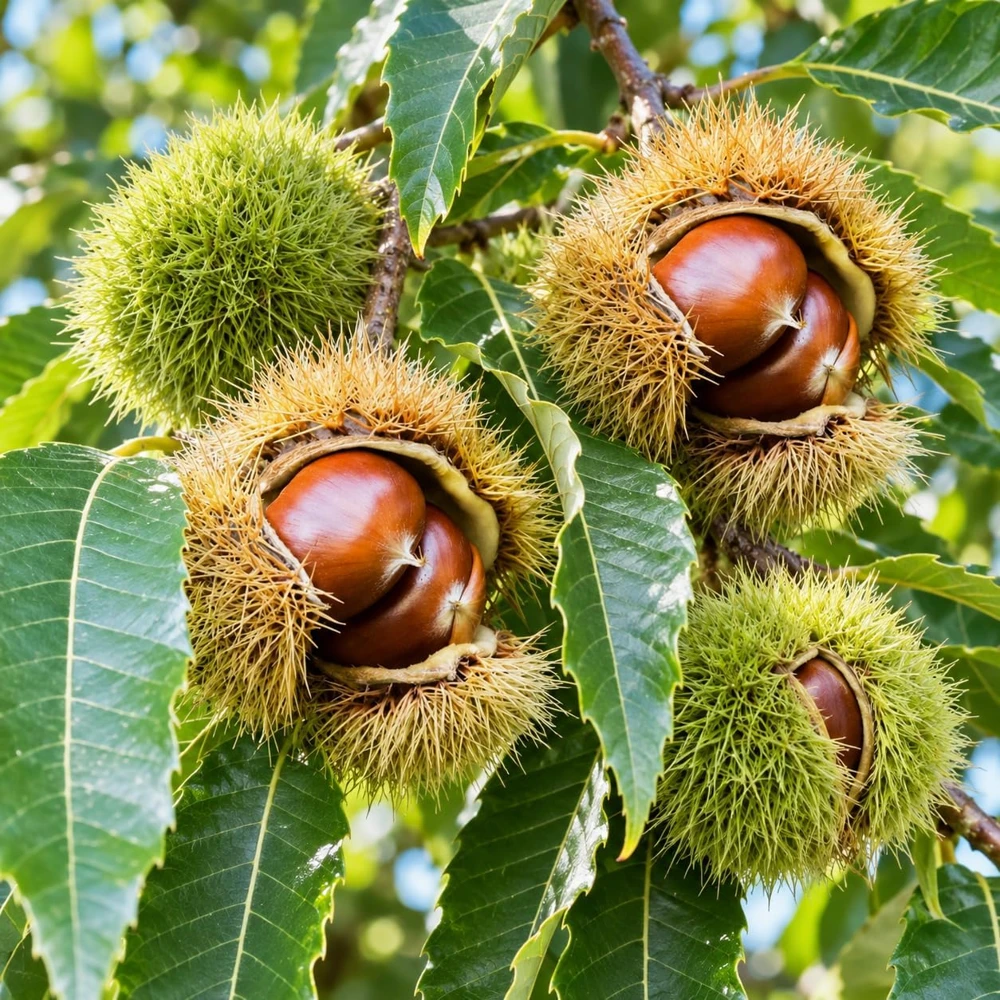
Sweet Chestnut Trees Live Plants – 2 Pack, 14-18″ Tall, 1-Year-Old Bare Root Nut Trees for Outdoor Gardens
59.99 $
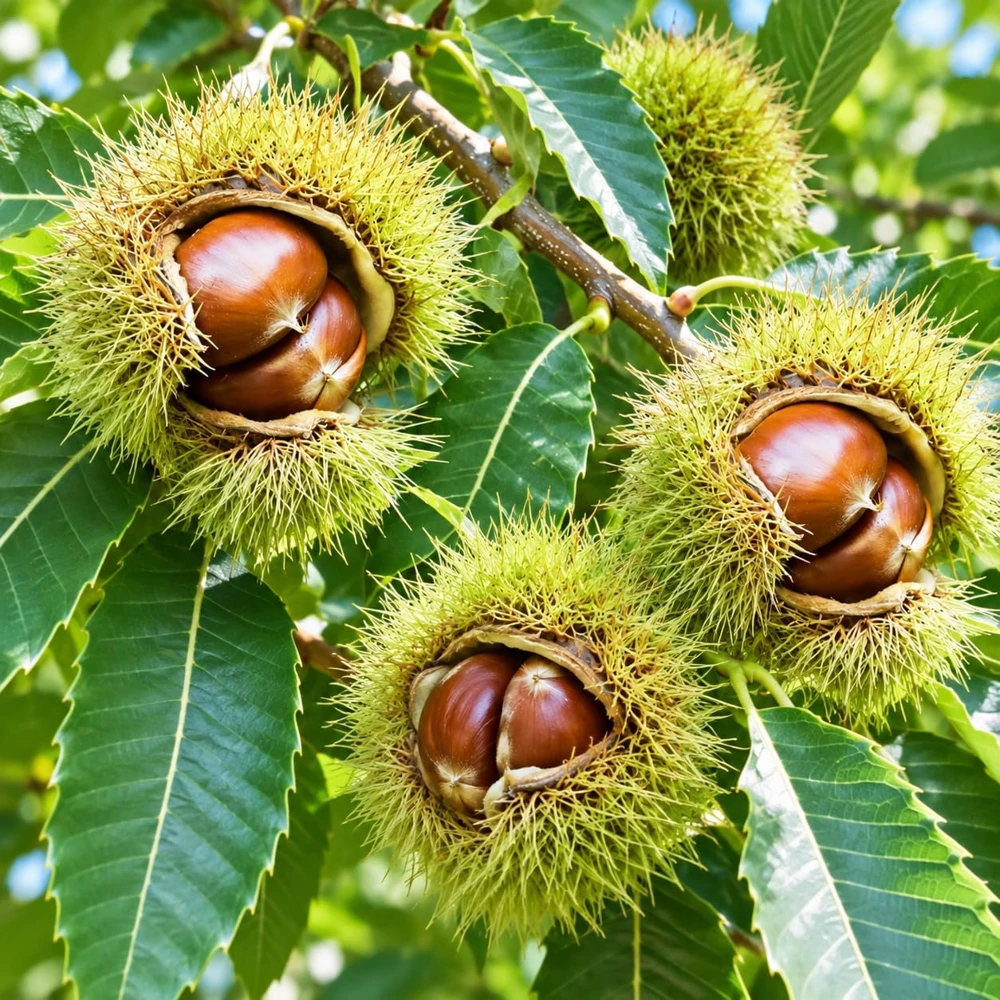
Cultivate your own delicious chestnuts with these sweet chestnut trees live plants. This pack includes two 14-18 inch tall, 1-year-old bare-root trees, ideal for establishing in your garden or orchard. These hardy, deciduous nut trees are perfect for edible landscapes and provide seasonal beauty.
Estimated arrival
Oct 20
Oct 25 - Oct 27
Oct 27 - Nov 01
See our Shipping Policy.
Get in touch with us via email, and our team will review your concerns.
Our Alive & Thrive Guarantee covers issues with your plants within the first 30 days. Read our Refund & Returns Policy.
-
USDA Hardiness Zone
USDA Zones 5-8 -
Soil Type
Well-draining, slightly acidic to neutral soil -
Sunlight Exposure
Full sun -
Expected Planting Period
Early spring or late fall
Overview
Transform your garden into a productive orchard with our premium sweet chestnut trees live plants. This offering includes two robust, 1-year-old bare-root specimens, each standing 14-18 inches tall, ready to establish and thrive in your landscape. Sweet chestnut trees, scientifically known as Castanea sativa, are highly valued for their delicious, nutritious nuts and their stately presence as mature deciduous trees. These hardy plants are an excellent choice for home gardeners looking to add a long-term food source and beautiful seasonal foliage to their property. Planting these young trees allows you to enjoy the rewarding process of nurturing them from their early stages into productive, nut-bearing giants.
Our sweet chestnut trees live plants are carefully selected to ensure strong growth potential. They arrive in a bare-root state, which is an optimal method for transplanting deciduous trees, promoting rapid root establishment once planted. These medium-sized nut trees are known for their resilience and adaptability to various climates, making them a fantastic addition to many garden zones. Imagine harvesting your own sweet, earthy chestnuts right from your backyard, perfect for roasting, baking, or simply enjoying fresh. These trees not only provide a valuable crop but also contribute to the ecological diversity and aesthetic appeal of your outdoor space, offering shade and a majestic appearance as they mature.
Key Benefits
Investing in sweet chestnut trees live plants brings a multitude of advantages, enhancing both your garden’s productivity and its visual appeal. These trees are a long-term asset, providing delicious food and environmental benefits for decades.
- Abundant Nut Production: Enjoy a bountiful harvest of sweet, edible chestnuts, a versatile and nutritious food source. These nuts are excellent for roasting, making flour, or adding to various culinary dishes, providing a sustainable food supply right from your yard.
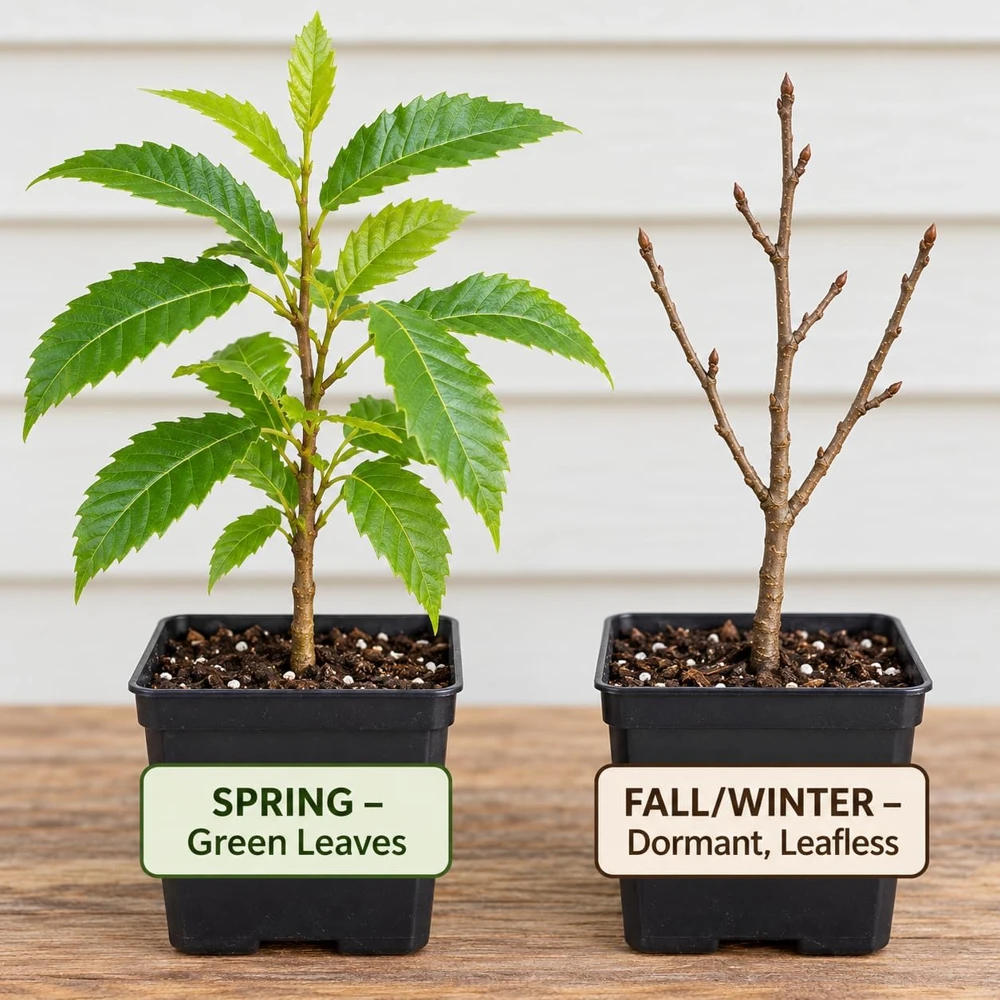
- Beautiful Deciduous Foliage: Experience the seasonal beauty of these trees, from vibrant green leaves in spring and summer to striking yellow and gold hues in the autumn, adding dynamic visual interest to your landscape.
- Hardy and Resilient: These sweet chestnut trees live plants are known for their hardiness and ability to thrive in a range of climates and soil conditions, making them a reliable choice for many gardeners. They are well-suited to withstand various environmental challenges.
- Long-Term Investment: A chestnut tree can live for many decades, providing a continuous supply of nuts and increasing in majestic beauty over time, making it a valuable addition to any property.
- Supports Wildlife: The nuts produced by these trees can also serve as a food source for local wildlife, contributing to the biodiversity of your garden ecosystem.
- Excellent for Edible Landscapes: Integrate these trees into an edible landscape design, combining beauty with utility, and creating a food forest that provides both sustenance and aesthetic pleasure.
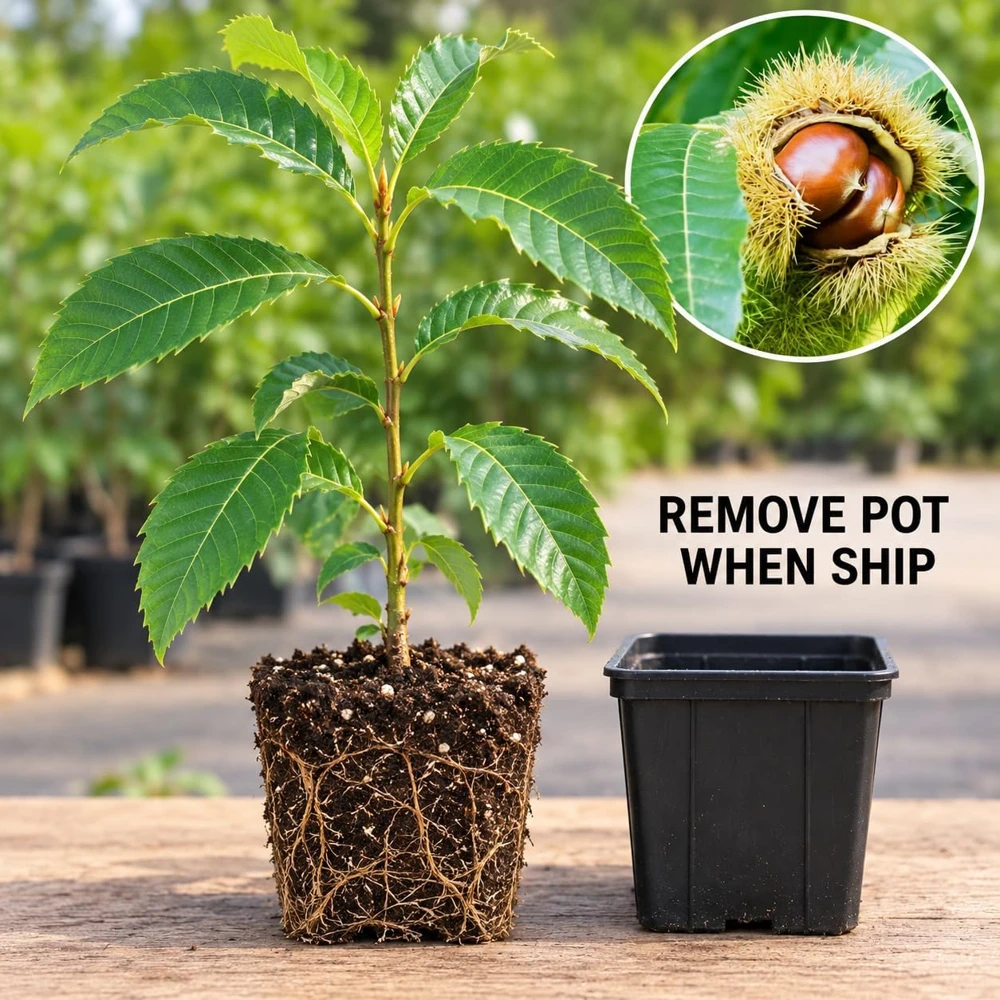
- Easy to Establish Bare Roots: Shipped as bare-root plants, these young trees are easy to plant and establish, allowing their root systems to quickly adapt to their new environment for vigorous growth.
Plant Care & Growing Tips
Caring for your sweet chestnut trees live plants properly from the start ensures they grow into strong, productive nut-bearing trees. These trees are relatively low-maintenance once established, but initial care is crucial for success. Upon arrival, soak the bare roots in water for a few hours before planting. Choose a site with full sun exposure, meaning at least 6-8 hours of direct sunlight per day. Good air circulation is also beneficial to prevent fungal issues. Dig a hole wide enough to comfortably spread out the roots and deep enough so that the root collar is level with the soil surface. Backfill with native soil, gently tamping down to remove air pockets, and water thoroughly.
Sweet chestnut trees live plants prefer well-drained, slightly acidic to neutral soil (pH 5.0-6.5). Avoid heavy clay soils that retain too much moisture, as this can lead to root rot. If your soil is heavy, amend it with organic matter like compost or sand to improve drainage. Consistent watering is vital during the first few years, especially during dry spells. Aim to keep the soil consistently moist but not waterlogged. Once established, chestnut trees are fairly drought-tolerant. Fertilize sparingly in the first year; an all-purpose balanced fertilizer can be applied in early spring in subsequent years. Protect young trees from deer and other pests, which can browse on tender new growth. Pruning is generally minimal, focusing on removing dead, damaged, or crossing branches to maintain good structure and air flow. Understanding how to grow chestnut trees successfully involves patience and providing the right conditions from the outset.
Size & Details
This offering includes two sweet chestnut trees live plants. Each tree is a 1-year-old bare-root specimen, arriving at a healthy height of 14-18 inches tall. Bare-root plants are dormant when shipped, which is ideal for transplanting and minimizes shock, allowing the roots to quickly establish in their new environment. These trees have a medium growth rate, typically adding 1-2 feet per year once established. Mature sweet chestnut trees can reach heights of 50-70 feet with a spread of 30-50 feet, developing a broad, rounded canopy. They begin bearing nuts in approximately 5-7 years, with production increasing as the tree matures.
These bare root chestnut trees are ready for immediate planting in suitable outdoor conditions. They are hardy deciduous trees, meaning they will lose their leaves in the fall and enter dormancy during winter. The best time to plant is in early spring or late fall when the trees are dormant. With proper care, these young trees will grow into magnificent specimens, providing shade, beauty, and a delicious harvest of nuts for many years to come. They are a perfect choice for creating an edible landscape or adding to a nut tree collection, offering a rewarding long-term investment for any gardener.
Frequently Asked Questions
- Q: How big do these sweet chestnut trees get? A: These sweet chestnut trees live plants arrive at 14-18 inches tall. Mature sweet chestnut trees can reach impressive heights of 50-70 feet with a spread of 30-50 feet, developing into large, stately specimens over many years.
- Q: Are these indoor or outdoor plants? A: These are outdoor trees. Sweet chestnut trees live plants require full sun and space to grow, making them unsuitable for indoor cultivation. They are best planted in a garden, orchard, or a spacious landscape.
- Q: How much sunlight do sweet chestnut trees need? A: Sweet chestnut trees thrive in full sun, requiring at least 6-8 hours of direct sunlight per day to ensure optimal growth and nut production. Choosing a sunny location is key for successful cultivation.
- Q: Are these trees easy to care for? A: Once established, sweet chestnut trees live plants are relatively low-maintenance. The most critical period is the first few years, where consistent watering and protection from pests are essential. They are a good choice for gardeners looking for a long-term, rewarding project.
- Q: What condition will the trees arrive in? A: These are 1-year-old bare-root chestnut trees. They will arrive dormant, without soil around their roots, which is the standard and most effective way to ship deciduous trees for transplanting, ensuring minimal shock and quick establishment.
- Q: When is the best time to plant bare root chestnut trees? A: The ideal time to plant bare root chestnut trees is in early spring, as soon as the ground can be worked, or in late fall after the leaves have dropped and the tree has entered dormancy. This allows the roots to establish before extreme weather.
- Q: Will these trees survive winter in my zone? A: Sweet chestnut trees are generally hardy in USDA Zones 5-8, sometimes extending to Zone 4 with protection or specific varieties. It’s important to know your local hardiness zone to ensure these trees will thrive in your climate.
- Q: How long until these trees produce nuts? A: Typically, sweet chestnut trees live plants begin producing nuts in about 5-7 years after planting, with yields increasing significantly as the trees mature. Patience is rewarded with delicious harvests.
- Q: What kind of soil do chestnut trees prefer? A: Chestnut trees prefer well-drained, slightly acidic to neutral soil (pH 5.0-6.5). They do not tolerate heavy, waterlogged clay soils, so good drainage is crucial for their health and growth.
- Q: Can I grow a chestnut tree from a nut? A: While it is possible to grow a chestnut tree from a nut, purchasing 1-year-old sweet chestnut trees live plants provides a significant head start, ensuring a healthier and more vigorous young tree with a higher chance of success.
Be the first to review “Sweet Chestnut Trees Live Plants – 2 Pack, 14-18″ Tall, 1-Year-Old Bare Root Nut Trees for Outdoor Gardens”
Related products


You May Like

Hardneck vs. Softneck Garlic: Which Should You Grow?
Have you ever stood in front of a seed catalog in mid-September, staring at dozens [...]
Oct

When to Plant Music Garlic: Ultimate US Fall Guide
Have you ever spent your fall weekend placing carefully chosen garlic cloves into rich, dark [...]
1 Comment
Oct

5 Best Bulbs for Fall Planting: Brighten Your Garden This Spring
Are you dreaming of a garden full of vibrant colors in the spring? The key [...]
Aug

10 Houseplants That Will Thrive in Your Kitchen
Are you tired of your kitchen feeling dull and lifeless? Want to add a little [...]
1 Comment
Aug
Reviews
There are no reviews yet.