
Guide
How to Grow Passion Flower (Passiflora) for Tropical Blooms
Nov
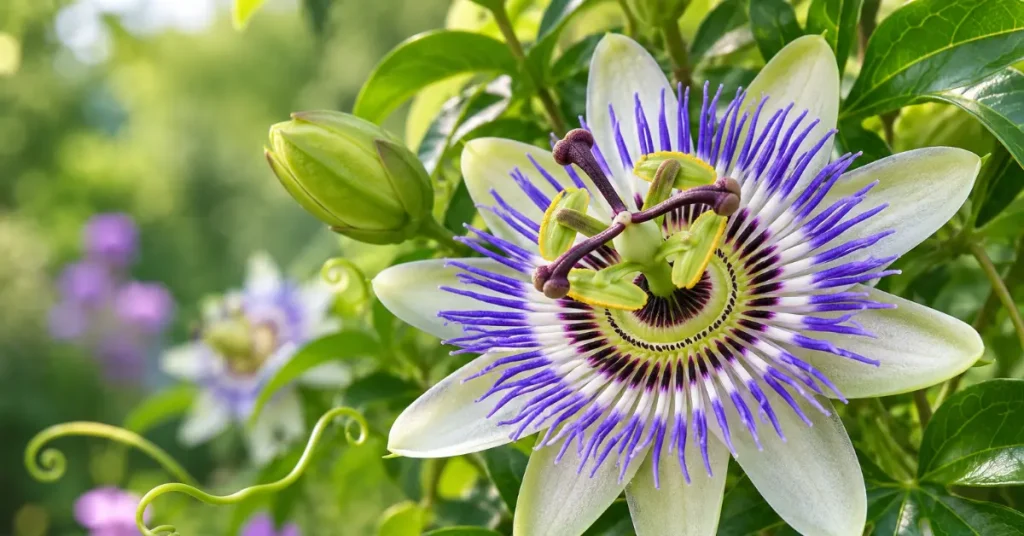
Few climbing vines in the home garden command attention quite like the exotic Passion Flower (Passiflora). Renowned for its intricate, otherworldly blossoms featuring delicate purple-lavender filaments, a striking central crown, and lush, lobed green foliage, this fast-growing tropical vine transforms basic garden trellises, fences, and arbor arches into breathtaking botanical showcases.
While its intricate, alien-like flowers look like they require a professional greenhouse staff to maintain, growing Passion Flowers is surprisingly straightforward when you get a few basic environmental conditions right. Given ample sunlight, well-draining soil, and a sturdy support structure to scramble up, this vigorous climber will reward you with continuous, fragrant blooms from midsummer all the way through early autumn.
In this guide, you’ll learn everything you need to know about growing Passion Flower, from selecting the right planting site and preparing the soil to watering, pruning, fertilizing, container growing, and winter protection. Whether you’re training a vine up a sunny patio lattice or building a lush privacy screen, these practical tips will help you enjoy robust growth and spectacular flowers year after year.
What Is Passion Flower?

Passion Flower is a fast-growing, tendril-climbing vine belonging to the genus Passiflora (often cultivars or hybrids of Passiflora incarnata or Passiflora caerulea). Native to warm temperate and tropical regions of the Americas, this show-stopping vine uses delicate curly tendrils to latch onto nearby structures, easily climbing 10 to 20 feet or more in a single growing season.
The main attraction is the unique floral structure: large, flat blossoms with widespread petals topped by a fringe of wavy, thread-like filaments in shades of deep lavender, violet, and soft mauve. Individual flowers typically open for just one day, but the plant continuously produces fresh buds along its stems all season long, ensuring a steady stream of vibrant color that constantly attracts butterflies, bees, and hummingbirds.
Choose the Right Planting Site
Selecting the ideal location is essential for encouraging maximum flower production and keeping this energetic climber under control.
-
Sunlight Needs: Passion flowers demand full sun. Plant your vine in a site that receives at least 6 to 8 hours of direct, unfiltered sunlight daily. While the vine can survive in partial shade, insufficient sun drastically reduces flower counts and leads to sparse, leggy growth.
-
Sturdy Support Structure: Passion vines climb aggressively using clinging tendrils. Position your plant next to a strong trellis, sturdy wooden fence, pergola, wire obelisk, or chain-link fence that can support the weight of mature, leafy vines.
-
Soil Drainage: Excellent drainage is non-negotiable. While passion vines appreciate consistent moisture, their root systems quickly rot if submerged in heavy, waterlogged ground.
How to Plant Passion Flower
When to Plant
Plant in spring after all danger of frost has passed and soil temperatures have warmed up. In warmer USDA zones (Zones 8–11), early autumn planting is also suitable, allowing roots to anchor before cool winter weather sets in.
Prepare the Best Soil
Passionflower thrives in fertile, light, well-draining soil with a slightly acidic to neutral pH between 6.0 and 7.0.
-
Clear the planting spot of weeds and rocks.
-
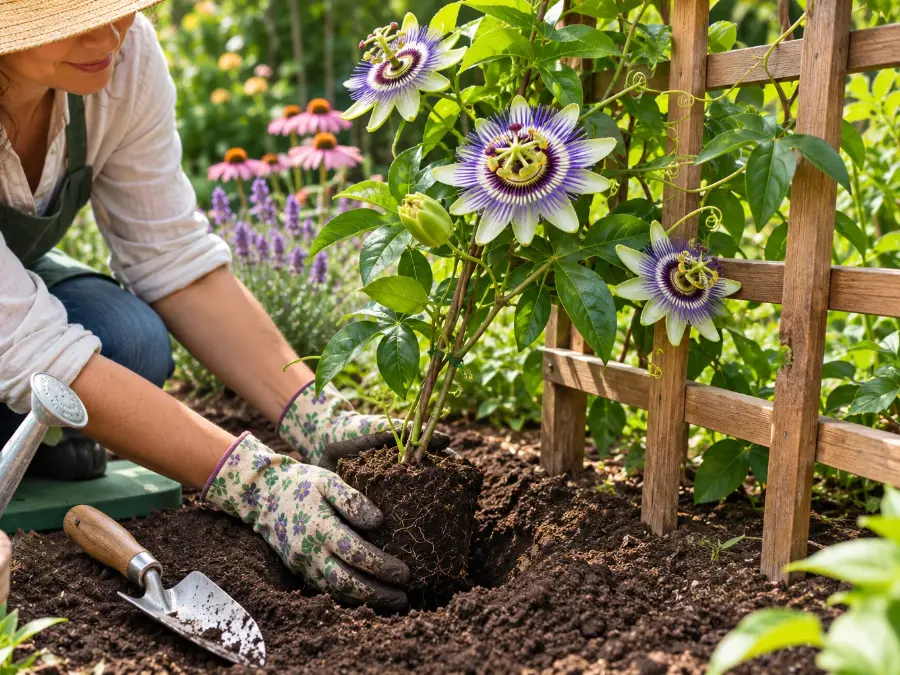
Dig a hole twice as wide as the root ball and equal in depth.
-
Mix finished compost, leaf mold, or aged manure into the excavated soil to boost fertility and soil aeration.
-
If planting in heavy clay soil, build up a raised mound or blend in coarse sand or perlite to ensure excess water drains away freely.
Step-by-Step Planting Process
-
Gently remove the vine from its container and carefully tease apart any bound roots near the base.
-
Set the root ball in the center of the hole so the top rests level with the surrounding ground.
-
Backfill with your amended soil blend, firming it down gently to remove air pockets.
-
Water deeply to settle the soil around the root zone.
-
Install your trellis or support structure immediately, gently guiding the main stems toward the support so the tendrils can attach naturally.
-
Apply a 2- to 3-inch layer of organic mulch around the base to retain moisture, keeping it a couple of inches away from the main stem.
How to Care for Passion Flower
Watering
Keeping soil moisture consistent during the warm growing season fuels rapid vine growth and continuous flower production. Newly planted passion vines need deep watering two to three times a week while they establish their root systems. Once established, aim to provide about one inch of water per week—factoring in natural rainfall—by soaking the soil deeply at the base rather than wetting the leaves. During hot midsummer heatwaves, check the ground regularly and water thoroughly whenever the top two inches feel dry to the touch.
As autumn arrives and temperatures cool down, scale back your watering significantly. If you trim back a potted passionflower and bring it indoors for winter, it will enter a semi-dormant rest and require only sparing sips of water whenever the soil dries out completely.
Fertilizing
Passion Flower is a moderate feeder, and the right nutrient balance is essential to maximize your floral display. Start in early spring by applying a balanced, slow-release organic fertilizer or a top-dressing of rich compost around the root zone as fresh shoots emerge.
Throughout late spring and summer, feed the vine every three to four weeks with a bloom-boosting formula higher in phosphorus and potassium, while steering clear of high-nitrogen fertilizers that stimulate rampant green foliage at the expense of blossoms.
Stop all fertilizing by late summer so the plant can naturally slow its growth and prepare for winter—especially if you plan to prune a container-bound vine down to one or two feet and bring it indoors for the cold months.
Pruning
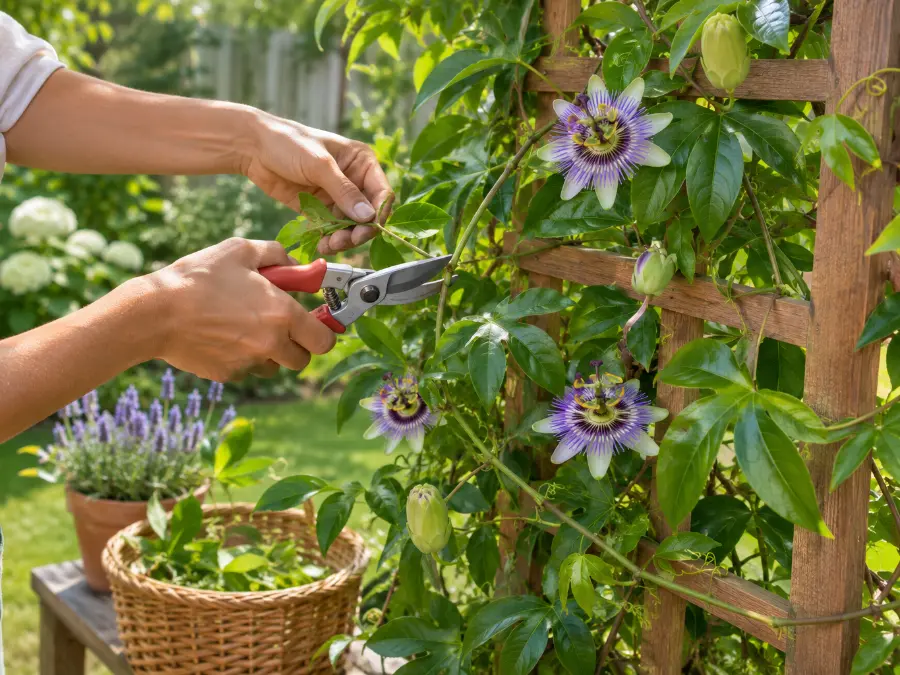
Because Passion Flower is an energetic climber that produces blossoms on new wood, regular pruning keeps the vine manageable and encourages a heavier flush of flowers. For outdoor, in-ground plants, perform your primary pruning in early spring just as new growth begins by removing any frost-damaged wood and trimming overcrowded side shoots back by one-third to improve sunlight and airflow.
If you grow your passionflower in a container and bring it indoors to escape winter frosts, trim the stems down to one or two feet high in the fall before moving it inside; while the plant may look sparse during its semi-dormant indoor rest, this trim makes it easy to overwinter and helps it bounce back vigorously in spring. Throughout summer, simply pinch back stray tendrils as needed to keep the vine neatly trained onto its trellis.
How To Get Passion Flower To Bloom

If your passion vine is growing rapidly with dense green leaves but no lavender blossoms, making a few environmental adjustments will jumpstart its flowering cycle:
-
Maximize Direct Sun: If surrounding trees or shrubs are casting shade, prune back overhead branches so your vine receives a full 6 to 8 hours of direct sunlight every day.
-
Switch Away From Nitrogen: High nitrogen forces leaf growth while suppressing flower buds. Stop using all-purpose lawn or foliage fertilizers and switch to a high-phosphorus bloom-booster formulation.
-
Keep Roots Slightly Restricted: Passion vines often bloom more profusely when their roots feel slightly confined. If planted in the ground, avoid over-cultivating a massive root bed; in pots, don’t over-pot into an excessively large container.
-
Maintain Steady Moisture: Severe drought stress can cause young flower buds to dry up and drop off before opening. Keep soil consistently moist during hot midsummer stretches.
Growing in Containers
If you live in a colder northern climate or have limited garden space, Passion Flower grows exceptionally well in large patio pots.
-
Choose a Large Pot: Select a heavy container at least 14 to 18 inches in diameter with clear drainage holes to accommodate a trellis and balance top-heavy growth.
-
Use Airy Potting Mix: Fill the pot with a high-quality, well-draining commercial potting soil blended with perlite or coarse sand. Never use heavy, dense garden soil.
-
Attach Support Early: Insert a wooden or metal obelisk trellis directly into the pot at planting time to support scrambling stems.
-
Monitor Water Daily: Container soil dries out quickly under full summer sun. Check the top inch of soil daily and water thoroughly until water flows out of the drainage holes.
-
Feed Monthly: Apply a balanced slow-release fertilizer in spring, supplemented with a liquid bloom-booster fertilizer every 3 to 4 weeks through midsummer.
Overwintering
Passionflower plants love warm weather and need winter protection in cooler regions (Zones 7 and below). For outdoor, in-ground vines, add a 3- to 4-inch layer of organic mulch, such as straw or shredded bark, around the base of the plant in the fall to insulate the roots from frost, and water deeply before the ground freezes. Even if freezing temperatures kill the top growth back to the soil, healthy mulched roots will sprout fresh new vines in the spring.
If you grow a container-bound passionflower, bring it indoors before the first hard frost. Trim the stems down to 1 or 2 feet high before moving the pot inside, then place it in a cool, bright spot (around 50°F to 60°F) and cut back on watering with no fertilizer. The plant will go semi-dormant, shed some leaves, and look less than ideal over winter, but it will quickly perk up with lush growth once spring returns.
Common Pests and Diseases
Passion Flower is a tough, resilient climber, but keep an eye out for a few potential garden issues:
Caterpillars (Fritillary Butterflies)
Passion vines are the primary host plant for Gulf Fritillary and Zebra Longwing butterfly larvae. While caterpillars will chew on leaves, the plant usually recovers quickly. Consider sharing your foliage with these beneficial pollinators rather than spraying chemicals!
Aphids and Spider Mites
Tiny sap-sucking pests can cluster on tender young shoots or leaf undersides during hot, dry spells. Blast them off with a strong spray of water from a hose, or treat with insecticidal soap or neem oil.
Fungal Root Rot
Yellowing foliage and wilting stems despite damp soil indicate root rot caused by poor drainage. Always plant in well-draining soil and avoid letting pots sit in filled saucers.
Common Growing Passion Flower Mistakes
-
Planting in partial shade: Insufficient light yields long, leggy vines with few to no flower buds.
-
Using heavy nitrogen fertilizer: Promotes rampant, jungle-like foliage while preventing lavender flowers from forming.
-
Neglecting a trellis at planting: Allowing stems to scramble across the ground makes them vulnerable to rot, trampling, and pest damage.
-
Overwatering in heavy clay soil: Trapping stagnant water around roots causes rapid root dieback and plant failure.
Frequently Asked Questions (FAQs)
Are Passion Flowers perennial?
Yes! In USDA Zones 7 through 11, Passion Flower is a hardy perennial vine that returns year after year. In colder northern zones, it can be grown as an annual or brought indoors to overwinter in a sunny container.
Can you eat the fruit of Passion Flower?
Many Passiflora varieties produce round or oval fruits (maypops). While some native species like Passiflora incarnata yield edible, tart fruit, always verify your specific plant variety before consuming any garden fruit, and only eat fully ripe fruits.
Why do individual passion flowers only last for one day?
Passion flower blossoms are ephemeral by nature, typically opening in the morning and closing permanently by evening. However, because healthy vines produce dozens of flower buds along their stems, fresh flowers open every single day throughout the blooming season!
How fast does Passion Flower grow?
Once established in warm weather, passion vines grow extraordinarily fast, often adding 10 to 20 feet of new stem growth in a single summer season.
Conclusions
Growing Passion Flower comes down to a few basic principles. Choose a sunny spot receiving at least 6 to 8 hours of direct light, provide a sturdy trellis for tendrils to climb, keep soil moisture consistent, avoid high-nitrogen fertilizers, and prune back early in spring. You don’t need a high-maintenance routine to produce these tropical wonders, just plenty of warmth, strong support, and a sunny garden wall.
Pick up a Passion Flower vine, install your trellis, and enjoy a full season of exotic, jewel-toned blossoms all summer long!
