
Guide
Thanksgiving Cactus Care: How to Get Thanksgiving Cactus to Bloom
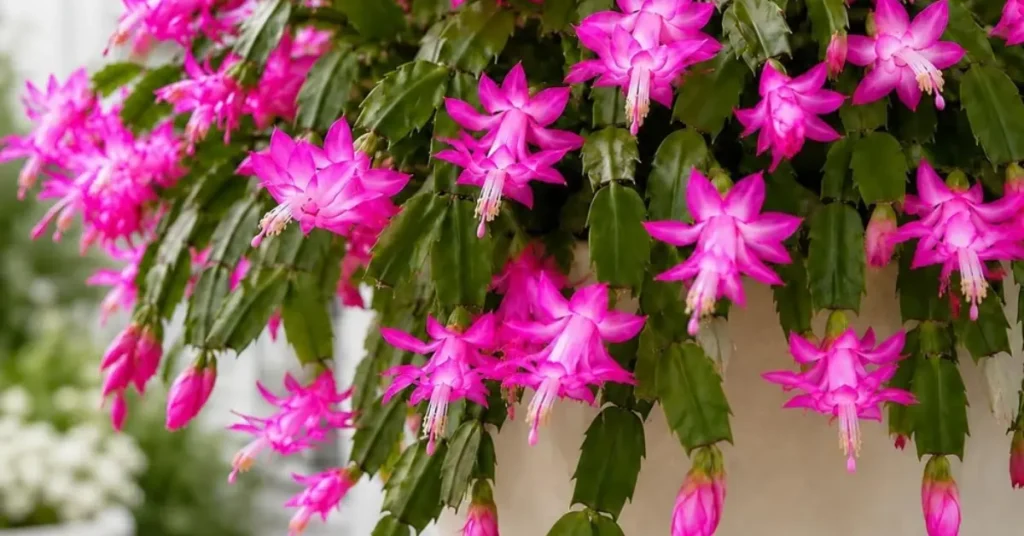
Nov
Is your Thanksgiving cactus growing well but not giving you any flowers? Maybe it looked great last year, but now it just sits by the window with no sign of new buds. Or perhaps you see tiny buds forming, only to watch them fall off before they open.
If this sounds like your plant, you are not alone.
The good news is that getting a Thanksgiving cactus to bloom is often easier than you think. This tropical cactus needs the right mix of light, cool nights, and steady care to produce its bright holiday flowers.
In this Thanksgiving cactus care guide, you’ll learn how to help your plant bloom, why flowers sometimes fail to appear, and what you can do to keep your cactus looking good all year.
What Is a Thanksgiving Cactus?
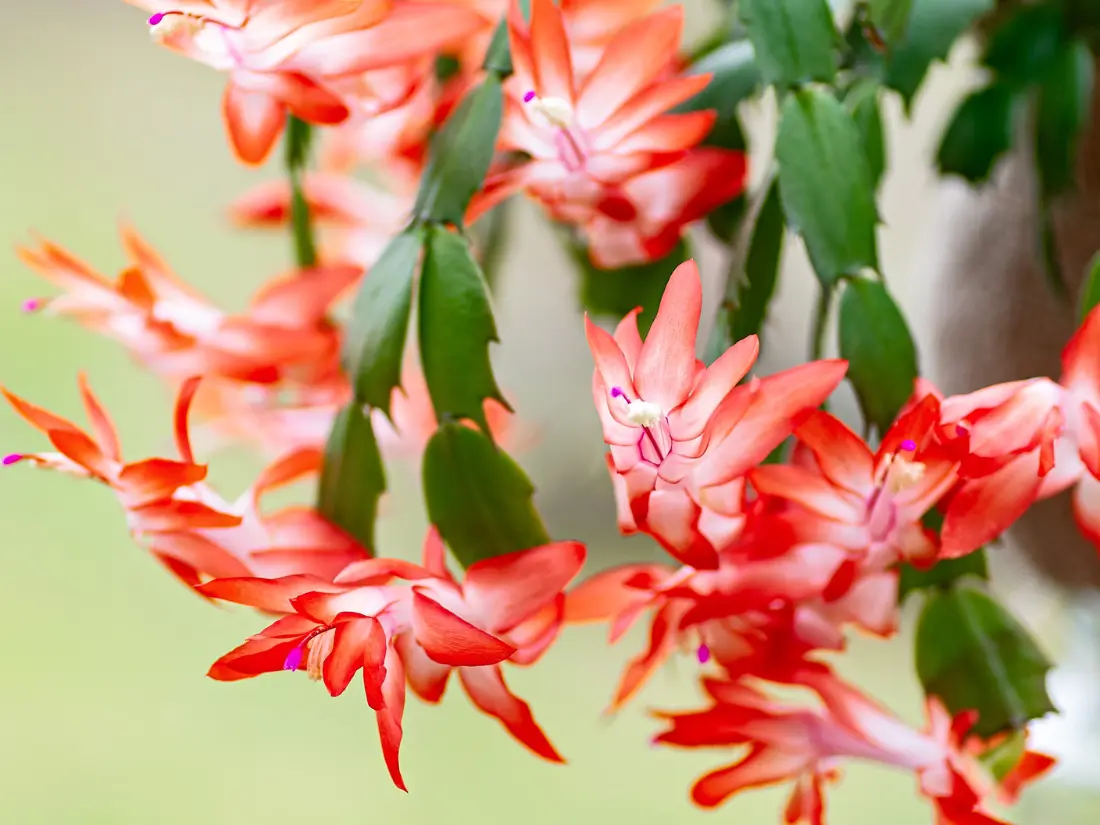
Few houseplants can brighten up late autumn and early winter quite like the vibrant, blooming Thanksgiving Cactus (Schlumbergera truncata). Famed for its arching green stems and exotic, jewel-toned blossoms in shades of fuchsia, red, coral, peach, and white, this tropical holiday favorite brings a welcoming burst of color just as outdoor gardens are winding down for the season.
The Thanksgiving Cactus (Schlumbergera truncata) is a popular indoor houseplant native to the coastal shade-canopies and shaded rainforests of southeastern Brazil. In its wild habitat, it grows attached to tree branches and rocky crannies, drawing moisture and organic nutrients from humid air and decaying leaves.
Because it naturally grows under dense tree canopies, it does not tolerate direct sun or completely dry desert sand. Instead, it features flattened, stem-like segment pads called phylloclades that store moisture, cascading gracefully over container edges as the plant matures.
Thanksgiving Cactus vs. Christmas Cactus: What’s the Difference?
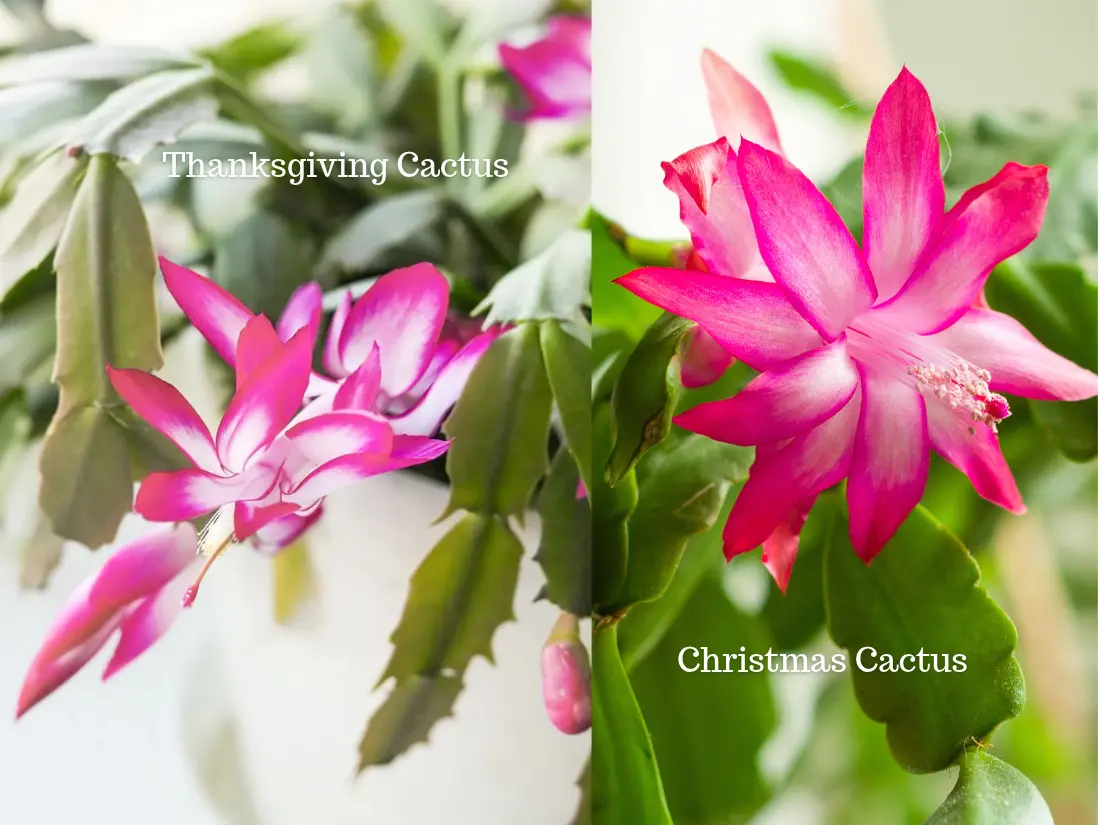
Holiday cacti are often mislabeled at plant nurseries and grocery stores, but you can easily identify a Thanksgiving Cactus by examining its stem segments and flowers:
-
Stem Shape: The stem segments of a Thanksgiving Cactus feature sharp, pointed, claw-like teeth along their margins (earning it the nickname “Crab Cactus”). In contrast, the Christmas Cactus (Schlumbergera x buckleyi) has smooth, rounded, scalloped edges, while the Easter Cactus (Rhipsalidopsis gaertneri) sports star-shaped flowers and rounded segments with small bristles.
-
Bloom Timing: Thanksgiving Cactus typically flowers earlier in the holiday season, starting in late October or November, while Christmas Cactus flowers later in December and January.
-
Pollen Anthers: Look closely at the flower center: Thanksgiving Cactus flowers hold yellow pollen anthers, whereas true Christmas Cactus flowers feature white-to-purplish anthers.
When Does a Thanksgiving Cactus Bloom?
As a general rule, a Thanksgiving Cactus sets buds in early autumn and bursts into full bloom from late October through late November, right in time for holiday gatherings. Individual flower buds open progressively over four to six weeks, extending your indoor floral display into early winter.
What Triggers Thanksgiving Cactus Flower Buds?
Thanksgiving Cacti are thermo-photoperiodic plants, meaning their blooming mechanism is controlled by two specific environmental cues in early autumn:
-
Uninterrupted Dark Nights: The plant requires short daylight periods (around 10 hours) and long, continuous darkness (12 to 14 hours every night) for 6 to 8 weeks.
-
Cool Temperatures: Nighttime temperatures dropping consistently into the 55°F to 65°F (13°C to 18°C) range signal to the plant that autumn has arrived, forcing it to stop producing vegetative stem growth and begin initiating flower buds.
How to Get a Thanksgiving Cactus to Bloom
If your plant is lush and green but refuses to bloom, follow these six simple steps starting in late September to guarantee a heavy set of flower buds.
Step 1: Start Preparing Your Cactus in Early Fall
Begin your forced-bloom routine in mid-to-late September (about 6 to 8 weeks before Thanksgiving). Pinch off any tiny, reddish young stem segments at the tips of the foliage. Removing tender new growth stops vegetative shoot production and forces the plant to concentrate its energy on developing mature flower buds at the tips of established stem pads.
Step 2: Give Your Cactus Long, Dark Nights
To initiate bud formation, place your plant in a location that receives 12 to 14 hours of total, uninterrupted darkness each night for 6 straight weeks.
Cover the plant with a dark, breathable cloth or box from 6:00 PM to 8:00 AM every evening, or move it into a spare bedroom or closet where indoor lights are never turned on after sunset. Even brief exposure to artificial room lighting or streetlights during its dark period can disrupt bud formation and prevent blooming!
Step 3: Keep Nighttime Temperatures Cool
Temperature plays a crucial role in setting flower buds. Keep your Thanksgiving Cactus in a cool room where nighttime temperatures consistently hover between 55°F and 65°F (13°C to 18°C).
If nighttime temperatures remain steadily around 55°F (13°C), the plant will often initiate flower buds even if light cycles aren’t strictly controlled! Avoid placing your cactus near heating vents, radiators, fireplaces, or drafty exterior doors.
Step 4: Provide Bright, Indirect Sunlight
During daylight hours, expose your plant to 10 hours of bright, indirect sunlight. A sunlit east-facing windowsill or a spot a few feet back from a south- or west-facing window is ideal. Avoid direct, harsh mid-day sunlight, which can scorch the stem segments and turn foliage a stressed reddish-purple.
Step 5: Adjust Watering and Fertilizing
During the autumn pre-bloom phase, the plant’s metabolic growth slows down significantly:
-
Reduce Watering: Cut back on watering frequency. Allow the top 2 inches of soil to dry out completely between waterings. Soil should remain slightly damp deep near the roots, but never bone-dry or soggy.
-
Stop Fertilizing: Stop applying all fertilizers in late summer (by late August). Feeding during early autumn encourages weak leaf shoots rather than tight flower buds.
Step 6: Protect the Buds Until They Open
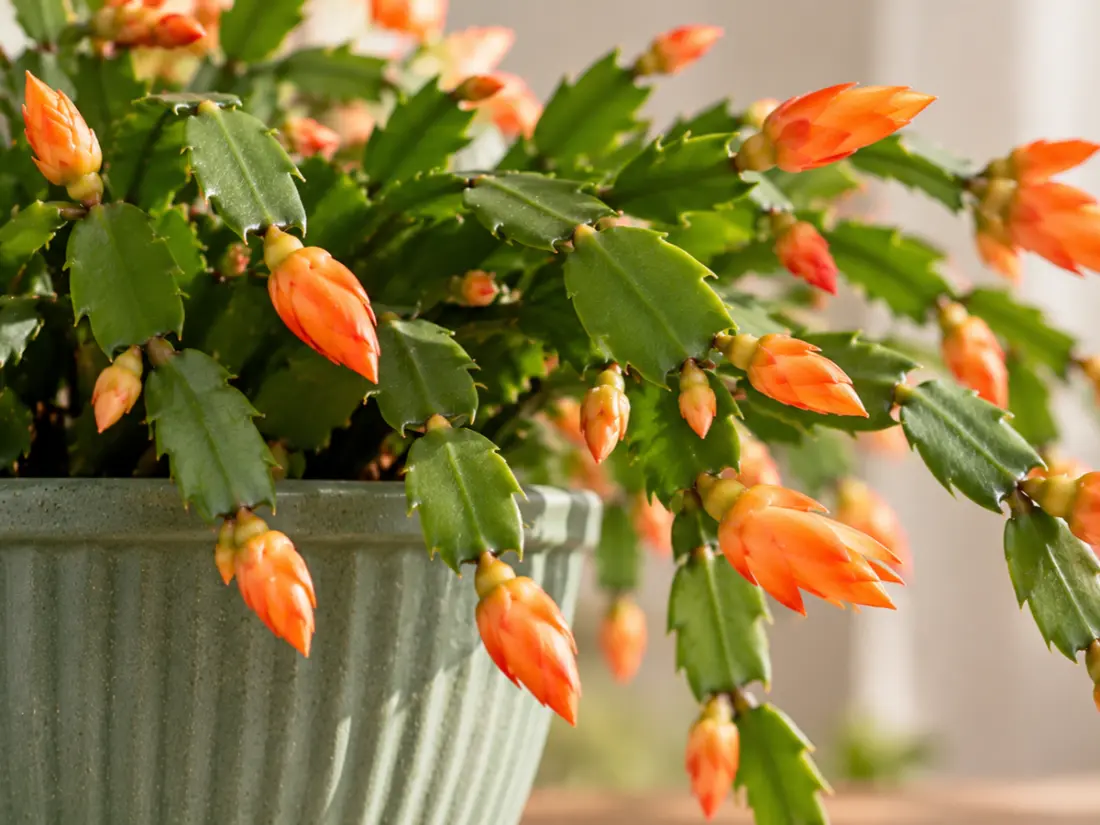
Once small rice-sized flower buds form at the ends of the stem segments in late October, you can move your plant back out into your main living area to enjoy the display.
However, handle the plant with extreme care! Avoid turning or rotating the pot relative to its light source, keep it away from hot air currents, and maintain consistent soil moisture. Sudden changes in light angle, drafts, or soil moisture will cause tender buds to drop off before opening.
Thanksgiving Cactus Seasonal Care Calendar
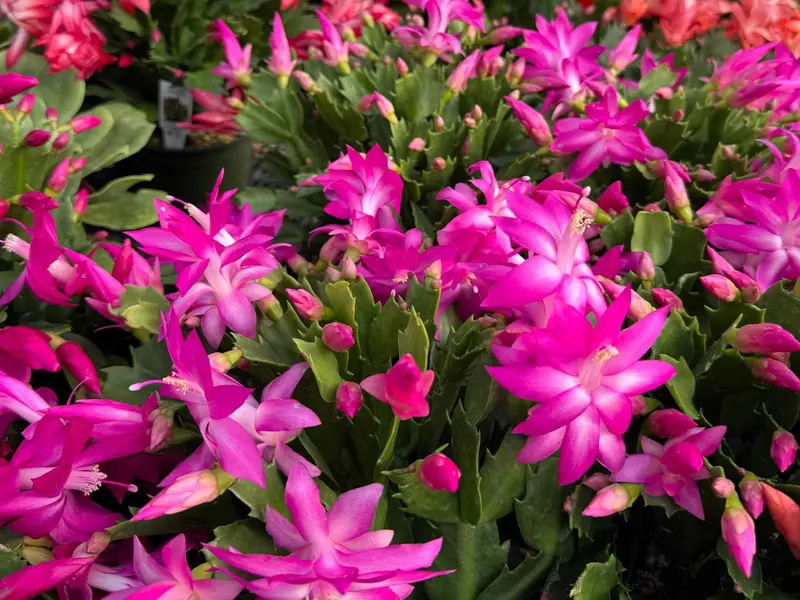
To keep your Thanksgiving Cactus healthy, thriving, and ready to bloom every year, follow this simple seasonal care calendar:
|
Season |
Primary Care Focus |
Light & Temperature |
Watering & Feeding |
|
Fall (Sept – Nov) |
Bud Initiation & Blooming |
12–14 hrs continuous darkness at night; cool temps (55°F–65°F). Move to bright indirect light once buds form. |
Water lightly when top 2 inches of soil dry out. No fertilizer. |
|
Winter (Dec – Jan) |
Post-Bloom Rest Period |
Bright, indirect light; cool indoor temperatures (60°F–70°F). |
Water sparingly every 2–3 weeks; keep soil barely moist. No fertilizer. |
|
Spring (Feb – May) |
Active Vegetative Growth |
Bright, indirect sunlight; warm indoor temperatures (65°F–75°F). |
Water when top inch of soil feels dry. Feed monthly with balanced houseplant food. |
|
Summer (June – Aug) |
Branching & Energy Storage |
Dappled shade outdoors or bright indirect light indoors. Protect from direct sun. |
Water regularly; keep soil evenly moist but well-drained. Feed every 2–4 weeks. |
Frequently Asked Questions (FAQs)
How Often Should You Water a Thanksgiving Cactus?
Watering depends on the season. During active spring and summer growth, water whenever the top inch of soil feels dry to the touch (usually once a week). During the autumn pre-bloom and winter rest periods, reduce watering to every 2 to 3 weeks, allowing the top 2 inches of soil to dry out. Always empty drainage saucers so roots never sit in standing water!
Why Is My Thanksgiving Cactus Not Blooming?
The most common reasons for a lack of blooms include exposure to artificial room lighting during its dark night period, ambient temperatures remaining too warm at night (above 70°F/21°C), planting in a spot receiving insufficient daylight, or over-fertilizing in late summer and early fall.
Why Are My Thanksgiving Cactus Buds Falling Off?
Bud drop is triggered by sudden environmental stress. Common causes include:
-
Drafts from heating vents, radiators, or cold doors.
-
Drastic changes in soil moisture (letting the soil dry out completely or severe overwatering).
-
Moving or rotating the plant after flower buds have developed.
-
Low indoor humidity during cold winter months.
What to Do After Your Thanksgiving Cactus Finishes Blooming?
Once the last flowers fade in late December or January, pluck off the spent blossoms. Give your plant a 30-day rest period by placing it in a cool room, cutting back on water, and withholding fertilizer. In late winter or early spring, you can prune back 1 to 2 stem segments to encourage branching and thicker foliage.
Can a Thanksgiving Cactus Bloom More Than Once a Year?
Yes! With proper care, many healthy Thanksgiving Cacti put on a main bloom show in November and a lighter, secondary flush of blossoms in late winter or early spring (around February or March) as day lengths and natural temperatures shift again.
How Long Does It Take for a Thanksgiving Cactus to Bloom?
Once small flower buds first appear on stem tips in mid-to-late October, it takes approximately 3 to 4 weeks for those buds to enlarge and open into fully expanded flowers.
Should I Repot My Thanksgiving Cactus While It Has Flower Buds?
No! Never repot, prune, or root-disturb a Thanksgiving Cactus while it is forming buds or actively flowering. Repotting during the bloom cycle causes severe stress, causing all buds to drop immediately. Wait until spring (March to May) after post-bloom rest to repot into fresh cactus/succulent soil mix.
Why Is My Thanksgiving Cactus Blooming in December Instead of November?
If your Thanksgiving Cactus blooms in December rather than November, you may actually own a true Christmas Cactus (Schlumbergera x buckleyi)! Alternatively, if temperatures in your home remained warm throughout September, bud initiation may have simply been delayed by a few weeks.
Final Thoughts
Caring for a Thanksgiving Cactus and bringing it into full bloom comes down to honoring its tropical rainforest roots.
Provide long, dark nights and cool evening temperatures starting in mid-September, keep soil moisture balanced, avoid high-nitrogen fall fertilizers, and shield delicate flower buds from sudden room drafts or light shifts. You don’t need complicated tricks to enjoy a magnificent holiday display, just a little seasonal timing and a cool, dark room to work its magic.
Set your autumn care routine into motion today, and look forward to enjoying a spectacular, colorful sea of jewel-toned blossoms all season long!
Happy gardening!
